


Preorder Fulfillment: How a 3PL Handles Complex Inventory and Customer Expectations
Preorder campaigns often trip up fulfillment due to mixed inventory states, supplier delays, and surges in order volume. This guide is for DTC founders, retail marketers, and procurement pros comparing 3PLs to understand preorder fulfillment workflows, pricing, SLAs, and operational risks—so you can pick a partner who keeps your brand promises and customer satisfaction intact.

What Is Preorder Fulfillment and When Should You Use It?
Preorder fulfillment means managing orders placed before the product is physically available. You are accepting orders today and shipping the product when the inventory arrives, sometimes weeks or months later.
Use Cases for Preorder Fulfillment
New product launches: When you have a fixed estimated time of arrival (ETA) for the inventory, and want to build demand or test market reaction.
Limited editions or collaborations: Items that have fixed allocations which must be rationed and reserved before shipping.
Restocks of bestselling SKUs: When demand is higher than immediate supply, and customers are willing to wait for the next batch.
Seasonal or event-driven releases: Such as holiday collections or product drops tied to specific dates, requiring precise timing and communications.
Why Preorder Fulfillment Is Operationally Complex
Split inventory states: For the same SKU, some units may be “in stock” while others are “incoming” (expected on a future date). Bundles may combine both states, which requires the warehouse management system (WMS) to carefully allocate stock without overselling.
Allocation risk: Without accurate reservation against incoming quantities, overselling causes customer service headaches, refunds, and negative brand impact.
Mixed order complexity: Orders may include preorder items alongside regular stock. Deciding whether to ship partial orders immediately or hold until all items are ready impacts costs and customer expectations.
Supplier unpredictability: ETAs sometimes slip, packaging or barcodes change, and delays cascade if not tightly tracked.
Labor surges on release day: Preorder releases often generate sharp volume spikes unlike steady daily order flow, challenging labor capacity and process flow.
When Does a 3PL Make Sense for Preorder Fulfillment?
Consider a 3PL for preorder fulfillment if you require strict inventory state management and allocation logic within a WMS to avoid overselling.
Consider a 3PL for preorder fulfillment if you need to batch inventory receipts and orders at scale while maintaining accuracy.
Consider a 3PL for preorder fulfillment if you want to incorporate custom inserts or kitting specifically for preorder campaigns.
Consider a 3PL for preorder fulfillment if you cannot absorb a 2 to 5 times surge in orders on launch without risking missed ship dates or errors.
Preorder Fulfillment Step-by-Step Workflow
A clean, repeatable preorder fulfillment workflow reduces errors and customer pain points. Here’s a detailed operator-level breakdown of a typical process we implement:
1. Receive the Preorder Inventory Forecast & Timeline from the Brand
The brand communicates projected preorder volumes by SKU, promised shipping windows or release dates, purchase order (PO) numbers, and pallet or carton details.
The 3PL confirms dock appointment schedules and receiving capacity for those forecasted shipments.
Cutoffs for “wave 1” versus later “wave 2” inventory receipts based on timing ensure staffing alignment.
2. Set Up SKU States in the Warehouse Management System (WMS)
Each SKU is established with specific inventory statuses: Allocable (on-hand and available for picking); Incoming (products linked to purchase orders, expected but not yet available); Blocked (units reserved for kitting, quality inspection, or hold).
Orders containing preorder SKUs receive a “preorder hold” flag preventing picking prior to release date.
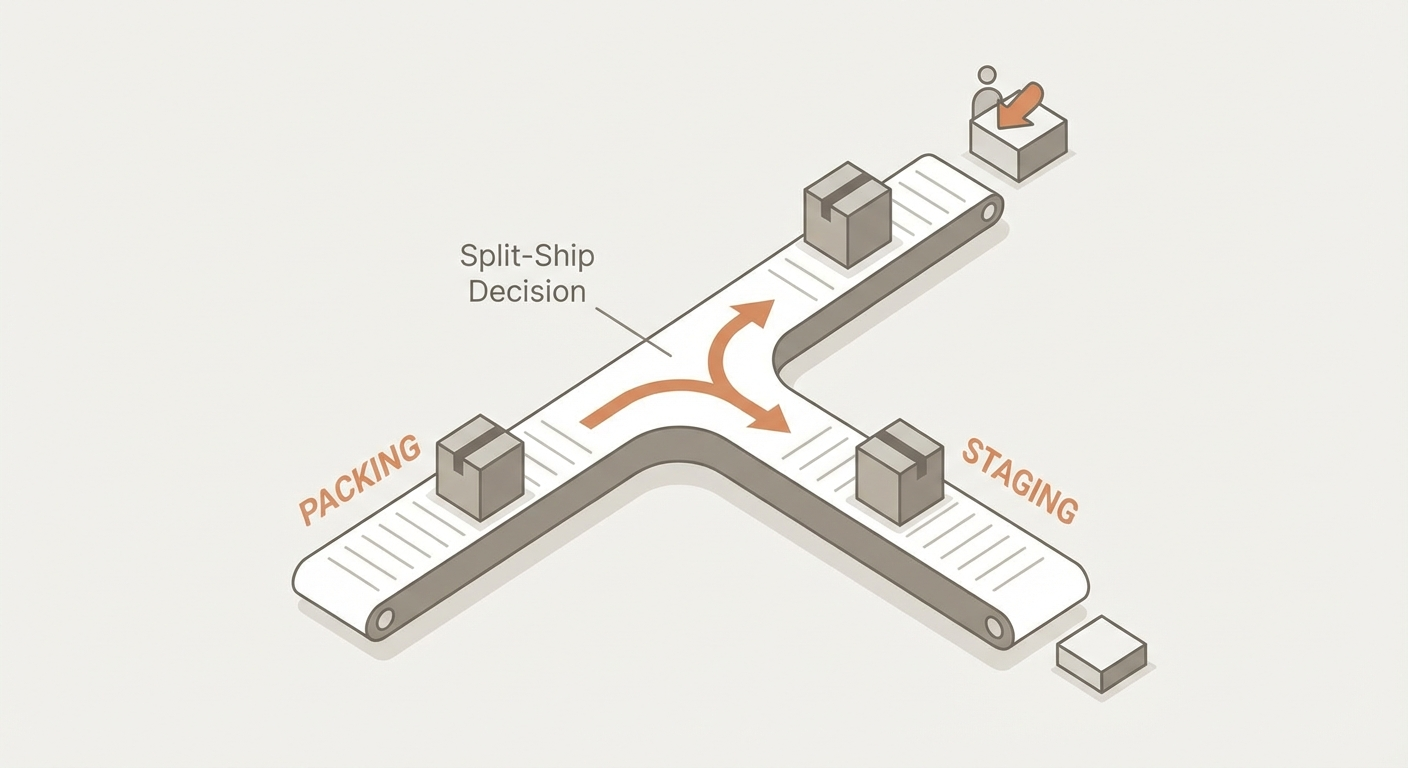
Split-shipping policies are defined per SKU or order tag to automatically handle or hold partial shipments.
3. Map Order Tags and Customer Communications
The brand’s ecommerce or order management system tags preorder orders upon creation, and the 3PL replicates tags inside the WMS to maintain operational consistency.
Customer-facing messages and estimated ship dates are agreed upon and updated dynamically if supplier ETAs shift.
4. Batch Incoming Product Receipts for Expected Launches
Launch POs arrive during staffed receiving windows to avoid bottlenecks.
Dock-to-stock times are targeted at under 24 hours to ensure timely allocation.
Barcode and packaging labels are verified immediately. Incorrect or missing labels are corrected on receiving to avoid wasting time at picking lines.
5. Separate Preorder Inventory from Regular Stock in Pick Locations
Preorder inventory is slotted in dedicated pick locations to avoid mix-ups with regular stock of the same SKU.
For items requiring kitting or packaging assembly, relevant inventory units are blocked and moved to staging or production areas.
6. Prepare Custom Kitting, Inserts, and Labeling
Marketing collateral such as flyers, coupons, and branded packing inserts are printed and staged in advance of the release date.
Kitting assembly and quality checks finalize bulk kits before returning them to allocable inventory for picking.
Onsite printing shortens turnaround and gives tighter quality control compared to outsourcing.
7. Wave Planning for Mixed Preorder and Regular Orders
Pick waves are carefully planned by carrier, service level, zones, and SKU to minimize picker movement congestion.
Cutoffs are established smartly—usually two waves daily—to balance labor with timely shipments.
8. Release Orders from Hold and Complete Pick-Pack-Ship Process
On release date, the WMS flips preorder orders from “hold” to “open,” triggering picking workflows.
Mixed orders are split or held based on preconfigured policies.
Scan-based picking, lot/serial captures (if needed), and dimension/weight verification are employed to guarantee accuracy and carrier compliance.
Labels are printed post-verification to avoid need for costly carrier chargebacks.
9. Manage Supplier Delays and Exception Handling
If receiving shipments are short or delayed, order releases are throttled or shifted to later waves.
Customer notifications regarding updated ETAs are triggered per SOP, minimizing service ticket volume.
10. Reconcile Preorder Backlog and Update Inventory Accuracy
Daily reconciliation ensures backlog clearance and accurate cycle counts are conducted on all locations.
Error logs are reviewed collaboratively to identify root causes ahead of subsequent launches.

Key Preorder Fulfillment KPIs and SLAs
Preorder campaigns demand tight operational metrics to safeguard customer satisfaction and brand reputation.
KPI: Pick Accuracy | Target: ≥ 99.5% | Notes: Scan confirmation at picking and packing to avoid mis-ships
KPI: Order Cycle Time | Target: ≤ 48 hours post-release | Notes: Typically enabled by two wave picks per day
KPI: Dock-to-Stock Time | Target: ≤ 24 hours | Notes: Fast receipt ensures inventory availability for allocation
KPI: On-Time Ship Rate | Target: ≥ 98% | Notes: Based on promised preorder ship windows
KPI: Inventory Accuracy | Target: ≥ 99.8% at location-level | Notes: Daily cycle counts increase accuracy during backlog periods
For a comprehensive preorder fulfillment setup, these KPIs highlight the critical areas that 3PLs must deliver consistently.
Pricing Drivers for Preorder Fulfillment
Preorder fulfillment introduces complexities and activities that affect pricing beyond traditional pick-and-pack services:
Inventory Complexity: Managing multiple SKU states (allocable, incoming, blocked), including blocking units for kitting or quality inspection, requires ongoing system configuration and operator oversight.
High-Touch Kitting/Printing: Custom kitting and incorporation of marketing inserts, flyers, variable print runs, and branded materials increase labor and materials cost.
Volume Spikes on Release Day: Sharp labor demand peaks often require overtime, temp labor, or shift expansions, influencing hourly labor costs.
Segregated Storage Needs: Allocated preorder stock occupies distinct pick faces or storage locations separate from open inventory, affecting space allocation and associated fees.
Technology Integration: Mapping complex preorder order tagging, split-ship policies, and real-time status updates across systems demand ongoing management and technical support.
SLA Compression: Demanding compressed dock-to-stock or expedited pick-pack timelines involves premium handling pricing to incentivize labor and process prioritization.
These pricing drivers shape how 3PLs scope and quote preorder fulfillment projects, emphasizing the importance of age-old logistics fundamentals married to ecommerce agility.

Risks in Preorder Fulfillment and How to Mitigate Them
Preorder fulfillment, if not managed meticulously, risks operational breakdowns and damaging customer experience. Below are key risks and practical mitigations:
Risk: Inventory misallocation causing oversells or stockouts | Mitigation: Employ real-time slotting and daily allocation reconciliation in WMS; enforce system-controlled inventory holds and approvals for overrides
Risk: Supplier delays disrupting ship dates | Mitigation: Build contingency into cutoff dates, maintain buffer inventory where possible; ensure timely customer updates via integrated OMS-CRM triggers
Risk: Mixed SKU pick errors between preorder and regular orders | Mitigation: Segregate preorder inventory in dedicated pick zones; implement wave picking SOPs and double-scan verification steps
Risk: Surge labor bottlenecks on release day | Mitigation: Maintain scalable labor pools and cross-trained teams; plan shifts and pre-stage packing materials to smooth peaks
Risk: Pre-creating labels leading to carrier chargebacks | Mitigation: Print labels only after final verification of package weights and dimensions to avoid costly carrier adjustments
Risk: Poor customer communication on delays leading to support ticket surges | Mitigation: Tie order tags to accurate ETAs and auto-update customers proactively when supplier delays occur
Proper mitigation requires a disciplined collaboration between the brand, supplier, order management, and 3PL operations.
The Atlanta Advantage in Preorder Fulfillment
Choosing a 3PL with a strategic Atlanta location confers unique benefits for preorder fulfillment:
Rapid Freight Reach: Atlanta’s transportation network enables 2-day parcel transit to approximately 80% of the U.S. population. This proximity helps maintain aggressive preorder delivery promises even when release dates shift.
Cost-Effective Distribution Hub: As a lower-cost freight origin point relative to coasts, Atlanta reduces need for costly expedited shipping or air freight alternatives, lowering landed costs.
Deep Operational Experience: All Points, operating in Atlanta since 1995, brings unmatched expertise in managing preorder workflows, mixed inventory states, and volume surges.
Integrated Services Under One Roof: Having kitting, printing, and fulfillment centralized facilitates superior quality control on marketing inserts and packouts. This reduces handoffs, communication errors, and time-to-ship.
Together, these advantages create a resilient, scalable preorder fulfillment environment tailored for the demands of direct-to-consumer brands and retail marketers.
What You Get with All Points
Partnering with All Points for preorder fulfillment means:
Preorder-ready warehouse management system configured for allocation logic, preorder holds, and release-date automation.
Dedicated launch receiving prioritizing timely dock-to-stock and PO appointments.
Wave planning and scan-based picking workflows that uphold ≥99.5% accuracy even during volume surges.
Custom kitting and assembly services on-site that integrate marketing collateral with preorder shipments efficiently.
In-house printing and marketing materials production for inserts, sleeves, and branded collateral.
Atlanta operations that cut transit days and reduce distribution costs across most of the U.S. market.
Operator-led account management focused on throughput, accuracy, and seamless communication to keep your preorder campaign on track.
Learn more about our related services:
Custom kitting and assembly: https://www.allpointsatl.com/services/custom-kitting-product-assembly
E-commerce order fulfillment: https://www.allpointsatl.com/services/e-commerce-order-fulfillment
Printing and marketing materials: https://www.allpointsatl.com/services/printing-marketing-materials
FAQ
Q: How much does preorder fulfillment cost?
A: Costs vary based on volume, SKU complexity, kitting inserts, and storage duration. Expect line-item pricing for receiving, storage (including allocated stock), pick/pack, kitting, relabeling, and printing. We provide detailed quotes tailored to your workflow.
Q: What SLAs apply to preorder fulfillment?
A: We guarantee ≥98% on-time ship post-release, ≤48-hour order cycle time, and ≥99.5% pick accuracy. Dock-to-stock times are typically ≤24 hours for prioritized POs.
Q: How do you manage supplier delays?
A: We build contingency into cutoff dates, hold buffer stock if feasible, and update customers with accurate ETA adjustments via integrated order management systems.
Q: Can All Points handle mixed preorder and regular orders?
A: Yes. We separate pick zones, enforce split-ship or hold-all rules at order level, and use wave picking combined with double-scan checks for accuracy.
Q: What are the lead times to set up preorder fulfillment?
A: Typically 2–4 weeks necessary to onboard, configure SKU states in the WMS, map order tags, and finalize SOPs. If kitting or printing is involved, allow one additional week for proofs and staging.
Call to Action
Schedule a call with an Atlanta 3PL expert to discuss your preorder fulfillment needs.
Get a preorder fulfillment quote: https://www.allpointsatl.com/contact
Secondary: Download the free 3PL Guide for logistics operators: https://www.allpointsatl.com/resources/3pl-guide-for-e-commerce-and-amazon-sellers
About All Points
All Points is an Atlanta-based, family-owned 3PL established in 1995. We deliver end-to-end logistics—from custom kitting and assembly and e-commerce fulfillment to warehousing, distribution, and printing and marketing materials—so your brand ships accurately, on time, and at scale.
Custom kitting and assembly: https://www.allpointsatl.com/services/custom-kitting-product-assembly
E-commerce order fulfillment: https://www.allpointsatl.com/services/e-commerce-order-fulfillment
Printing and marketing materials: https://www.allpointsatl.com/services/printing-marketing-materials
Disclaimer: This article is for informational purposes only and does not constitute legal, financial, or operational advice. Companies should consult directly with All Points experts or other relevant professionals before implementing preorder fulfillment workflows.
Additional Resources
Preorder Fulfillment Lessons: https://ironlinx.com/preorder-fulfillment-lessons/
Handling Too Many Pre-Orders: https://timesact.com/2025/08/14/handling-too-many-pre-orders/
Comprehensive Guide for Ecommerce Brands: https://www.fulfil.io/blog/pre-order-management-a-comprehensive-guide-for-ecommerce-brands/
Preorder Logistics: Avoid Chaos: https://timesact.com/2025/08/08/preorder-logistics-avoid-chaos/
Prevent Warehouse Chaos with Easy Pre-Order Operations: https://www.getpurpledot.com/insights/prevent-warehouse-chaos-with-easy-pre-order-operations
Conclusion
Preorder fulfillment demands precise inventory management, supplier coordination, and surge-ready labor to meet customer expectations. This article breaks down how a 3PL like All Points handles complex workflows, pricing, SLAs, and risks—helping brands launch on time with accuracy and ease.

.webp)
.webp)
.webp)
.webp)


