


Why Oversized Boxes Increase Dimensional Weight Charges
Dimensional weight charges punish oversized boxes. If you’re shipping lightweight products in large cartons, you’re effectively paying for air. Understanding how dimensional weight works, when it applies, and where brands often get burned is critical to controlling your fulfillment costs. This article explains the dynamics of dimensional weight charges, highlights common blind spots for DTC and retail brands, and walks through packaging and WMS workflows that stop oversizing, lower shipping invoices, and stabilize margins.

What Are Dimensional Weight Charges and When Do They Apply?
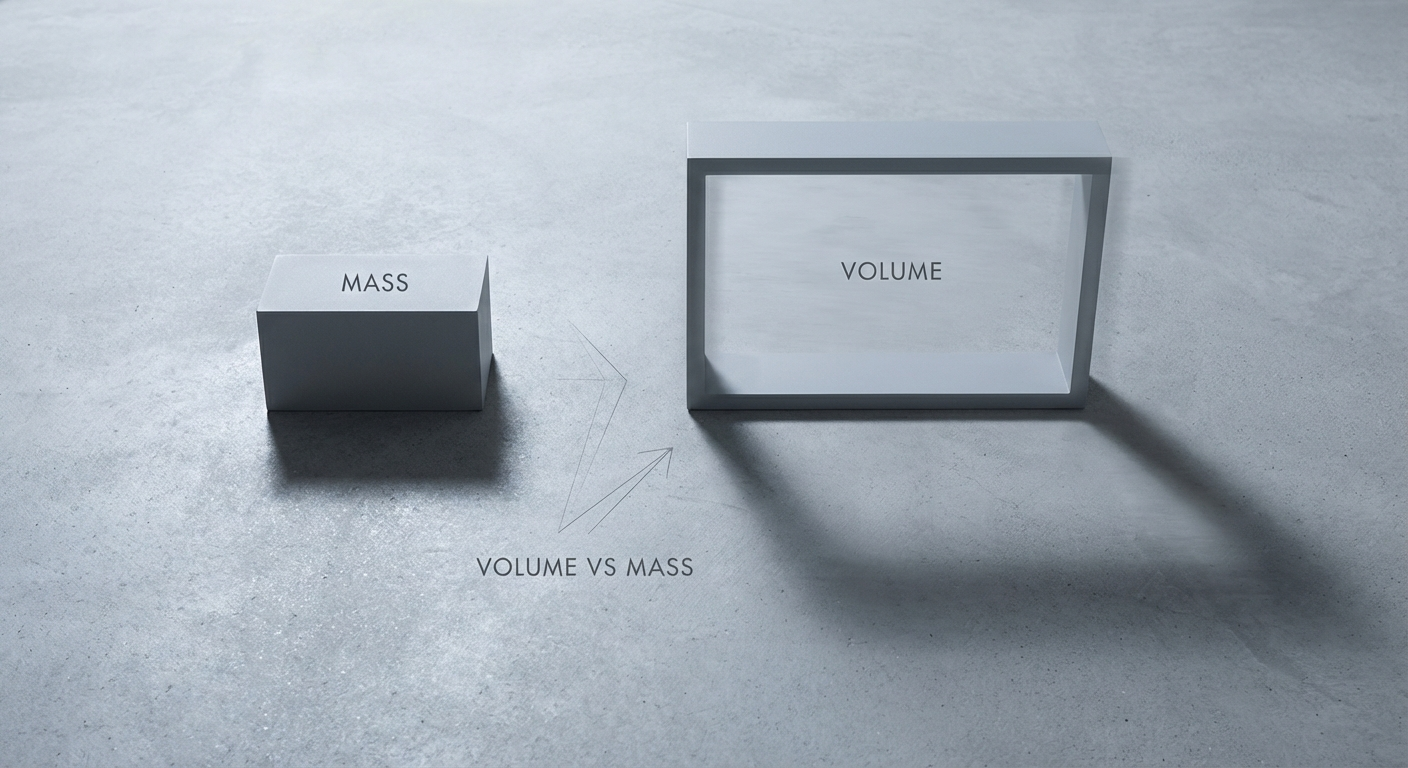
Carriers no longer charge freight fees based solely on actual weight. Instead, they use dimensional weight (DIM weight), which considers the volume your parcel occupies relative to its actual mass. You pay not only for what your package weighs but also for how much space it consumes in a truck or aircraft.
How Dimensional Weight Is Calculated
DIM Weight = (Length × Width × Height) ÷ DIM Divisor
For major domestic carriers such as UPS and FedEx, the most common DIM divisor is 139 cubic inches per pound for ground, express, and other parcel services. USPS is more nuanced; many parcels under 1 cubic foot avoid DIM charges, and certain services use divisors like 166 or apply zonal triggers. Carriers round up each dimension to the next whole inch before calculating volume, then round the billable weight (DIM or actual) up to the next full pound.
When Dimensional Weight Exceeds Actual Weight
DIM charges apply whenever the dimensional weight exceeds the actual (gross) weight of a package. This typically happens when lightweight products ship in bulky or oversized boxes, causing carriers to bill on the larger, volume-driven DIM weight rather than the true physical weight.
Example table (DIM divisor 139):
Box A: Dimensions 12 × 8 × 4; Volume 384 in³; DIM Weight 2.8 lb; Actual Weight 3 lb; Billed Weight 3 lb (actual weight wins)
Box B: Dimensions 14 × 10 × 8; Volume 1,120 in³; DIM Weight 8.1 lb; Actual Weight 3 lb; Billed Weight 9 lb (DIM weight wins)
In this example, Box B contains the same 3-pound product but is billed at 9 pounds due to its larger box volume—nearly tripling shipping expense.
Common Scenarios Where Dimensional Weight Hits DTC and Retail Brands
Subscription boxes with significant void space or seasonal inserts.
Kitting and assembly requiring larger cartons to fit multiple items or promotional materials.
Promotional mailers sent in standard boxes where bookfold or poly mailers would be smaller.
Lightweight, bulky products like pillows, foam, or apparel packed in overbuilt cartons.
Inconsistent packouts arising from SKU sprawl or relaxed WMS cartonization rules.
Step-by-Step Workflow to Manage Dimensional Weight in Fulfillment
If you don’t address your processes, you won’t control your costs. To minimize dimensional weight charges, you need a disciplined, operator-friendly SOP focused on packaging optimization and workflow discipline.
1. Pull the Right Data
Extract the prior 90 days of order lines, including SKUs per order, actual package weights, carrier-billed weights, and package dimensions.
Concentrate on top movers representing 80% of volume to quickly identify problem SKUs and packouts that drive costs.
2. Build a Lean Carton Library
Select 6–10 right-sized cartons that account for about 95% of orders; too many box sizes confuse packers and complicate cartonization rules.
Incorporate poly and mailer options as well as multi-depth cartons scored at 1-inch increments for flexibility.
Choose appropriate box strength for your products—many soft-goods brands reliably use 30–32 ECT corrugate.
3. Create SKU-to-Pack Mappings
Define primary carton choices, alternate box options, and dunnage limits.
Identify “Ship In Own Container” (SIOC) items to bypass unnecessary boxing.
Flag “cubic candidates” eligible for regional or USPS cubic pricing.
4. Turn on Cartonization in Your WMS
Enter dimension sets for each SKU and establish rules that automatically upscale box size only when needed (for example, adding a second unit).
Disable manual overrides without supervisor scans and justifications.
Auto-print carton IDs at each packing station so packers select the right box first.
5. Batch Orders by Size Class
Group small/light, medium, and bulky orders into separate batches to improve pack-line efficiency.
Stage appropriate cartons adjacent to each pack station per batch to eliminate box swaps.
Train packers to use the smallest valid box wherever possible and discourage “lazy upsizing.”
6. Configure Pack Stations to Capture Data
Integrate scales and dimensioners directly with your WMS.
Capture actual packed dimensions and weights automatically.
Set maximum allowable dunnage per size class and flag excess padding for review.
Provide photo guides for packouts of high-volume SKUs to standardize packaging.
7. Pre-Assemble Product Components
Bundle small, loose items tightly, banding or shrink-wrapping as appropriate.
Fold or roll apparel items by template to remove excess air volume inside cartons.
8. Manage Manual Overrides and Exceptions
Require scanning an exception code (bulge, gift wrap, damage risk) before approving larger boxes.
Supervisors review daily exception reports to catch and resolve trend issues.
9. Optimize Carrier and Service Routing
Route heavy yet small items through USPS cubic or regional carriers when cost-effective.
Use geographical advantage and ground transit options to avoid costly air DIM surcharges.
10. Audit Invoices and Chargebacks Weekly
Flag orders where DIM weight exceeds actual weight by more than 3 lbs or 30%.
Identify problematic SKUs, packers, or operational steps driving oversizing.
11. Conduct Quarterly Reviews and Updates
Evaluate carton and packout performance.
Retire box sizes with low usage or unintended upsizing.
Prep new SOPs and carton libraries prior to peak seasons.
For detailed operator guidance and systemization of these SOPs, see: https://www.allpointsatl.com/services/e-commerce-order-fulfillment

Dimensional Weight Pricing Drivers — What Moves Cost Up or Down?
Understanding what affects dimensional weight charges helps you strategically control packaging and reduce expensive penalties.
Drivers table:
Oversized boxes: Impact increases; Explanation larger volume directly increases dimensional weight and time in transit.
Lightweight, bulky products: Impact increases; Explanation items with low density cause dimensional weights to surpass actual weight.
Rounding up dimensions: Impact increases; Explanation carriers round up to the next inch or pound—even small bulges add volume.
Weak carton library: Impact increases; Explanation limited selection leads packers to choose larger default boxes.
Over-dunnage: Impact increases; Explanation excess air pillows or padding bulk up package volume unnecessarily.
Packaging optimization: Impact decreases; Explanation right-sized carton reduces billable cubic volume.
Pre-kitting and condensing: Impact decreases; Explanation tighter packouts reduce package dimensions and DIM weight.
Cartonization rules in WMS: Impact decreases; Explanation automated box selection enforces consistent right-sizing.
Carrier DIM divisor changes: Impact variable; Explanation divisor updates shift thresholds, changing cost calculations.
Service/zone selection: Impact variable; Explanation ground or zoned shipping can reduce long-zone air DIM surcharges.
Batching by size class: Impact decreases; Explanation efficient packing reduces upsizing and errors, lowering costs.
By actively controlling box selection, packout structure, and cartonization discipline, you directly influence billable weight and recurring shipping expenses.

SLA and KPI Table for Managing Dimensional Weight Impact (Example)
To maintain operational discipline and minimize DIM charge surprises, set clear SLAs and KPIs for your fulfillment team.
Metrics table:
Order accuracy: Target ≥ 99.5%; Why it matters prevents repacking that forces use of larger boxes.
Package size variance: Target < 5% vs standard; Why it matters keeps box dimensions consistent and predictable.
Dock-to-stock: Target ≤ 24 hours; Why it matters fast product updates enable accurate cartonization rules.
On-time ship: Target ≥ 98%; Why it matters avoids rushed packing errors and last-minute upsizing.
DIM charge error rate: Target < 2% of orders; Why it matters ensures carrier dimensional charges match expectations.
Cartonization compliance: Target ≥ 97%; Why it matters enforces use of recommended boxes and prevents overrides.
Exception override rate: Target ≤ 3%; Why it matters high overrides indicate need for retraining or SOP updates.
Monitoring and reporting on these metrics regularly helps identify gaps and maintain a culture of packaging efficiency.
Risks and Mitigations When Dimensional Weight Charges Spike
Risks
Oversized packaging by default or habit increases volume charges unnecessarily.
SKU sprawl with inconsistent packouts creates “close calls” pushing upgrades to larger boxes.
Lax WMS discipline (cartonization disabled, unchecked manual overrides, no audit trail) leads to packing errors.
Unnoticed annual carrier DIM divisor and rule changes surprise billing teams when invoicing occurs.
Last-minute marketing inserts or seasonal kit components increase box size without operational adjustments.
Mitigations
Enforce photo SOPs and maintain a lean, standardized box library.
Activate cartonization and restrict manual box overrides with mandatory scan-to-justify exception workflows.
Batch pack by size class and stage correct cartons to reduce errors and upsizing.
Run weekly invoice audits and monthly dimensional variance reports tied to SKUs and packers.
Use dimensional weight calculators to validate packaging choices pre-launch: https://www.allpointsatl.com/resources/dimensional-weight-calculator
Consolidate SKUs where feasible and redesign product packaging to optimize cube density.
Pre-kit components and switch to more space-efficient bookfold or mailer-style packaging where safety allows.
Review carrier contracts and available services annually at Q1 to plan for divisor and surcharge changes.
These combined strategies reduce spikes and unpredictable shipping costs attributable to dimensional weight.

The Atlanta Advantage — Why All Points’ Location Reduces DIM Weight Impact
While dimensional weight math doesn’t change, facility location impacts your cost profile.
2-day ground reach to ~80% of the U.S.: From Atlanta, about 80% of the country is accessible via ground transit within two days, enabling more ground shipments with more favorable DIM economics than air and fewer long-zone air DIM surcharges.
Later carrier cutoffs near a major shipping hub: Less rushed packing means fewer errors, less repacking, and minimized dimensional weight penalties.
Consolidated kitting, printing, and fulfillment: Integrated service lines align marketing inserts and packaging for precise fit, eliminating packaging surprises that cause oversizing.
Faster dock-to-stock processing: New products and SKU changes are updated within 24 hours in the WMS, keeping cartonization rules current.
Local carrier contracting leverage: Access to regional, cubic, and specialized carrier services from Atlanta improves negotiation power, lowering DIM costs on small, dense objects.
Case Study: Subscription Box Dimensional Weight Reduction
A subscription box shipper used a 12 × 10 × 6-inch carton (720 in³). Contents used ~400 in³ and weighed ~2.6 lbs. DIM calculated at 6 lbs, so shipment billed at 6 lbs DIM vs. actual 2.6 lbs.
After optimizing the kit and switching to a 10 × 8 × 4 multi-depth carton: New DIM = 10 × 8 × 4 = 320 in³ ÷ 139 = 2.3 lbs; billed at 3 lbs (actual weight becomes the chargeable weight).
Results: 21–28% parcel cost reduction depending on zone, 0.3% damage rate improvement, and ~9 seconds saved per order at pack station time, across ~30,000 monthly orders.
Dimensional Weight Charge Checklist
Measure product and kit cubic volume precisely.
Test the smallest box or mailer that meets protection and branding standards.
Calculate DIM weight using carrier divisors.
Validate with at least 10 live pack samples, recording actual dimensions and weights.
Update cartonization and photo packout guides in your WMS accordingly.
Train packers and lock down manual overrides.
Audit the first 200 orders shipped to track billed vs. expected DIM charges.
What You Get with All Points
Custom kitting and packaging design integrated with product assembly minimizes oversized boxes and volume: https://www.allpointsatl.com/services/custom-kitting-product-assembly
Printing and marketing materials precision-aligned to packaging, preventing forced upsizes and oversizing.
Proven SOPs and SLA discipline, including carton libraries, cartonization rules, and rigorous audit compliance that maintain DIM control and packaging consistency.
Atlanta-based fulfillment network enabling fast two-day ground reach to most of the U.S., blending speed with steady shipping costs: https://www.allpointsatl.com/services/e-commerce-order-fulfillment
Transparent dimensional weight visibility, tracking billed vs actual weights by SKU and pack station, so you can proactively adjust workflows.
Frequently Asked Questions (FAQs)
Q: What are dimensional weight charges?
A: Dimensional weight charges are shipping fees calculated based on the package’s cubic volume rather than just its actual weight. Carriers bill using the higher of actual or DIM weight, with DIM weight computed as length × width × height divided by a DIM divisor.
Q: How do I calculate DIM weight?
A: Measure the package dimensions in inches (rounding up to the next full inch), multiply length × width × height, then divide by your carrier’s DIM divisor (commonly 139 for UPS and FedEx). Round the result up to the next full pound. Calculator: https://www.allpointsatl.com/resources/dimensional-weight-calculator
Q: What SLAs help control DIM charges?
A: Key metrics include package size variance less than 5%, cartonization compliance over 97%, DIM charge error rate under 2%, order accuracy above 99.5%, and dock-to-stock within 24 hours.
Q: How fast can I see savings from right-sizing?
A: Many brands begin to see dimensional weight savings within 2 to 6 weeks following data analysis, pilot implementation, and staged rollout of cartonization and packing process improvements.
Q: Can All Points handle seasonal kitting without increasing DIM fees?
A: Yes. Teams pre-kit seasonal inserts and update carton libraries ahead of time, aligning print materials to packaging so last-minute upsizing at packing stations is avoided.
For more on managing dimensional weight, get in touch with the team or explore resources.
Get a Kitting Quote to Reduce Dimensional Weight Charges Today
Optimize packaging, cut oversize box penalties, and improve your bottom line with All Points’ expert kitting and fulfillment solutions.
Schedule a call: https://www.allpointsatl.com/contact
Disclaimer
This article provides general information and is not legal or financial advice. Carrier dimensional weight policies and divisors can change over time. Always verify current carrier rates and rules before making decisions. All Points is not liable for carrier fees or penalties incurred. Operational recommendations should be tailored to your business needs.
Meta
Meta title: Dimensional Weight Charges: What They Are and How to Control Shipping Costs
Meta description: Oversized boxes trigger dimensional weight charges and inflate your shipping spend. Here’s how DIM weight works, why it spikes, and operator-level steps to right-size packaging and cut costs.
URL slug: /blog/dimensional-weight-charges-shipping-costs
Image alt text: Packages sorted by size to reduce dimensional weight charges
Reference Links
FedEx on Dimensional Weight: https://www.fedex.com/en-us/shipping/packaging/what-is-dimensional-weight.html
The Boxery on How Box Size Affects Shipping Cost: https://www.theboxery.com/blog/how-box-size-affects-shipping-costs-and-what-you-can-do-about-it/?srsltid=AfmBOorRkatXIs63hb4z1Psl3VED1Bp8-3dZULUMdsghqsgVWM2YrS2x
Red Stag Fulfillment Dimensional Weight Calculator: https://redstagfulfillment.com/dimensional-weight-calculator/
DCL Corporation on Dimensional Weight: https://dclcorp.com/blog/shipping/dimensional-weight/
Wikipedia on Dimensional Weight: https://en.wikipedia.org/wiki/Dimensional_weight
By aligning deep operational discipline, packaging science, and geographic advantages, managing dimensional weight charges can transform a shipping budget from a recurring problem to a predictable, controllable cost.
Conclusion
Oversized boxes increase shipping costs by triggering dimensional weight charges, where carriers bill by package volume instead of actual weight. This article explains how DIM weight is calculated, common pitfalls for DTC brands, and practical workflows to right-size packaging, reduce fees, and stabilize fulfillment expenses.

.webp)
.webp)
.webp)
.webp)


