


Standardizing Packaging to Avoid Fulfillment Delays: What DTC Brands Need to Know
Inconsistent packaging is a major cause of fulfillment delays for DTC brands and ecommerce operators. If you’re a founder, ops manager, or procurement lead comparing 3PLs, understanding how standardization impacts workflow, cost, and risks helps you choose the right partner and avoid logistics bottlenecks. Here’s what standard packaging looks like in practice and why it matters.

What is Packaging Standardization and When to Use It
Packaging standardization means using consistent sizes, materials, labeling, and packing procedures across SKUs and shipments to streamline handling and shipping. This approach enables teams to efficiently process orders without guesswork, reducing errors and delays caused by poor packaging choices.
When to use packaging standardization:
- High SKU counts with varied pack sizes
- Subscription boxes or volume-driven ecommerce
- Complex kitting or custom packaging runs
Why it matters:
- Reduces damage, returns, and re-shipments caused by poorly sized or inconsistent packaging.
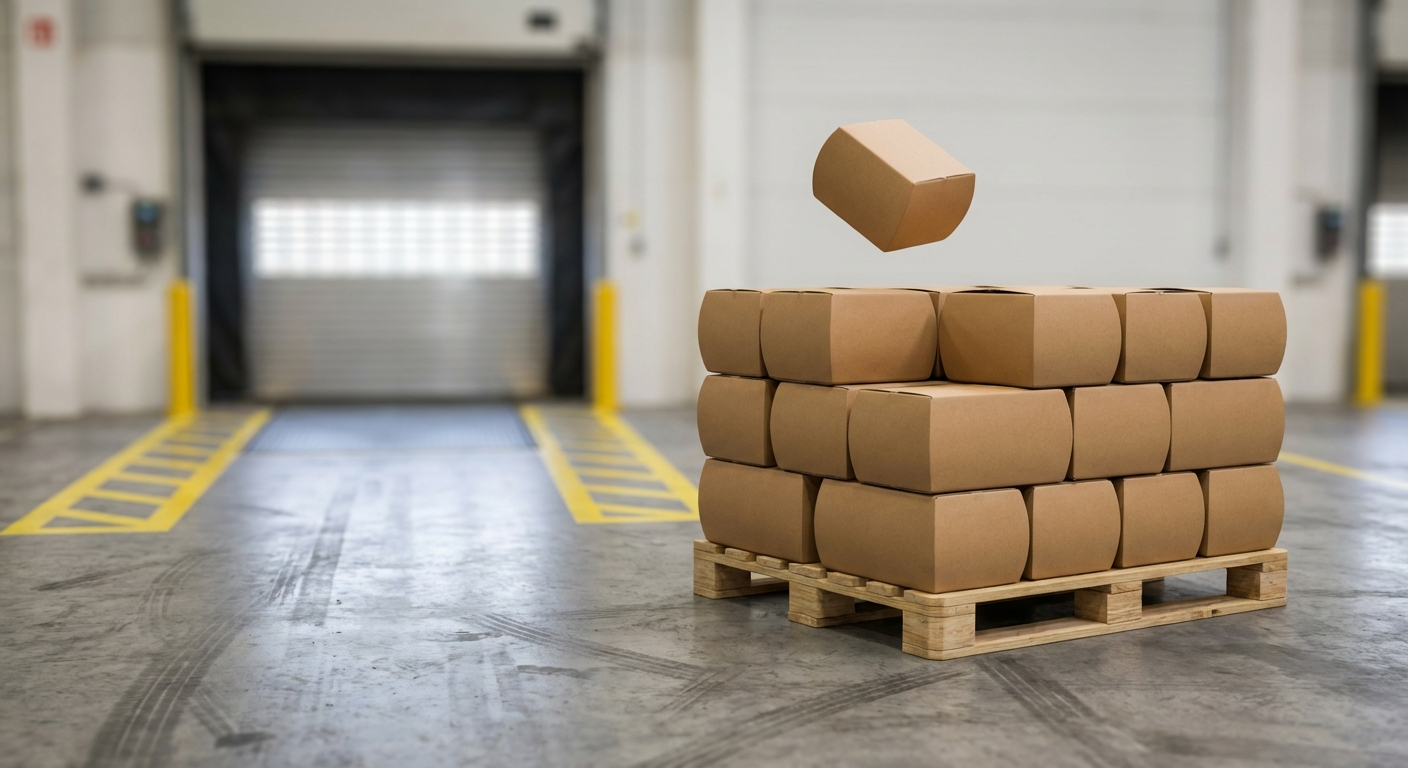
- Simplifies palletization and dock workflows, improving throughput and reducing bottlenecks.
- Helps control freight costs by minimizing dimensional weight penalties and freight disputes.
- Supports guidelines for regulatory compliance, shipping requirements, and marketing integration.
Packaging standardization becomes essential as brands scale their operations. When volumes increase, and product varieties expand, standardizing packaging reduces complexity that hinders workflows and elevates cost variability. Operators no longer waste time searching for the right carton size or scrambling to repack at the dock due to packing failures.
Step-by-Step Workflow for Implementing Packaging Standardization
Implementing packaging standardization requires a methodical approach combining data analysis, operational alignment, and ongoing quality control. Below is a detailed workflow that brands and their 3PL partners can follow:
1. Audit Current Packaging and Identify Inconsistent SKUs
Start by collecting data over 30–60 days, analyzing:
- Active carton SKUs and dunnage types to profile complexity
- Order types and packing methods by SKU family
- Return reasons, particularly product damage linked to packaging failures
- Dimensional (DIM) weight fee occurrences and size mismatches affecting freight
- WMS carton assignments and unit of measure (UOM) consistency
- Floor observations to time pick-to-pack and pack-to-ship workflows
An audit reveals pack sizes causing inefficiency or errors and identifies opportunities for consolidation.
2. Define Standard Pack Sizes Compatible with Warehouse Pick Paths and Pallet Configurations
Working from audit findings, select 4–6 core carton sizes and 1–2 mailers that:
- Cover the vast majority of SKUs with proper fit to minimize void fill
- Align board grade specifications with product fragility and weight
- Optimize for pallet dimensions (typically 40x48 inches) and overall stack heights
- Correspond to standard carrier DIM weight thresholds to reduce surcharges
Defining pack tiers like single-item, small multi-item, and large multi-item cartons helps streamline cartonization and palletization.
3. Document Packaging SOPs Including Box Specs, Void-Fill, Labeling Placement
Develop comprehensive standard operating procedures that specify:
- Precise box dimensions, board grades, and void-fill quantities per product class
- Labeling zones to ensure barcode readability and avoid seams or edges, typically a flat surface with 4x6 inch labels positioned with 1-inch margin
- Taping patterns such as H-taping for heavier cartons and single-strip for lighter ones
- Insert placement rules for marketing collateral and temperature inserts
- Quality control steps, including no-rattle void fill tests and pack slip scanning
Visual aids and photo examples support consistent adherence.
4. Train Pick & Pack Teams and Kitting Operators on the New Standards
Conduct hands-on training sessions at packing stations covering:
- Correct carton selection and packing procedures
- Void fill application and shake tests
- Label application instructions and sealing methods
- Use of updated pick carts with standardized carton inventories
Ensure operators can quickly recognize and correct deviations.
5. Implement Quality Checks at Packing Stations and Dock-to-Stock Scanning
Integrate continuous quality control by:
- Performing random weight and dimension checks (e.g., 1 in 50 packages)
- Tracking repacks and exception reasons through warehouse management or TMS systems
- Performing dock-to-stock verified scans to confirm packing accuracy prior to shipping
- Regularly reviewing damage rates and returns data for trends
Feedback loops maintain packaging discipline and highlight areas for correction.
6. Continuously Monitor Damage Reports and Adjust Standards as Needed
Packaging is not a “set it and forget it” initiative. Weekly reviews of:
- Order cycle times and packing duration
- Return and damage reason trends by SKU
- DIM fee patterns and freight auditing results
- Operator feedback on tooling or carton usability
Support iterative improvements, SKU rationalization, or adoption of secondary pack sizes where necessary.

Key KPIs and SLAs Impacted by Packaging Standardization
Standardizing packaging directly improves critical performance indicators:
KPI | What You Should Expect | Target SLA
Pick Accuracy | Errors due to incorrect packaging decrease | 99.8%+
Dock-to-Stock Time | Reduced handling time from standardized packs | < 24 hours
Order Cycle Time | Faster processing and fewer ship delays | 1–2 days average
On-Time Shipping | Improved due to less repacking and reshipments | 98%+ on-time ship
Return Rate | Decreased product damage and fulfillment errors | < 2%
These KPIs reflect tangible benefits such as fewer mis-picks, smoother palletization, and faster throughput with less rework.
For more on how packaging affects order processing speed and optimization, see: https://www.pdachain.com/2025/03/16/how-packaging-affects-order-processing-speed-and-how-to-optimize-it/

Pricing Drivers for Packaging Standardization
Understanding associated cost factors helps build strong ROI cases for investing in standardization.
Costs Up
- Customized design and tooling: Die-cut templates or print plates for custom packaging incur upfront costs ranging from $500 to $2,000 per size.
- Multiple pack sizes outside standards: Ordering and managing varied carton sizes inflates procurement and inventory complexity.
- Additional packing materials: Fragile or liquid products require stronger board grades or extra void-fills increasing material spend.
Costs Down
- Easier batch picking and packout workflows: Reducing box sizes simplifies operator decision-making and speeds packing.
- Reduced labor fixing packaging issues: Less time wasted repacking or adjusting packs translates to dozens of work hours saved monthly.
- Lower return shipping fees: Minimizing product damage reduces costly reshipments and customer service touchpoints.
Volume Thresholds
Typically, brands shipping over 10,000 orders per month or maintaining 500+ SKUs benefit significantly. Initial investments are recouped within 1–2 quarters via labor savings and freight cost avoidance.
To learn how durable packaging materials can streamline logistics and reduce costs, refer to: https://www.bulldogbag.com/resources/blog/how-durable-materials-boost-efficiency-cut-costs-and-streamline-packaging-and-logistics/

Risks of Ignoring Packaging Standardization and How to Mitigate Them
Ignoring packaging standardization exposes operations to a variety of risks:
- Frequent packing errors increase damage and returns
Mitigation: Use clear SOPs, enforce a packout matrix, and provide comprehensive training for packers.
- Logistical delays caused by irregular box sizes complicate staging and palletization
Mitigation: Lock pack size tiers aligned to standardized pallet and container loads, reducing dock congestion.
- Labeling errors with inconsistent processes cause scanning failures and false pick errors
Mitigation: Enforce label placement standards, adopt quality checks during packing, and use scanner feedback loops.
- SKU proliferation makes uniform packaging difficult
Mitigation: Collaborate with your 3PL on SKU rationalization strategies to balance variety with operational efficiency.
- Frequent marketing packaging revisions introduce variability
Mitigation: Implement a formal change control process involving sampling, testing, approval, and planned phase-outs.
Adopting these mitigations safeguards fulfillment consistency and scalability. For insights on optimizing packaging processes to accelerate fulfillment, consult: https://fiberinteriorpackaging.com/resources/how-to-optimize-your-packaging-processes-for-faster-fulfillment/
The Atlanta Advantage for Packaging and Fulfillment
Choosing a fulfillment partner based in Atlanta offers unique benefits that complement packaging standardization efforts:
- Proximity: Atlanta’s central location provides 2-day ground delivery to 80% of the U.S. market, shaving transit time compared to East or West Coast distribution.
- Scaling: Our family-owned 3PL, established in 1995, uniquely integrates kitting, packaging, and fulfillment services under one roof, simplifying the rollout of standardized packaging workflows.
- Operational expertise: Experience handling complex packaging standardization for high-volume DTC and subscription brands ensures predictable throughput and fewer errors.
- Inbound efficiency: Located near the Port of Savannah and multiple transport hubs, replenishment and material flow are more reliable and cost-effective.
Discover how advanced packaging technology navigates supply chain challenges: https://robopacusa.com/navigating-supply-chain-challenges-with-advanced-packaging/
What You Get With All Points
- Custom kitting and printing packaging materials tailored to your SKU mix: We provide custom kitting and product assembly services: https://www.allpointsatl.com/services/custom-kitting-product-assembly
- Ecommerce fulfillment with strict SLA/KPI monitoring: E-commerce order fulfillment with strict SLA and KPI monitoring: https://www.allpointsatl.com/services/e-commerce-order-fulfillment
- Flexible warehousing and distribution designed for standardized workflows: Flexible warehousing and distribution solutions: https://www.allpointsatl.com/services/warehousing-distribution
- Printing and marketing materials production that complements packaging: Coordinate packaging inserts, marketing collateral, and customized packaging prints to reinforce brand messaging while maintaining packaging consistency.
Call to Action
Get a kitting quote or talk to an Atlanta 3PL expert to see how packaging standardization can improve your fulfillment efficiency today:
- Request a quote for custom kitting and product assembly: https://www.allpointsatl.com/services/custom-kitting-product-assembly
- Contact an expert for fulfillment consultation: https://www.allpointsatl.com/contact
Sidebar Module
Based in Atlanta since 1995 | Phone: XXX-XXX-XXXX | Email: contact@allpoints.com
FAQ
Q: What is packaging standardization and why does it matter?
A: Packaging standardization is selecting a concise set of sizes, materials, labeling, and packing procedures applied consistently. It matters because it reduces handling time, errors, damage, DIM weight penalties, and helps ensure orders ship on time.
Q: How does packaging affect fulfillment pricing?
A: Packaging impacts labor time, material spend, and freight costs. Varied sizes or poorly fitting cartons increase packing time and freight charges, while standardization lowers these costs.
Q: What KPIs improve with standardized packaging?
A: Expect pick and pack accuracy above 99.8%, dock-to-stock time below 24 hours, order cycle time averaging 1–2 days, on-time shipping above 98%, and return rates under 2%.
Q: How long does it take to implement packaging standards?
A: Typically 4 to 6 weeks including auditing, defining standards, training, piloting, and full rollout, with minimal disruption.
Q: What is the Atlanta advantage for ecommerce fulfillment?
A: Atlanta enables faster ground shipping to most of the U.S., reduces freight zones and costs, offers efficient inbound volume handling near major ports, and provides experienced integrated 3PL services.
Disclaimer: This article reflects operational best practices intended for DTC founders, ops managers, brand marketers, and procurement leads evaluating packaging standardization to improve fulfillment efficiency. Results may vary based on business models and volumes. Consult a qualified 3PL expert for customized analysis.
Additional References
- How packaging affects order processing speed and how to optimize it: https://www.pdachain.com/2025/03/16/how-packaging-affects-order-processing-speed-and-how-to-optimize-it/
- Navigating supply chain challenges with advanced packaging: https://robopacusa.com/navigating-supply-chain-challenges-with-advanced-packaging/
- Maximizing fulfillment efficiency with packaging best practices: https://www.packsize.com/blog/maximizing-fulfillment-efficiency
- How to optimize your packaging processes for faster fulfillment: https://fiberinteriorpackaging.com/resources/how-to-optimize-your-packaging-processes-for-faster-fulfillment/
- How durable materials boost efficiency, cut costs, and streamline packaging and logistics: https://www.bulldogbag.com/resources/blog/how-durable-materials-boost-efficiency-cut-costs-and-streamline-packaging-and-logistics/
By standardizing packaging, DTC brands optimize every touchpoint of fulfillment—minimizing errors, reducing costs, and accelerating delivery to customers. Partnering with an experienced, Atlanta-based 3PL like All Points brings these benefits into reach quickly and reliably.
Conclusion
Standardizing packaging streamlines DTC fulfillment by reducing errors, cutting costs, and speeding delivery. Learn how consistent pack sizes, clear SOPs, and quality checks improve KPIs and avoid delays. Partnering with an Atlanta-based 3PL accelerates scalability and efficiency for growing ecommerce brands.
.webp)
.webp)
.webp)
.webp)
.webp)


