


Fulfillment Throughput Explained: How It Impacts Your 3PL Operations and Bottom Line
Managing fulfillment throughput is critical for DTC founders and retail operations leaders who want to keep pace with order volume and avoid costly bottlenecks. This article breaks down what fulfillment throughput is, how to measure it, key cost drivers, and mitigating risks. We also explain how All Points applies operator-grade execution to boost your efficiency and deliver on SLAs.

What Is Fulfillment Throughput and When to Use It
Fulfillment throughput refers to the rate at which your orders move through the key fulfillment processes: picking, packing, and shipping. Essentially, it measures how quickly and efficiently your operation converts demand into fulfilled, accurate shipments, encompassing receiving (dock-to-stock), inventory handling, order picking, packing, and tendering to carriers.
For DTC founders, retail brand marketers, and procurement leads comparing 3PLs or kitting partners, understanding fulfillment throughput is key because it defines your ability to keep pace with fluctuating order volumes and maintain high customer satisfaction. Unlike mere order volume—which tells you how many orders you have—throughput shows you how fast and accurately those orders flow through the fulfillment pipeline.
You should steer your attention to fulfillment throughput under specific circumstances, including:
- Volume spikes from promotions, influencer moments, or sudden wholesale purchase orders
- Scaling SKU counts that increase warehouse complexity and pick path intricacy
- Launching subscription or curated box programs that add kitting, inserts, or customization steps
- Entering markets that demand regional speed advantages, such as Atlanta ecommerce fulfillment
Without attention to throughput, higher order volumes turn into costly bottlenecks: late shipments, re-picks, inaccurate orders, and ultimately damage to brand reputation and margin. Scalable throughput allows you to double or triple volume without the proportional increase in labor or error rates.
For deeper insight into how throughput ties directly into operational execution, explore: https://www.allpointsatl.com/services/e-commerce-order-fulfillment
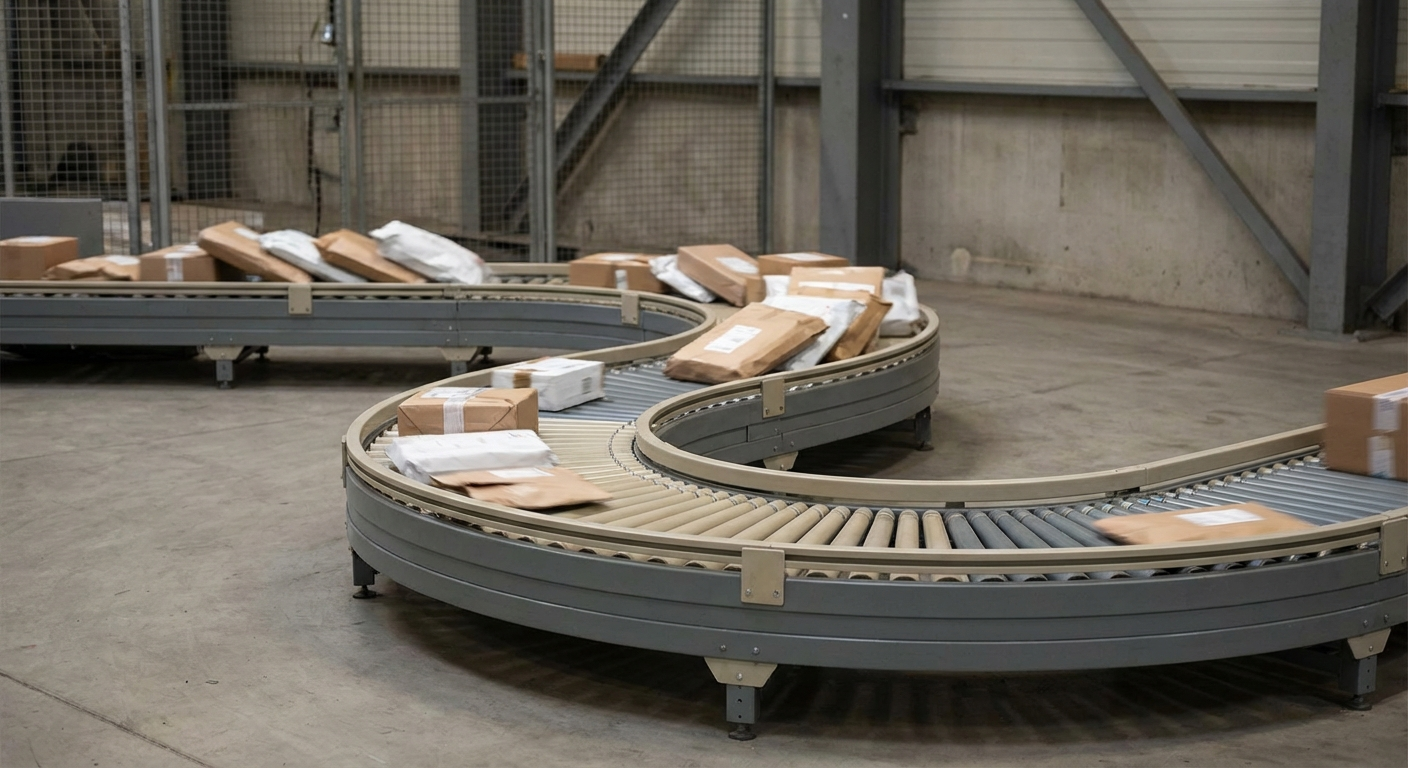
Step-by-Step Fulfillment Throughput Workflow
Fulfillment throughput is not about rushing or rushing blindly—it’s about deliberate, disciplined processes to remove waste and variation while maintaining accuracy. Below is a typical throughput-driven operational cadence that All Points follows daily to balance speed and quality:
1. Receive and Dock-to-Stock
- Pre-advise shipments via advanced shipping notices (ASNs) and schedule carrier appointments for dock readiness
- Count and inspect incoming goods on the dock, scanning each carton or pallet into the warehouse management system (WMS)
- Apply slotting discipline by placing high-velocity SKUs into prime “golden zone” locations for faster picking
- Quarantine and escalate discrepancies immediately to avoid downstream fulfillment impacts
- Target dock-to-stock times of two hours or less on standard receipts to support same-day sellability
2. Batch Planning (Multiple Times Daily)
- Organize orders into waves or batches by like order profiles (e.g., single-unit direct-to-consumer (DTC), 2–4 line multi-SKU, wholesale POs)
- Typical batch sizes reach 500+ orders per wave for high-volume single-unit picks; smaller batches used for complex or bulkier orders
- Align wave cutoffs strategically with carrier pickup times (Priority, Ground, Same-Day) and with any upstream printing or kitting dependencies
3. Slotting and Replenishment
- Employ ABC velocity-based slotting rules so A-movers sit closest to packing stations for quick grabs
- Use dedicated forward pick bins that receive continuous replenishment from upstream bulk storage
- Perform replenishment between waves—not mid-wave—to avoid interrupting picker flow
4. Optimized Pick Paths
- Implement zone picking in larger warehouses where appropriate to reduce walking distances
- Use tote- or cart-based multi-order picks to increase picks per labor hour without compromising accuracy
- Enforce scan-at-every-pick policies to catch errors in real-time; exceptions (e.g., blind picks) are logged by the picker for quick correction
5. Kitting and Value-Add (If Applicable)
- Schedule pre-kitting runs for repeatable product assemblies rather than crafting kits last minute under pressure
- Integrate brand inserts or printed collateral logically based on SKU or promotion logic rather than tribal knowledge
- Use strict standard operating procedures (SOPs) to ensure brand consistency and speed
- Learn more: https://www.allpointsatl.com/services/custom-kitting-product-assembly
6. Pack, Quality Control (QC), and Cartonization
- Configure packing stations by order profile; for example, design “fast lanes” for single-unit DTC orders and multi-line packing stations for bulk orders
- Scan-to-verify packed contents and conduct weight checks on high-risk or irregular SKUs to catch discrepancies before sealing
- Use auto-rate shopping software and cartonization tools to minimize dimensional weight charges
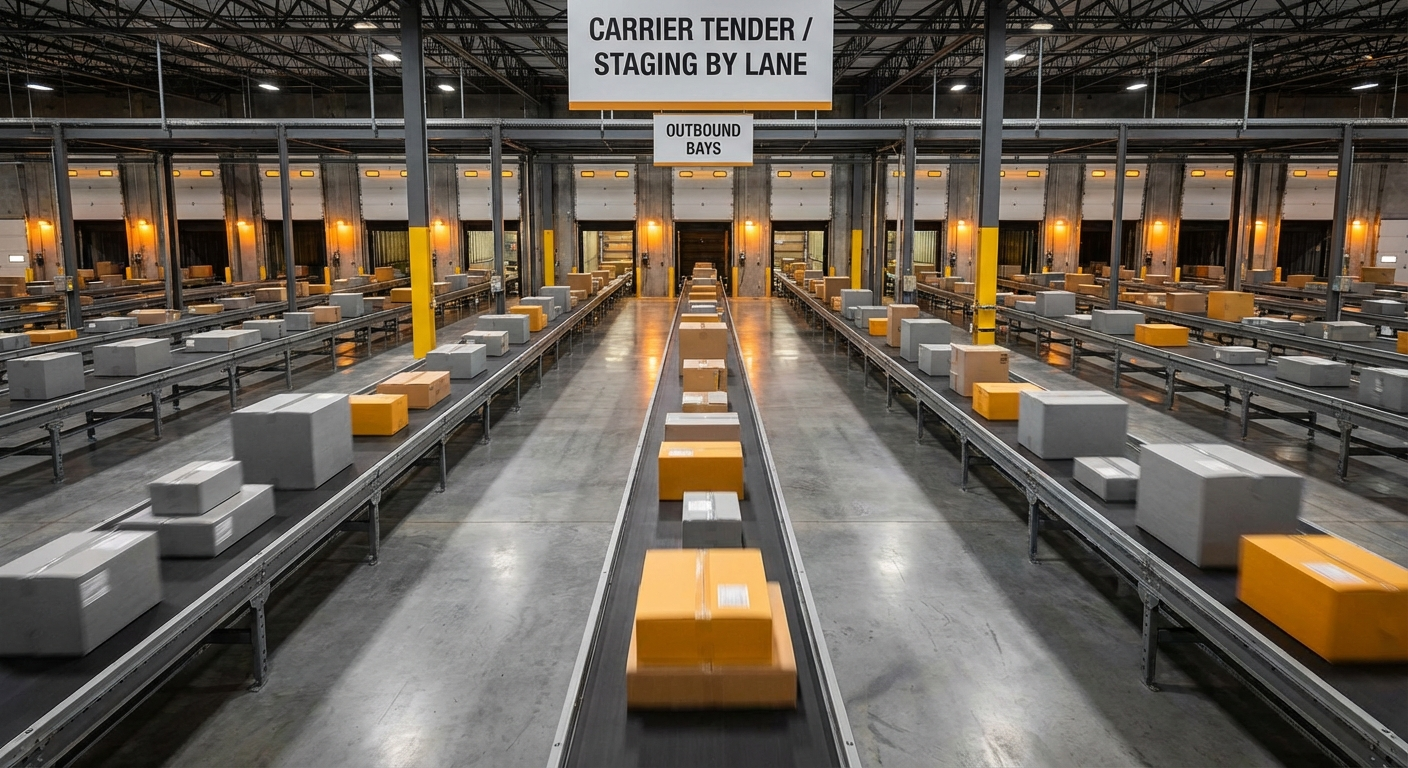
7. Final Staging and Tender
- Sort packed orders by carrier and service level for efficient staging by pickup window
- Run early truck pulls during volume surges to keep dock traffic flowing
- Update manifests and issue exception reports back to the WMS in real-time
8. Feedback Loop (Every Shift)
- Review packing errors, missed picks, slow zones, and exception types promptly
- Adjust slotting, batch sizes, or labor allocation for upcoming waves within the same day
The philosophy is clear: Do not attack volume spikes by adding labor blindly. Instead, enforce stringent batching, slotting, and cadence disciplines that enhance throughput while protecting accuracy.
For more on value-added activities like print and kitting, visit: https://www.allpointsatl.com/services/custom-kitting-product-assembly

Fulfillment Throughput KPIs and SLAs
Throughput success depends on managing several critical performance indicators (KPIs) and service level agreements (SLAs). All Points benchmarks these against industry standards, aiming to exceed where possible.
KPI Name: Pick Accuracy
Description: Percentage of items picked correctly at first pass
Typical Industry Range: 98–99.5%
All Points SLA Goal: ≥ 99.5%
Why It Matters: Minimizes customer returns and rework, protects margin
KPI Name: Order Cycle Time
Description: Time from order receipt to shipment (hours)
Typical Industry Range: 12–24 hours
All Points SLA Goal: ≤ 12 hours
Why It Matters: Enables fast shipping and keeps carrier commitments
KPI Name: Dock-to-Stock Time
Description: Time inventory spends on receiving dock before being available in WMS
Typical Industry Range: 2–6 hours
All Points SLA Goal: ≤ 2 hours
Why It Matters: Improves inventory accuracy and availability, avoids stockouts
KPI Name: On-Time Ship Rate
Description: Percentage of orders shipped by promised cutoff
Typical Industry Range: 95–99%
All Points SLA Goal: ≥ 98%
Why It Matters: Directly impacts customer satisfaction and retention
KPI Name: Throughput Density
Description: Number of lines picked per labor hour, by order profile
Typical Industry Range: Varies
All Points SLA Goal: Monitored closely
Why It Matters: Benchmarked to optimize labor, reduce touchpoints
Increasing throughput typically reduces order cycle time, but pushing speed without strong accuracy controls will increase errors. Hence, real-time scanning, QC, and operator accountability are essential guards against throughput trade-offs.
Additional benchmark resource: https://www.ascm.org/ascm-insights/8-kpis-for-an-efficient-warehouse/

Pricing Drivers in Fulfillment Throughput
Fulfillment costs are driven by the complexity and efficiency of your throughput. Factors influencing costs include:
Cost Drivers Increasing Fulfillment Expenses:
- SKU complexity and proliferation forcing longer pick routes and increased risk of error
- Volume spikes that require overtime or temporary labor
- Multi-line orders increasing picks and scans per shipment
- Custom kitting, printing, or value-added services that introduce additional steps and labor
- Poor dock-to-stock discipline raising holding costs and tying up working capital
- Out-of-region fulfillment causing higher transit times, dimensional weight surcharges, and premium shipping costs
Cost Drivers Lowering Fulfillment Expenses:
- Larger, consistent batching of contiguous SKU profiles reducing touches per unit
- Smart slotting strategies that position high-velocity SKUs closest to packing stations
- Strict adherence to dock-to-stock targets that accelerate inventory turnover and reduce overstock risk
- Use of Atlanta-based facilities that minimize regional shipping fees and transit times (see next section)
All Points balances cost and quality execution carefully, avoiding false economies that cause downstream rework, missed cutoffs, or dissatisfied customers.
Related pages: https://www.allpointsatl.com/services/warehousing-distribution and https://www.allpointsatl.com/services/custom-kitting-product-assembly
Further reading: https://www.shipfusion.com/blog/high-volume-order-fulfillment
Risks and How to Mitigate Them
Several common issues can undermine fulfillment throughput. Here are key risks and how All Points mitigates them:
Labor shortages and missed cutoffs
Risk: Scarce trained labor leads to bottlenecks near shift end, causing missed carrier pickups.
Mitigation: Cross-train workers to flex between receiving, picking, and packing; implement scheduled batch waves that align labor needs with workload peaks; prevent last-minute labor “firefighting” with consistent SOPs.
SKU sprawl compounding pick complexity
Risk: A “forest of SKUs” without slotting discipline increases picker travel and errors.
Mitigation: Ongoing SKU rationalization during onboarding; strict ABC slotting audits; removal or consolidation of redundant SKUs.
Weak Warehouse Management System (WMS) Discipline
Risk: Relying on memory or manual counts leads to inventory inaccuracies and repeated picks.
Mitigation: Enforce scan-at-every-move policies; cycle count by velocity tiers; escalate inventory discrepancies immediately.
Over-customization Without Scalable SOPs
Risk: Ad hoc customization instructions generate confusion and errors, especially during volume spikes.
Mitigation: Tie kitting and inserts to SKU or promo-based flags; pre-assemble kits on a schedule; maintain clear SOPs updated before demand changes.
Misalignment Between Pick Cadence and Carrier Cutoffs
Risk: Packing orders too late causes missed truck cutoffs, delayed shipments, and unhappy customers.
Mitigation: Wave planning backward from carrier pickup windows; early truck pulls during surges; staged outbound loads sorted by carrier and service.
For operators running fulfillment in house, keeping throughput stable demands:
- Measuring lines picked per labor hour by order profile and fixing slotting or batch logic proactively
- Re-slotting top SKUs monthly to keep pace with dynamic demand shifts
- Locking pack-outs per wave to prevent mid-shift chaos
- Treating dock-to-stock as a revenue driver, not just administrative “busy work”
Additional best practices: https://pattersonpope.com/wp-content/uploads/2022/11/Guide-Order-Fulfillment.pdf
The Atlanta Advantage for Fulfillment Throughput
Location matters when managing throughput. Here’s why All Points’ Atlanta network provides a distinct geographic and operational edge:
- 2-day ground reach to approximately 80% of U.S. consumers: Atlanta sits at a logistics crossroads covering most East Coast, Southeast, and Midwest consumers in two-day ground transit. This reduces reliance on costly air shipments and zone surcharges common in ecommerce.
- Proximity to major parcel hubs and highways: Close access to UPS, FedEx, USPS, and regional carriers supports later and more flexible pickup windows, critical for meeting same-day shipping promises.
- Access to suppliers and incoming freight via major air and sea ports: The Hartsfield-Jackson Atlanta International Airport cargo hub and Savannah port provide inbound speed and supply chain resilience.
- Integrated kitting, printing, and fulfillment under one roof: Co-locating value-added services reduces handoffs and errors, compressing total lead times and boosting throughput without adding headcount.
Quantitatively, this network can decrease transit time by one day for many customers while enabling same-day ship cutoffs, accelerating inventory turnover and reducing overall costs.
If comparing fulfillment partners, focus on dock-to-stock times, on-time ship rates, and pick accuracy above raw square footage claims. More details: https://www.allpointsatl.com/services/e-commerce-order-fulfillment
Supplementary reading: https://www.shipbob.com/blog/warehouse-throughput/ and https://www.veryableops.com/blog/throughput-what-it-is-and-why-it-matters-in-production
What You Get with All Points
Partnering with All Points means leveraging operator-level SOPs and integrated services built to maximize throughput:
- Custom kitting and assembly workflows that align seamlessly with pick and pack operations, eliminating unnecessary handling or bottlenecks: https://www.allpointsatl.com/services/custom-kitting-product-assembly
- Integrated printing for marketing materials and packaging keeps your branding consistent and turnaround fast without offsite delays: https://www.allpointsatl.com/services/printing-marketing-materials
- E-commerce, B2B, and subscription fulfillment processes share the same scan discipline and quality control rigor, ensuring greater accuracy at scale: https://www.allpointsatl.com/services/e-commerce-order-fulfillment
- Robust warehousing and distribution backbone supports throughput with forward pick faces, real-time staging, and cross-docking as required: https://www.allpointsatl.com/services/warehousing-distribution
- Transparent SLA and KPI reporting with partnership-minded consultation on SKU rationalization, pick path design, batch structuring, and seasonality planning.
Our 25+ years managing throughput at scale across clients ensures your brand’s orders flow quickly, accurately, and consistently, helping you win repeat customers and reduce operational surprises.
Practical Throughput vs. Volume Examples
10,000-Order Drop with 85% Single-Unit Orders
- Poor throughput execution: 5 waves, poorly slotted SKUs, 2.5 scans per order, 94% on-time ship rate, resulting in costly re-picks and delays.
- Optimized throughput: 8 waves of ~1,250 orders, well-slotted A SKUs, streamlined cartonization with 1.2 scans per order, achieving 99% on-time shipments and reducing labor costs drastically.
Subscription Build Week (30 SKUs, 3 Variants)
- Inefficient model: On-demand daily kitting leads to pack line starvation and carrier waits.
- Best practice: Two scheduled pre-kit runs staged by variant, allowing pickers to simply pull finished kits, resulting in 40% lower cycle times and smoother shipping.
Wholesale PO with 400 Lines
- Unoptimized: Pick orders sequentially with substantial backtracking, increasing time and errors.
- Optimized: Batch-label picking by aisle cluster, consolidated QC stations, near-zero pick errors, and better labor coverage.
Frequently Asked Questions
1. What is fulfillment throughput and why does it matter?
Fulfillment throughput measures how quickly, accurately, and consistently your operation picks, packs, and ships orders. Effective throughput directly affects costs, cutoff compliance, and customer experience. High order volumes with weak throughput erode margins and brand loyalty.
2. How does All Points measure and improve order cycle time?
We organize orders into waves aligned with carrier cutoffs, slot SKUs by velocity, and implement scanning at every step. Cycle times are monitored hourly, with adjustments to batch size, slotting, or staffing made dynamically to maintain target service levels.
3. What pricing factors affect fulfillment throughput costs?
Key factors include SKU count and complexity, number of lines per order, kitting and customization steps, packaging complexity, and batch consistency. Efficient dock-to-stock management reduces overstock and split shipments, lowering overall costs.
4. How quickly can Atlanta-based fulfillment reach customers?
Approximately 80% of U.S. consumers are reachable within two-day ground transit from Atlanta, dramatically reducing shipping fees related to dimensional weight and zone surcharges, while supporting same-day ship commitments.
5. What SLAs should I expect for pick accuracy and on-time shipping?
Typical target SLAs include pick accuracy at or above 99.5%, order cycle time under 12 hours (aligned with carrier cutoffs), dock-to-stock times at or below 2 hours, and on-time ship rates exceeding 98%. SLAs are customized per client and season.
Get Started
Get a kitting quote: https://www.allpointsatl.com/services/custom-kitting-product-assembly
Download the 3PL Guide
Based in Atlanta since 1995 — Call us at [Phone] or email [Email]
Meta Information
Meta title: Why fulfillment throughput matters more than order volume | All Points Atlanta 3PL
Meta description: Throughput—not order volume—drives cost, speed, and accuracy. See how All Points’ Atlanta 3PL improves pick/pack speed, dock-to-stock, and on-time ship rates with operator-grade SOPs.
Disclaimer
All Points is an Atlanta-based, family-owned 3PL founded in 1995. We deliver end-to-end logistics—from custom kitting and ecommerce fulfillment to warehousing, distribution, and printing—so your brand ships accurately, on time, and at scale. Results vary by client and season. This article is for informational purposes and does not constitute a service guarantee.
Additional Resources & References
Throughput: What It Is and Why It Matters in Production — https://www.veryableops.com/blog/throughput-what-it-is-and-why-it-matters-in-production
Warehouse Throughput — https://www.shipbob.com/blog/warehouse-throughput/
Guide to Order Fulfillment Processes — https://pattersonpope.com/wp-content/uploads/2022/11/Guide-Order-Fulfillment.pdf
High Volume Order Fulfillment — https://www.shipfusion.com/blog/high-volume-order-fulfillment
8 KPIs for an Efficient Warehouse — https://www.ascm.org/ascm-insights/8-kpis-for-an-efficient-warehouse/
If you are evaluating or scaling your fulfillment partner, keep throughput—not just order volume—top of mind. The right throughput-focused execution will reduce your total landed costs, improve margins, and delight your customers. At All Points, we deliver operator-level throughput expertise with the Atlanta advantage built in.
Conclusion
Fulfillment throughput—not just order volume—is key to fast, accurate, and cost-effective 3PL operations. Learn how All Points’ disciplined processes, smart batching, and Atlanta’s strategic location boost efficiency, cut errors, and drive on-time shipments, helping your brand scale smoothly and delight customers.

.webp)
.webp)
.webp)
.webp)


