


Pallet Storage Costs: What DTC Brands Need to Know
Managing pallet storage costs is a critical piece of 3PL selection for DTC brands and retail marketers scaling fulfillment. Understanding how pallet storage is priced, when it makes sense for your inventory profile, and how the right partner can offer operational clarity without surprises can make a significant difference to your bottom line and customer experience. This guide breaks down key factors influencing pallet storage costs, operational workflows, metrics to track, risks, and the strategic advantage of partnering with an Atlanta-based provider like All Points.
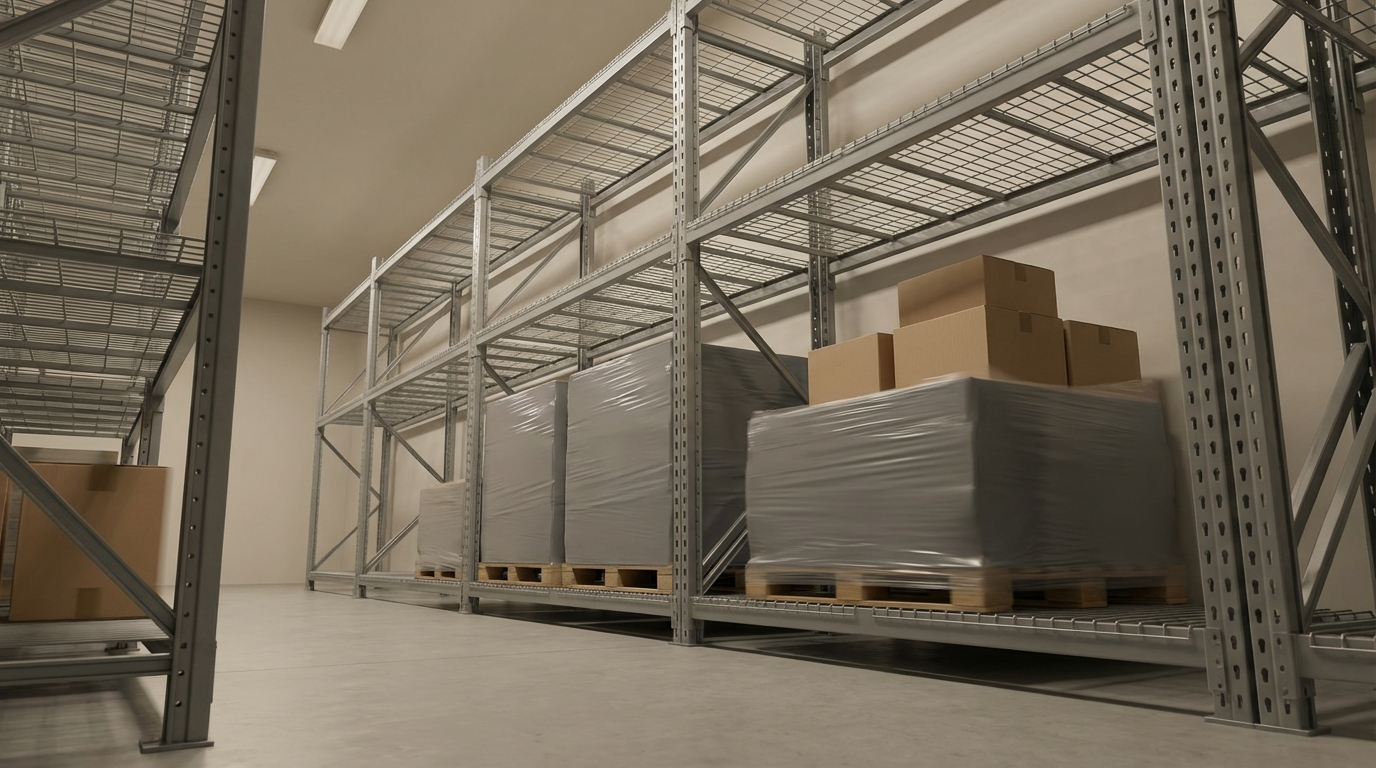
What Are Pallet Storage Costs and When to Use Pallet Storage?
Pallet storage costs refer to the fees charged by 3PL warehouses for renting inventory space on a pallet-by-pallet basis. Unlike other pricing models (per square foot, cubic foot, or shelving slot fees), pallet storage pricing is centered around your inventory’s physical footprint on warehouse pallets.
A pallet position is typically defined as a standard 48" × 40" footprint with a height cap of around 60"–72". If your pallets exceed these dimensions, additional charges often apply. For more irregularly shaped or unusually sized products, alternate pricing based on volume or shelving slots may be more appropriate.
Common Pricing Models for Warehousing
• Per pallet position: A fixed fee charged daily or monthly for each pallet you store. Ideal for case-packed goods or large bulk shipments.
• Per cubic foot: Billed based on measured volume. Useful for odd-shaped items or mixed SKU pallets but requires disciplined, precise measurements.
• Per shelf/bin: Based on each pick-slot or bin location, often used for small or individual units rather than pallets.
• Per square foot: Frequently applied for dedicated storage spaces or long-term projects where density is managed directly by the shipper.
When Pallet Storage Makes Sense
• Bulk inventory inflows: Pallet storage accommodates large, consolidated shipments like containers or truckloads.
• Slower-moving SKUs: Seasonal inventory, reserve stock, or lower-velocity SKUs are good candidates for palletized reserve storage.
• Large-format or heavy products: Items such as furniture, appliances, or equipment are often more efficiently stored on pallets.
• Kitting components: Pallets staged by SKU lot or batch provide efficient feeding into assembly or packaging workflows.
• Retail and wholesale pallet-out programs: Consistent case-level fulfillment benefits from palletized stock.
Factors Driving Pallet Storage Pricing
• Product size and cubic utilization: Pallet height, overhang, and stackability impact how many pallet positions your shipment occupies.
• Climate control and regulated storage: Food, cosmetics, or hazardous materials require specialized spaces commanding higher fees.
• Warehouse location: Urban, coastal, and port-adjacent markets often have higher rent and labor costs impacting rates.
• Frequency and labor intensity: The number of pallet moves, replenishment actions, and order picks increase handling charges.
Understanding these nuances upfront helps prevent unexpected cost overruns later on. Transparent conversations around your SKU profiles, pallet configurations, and fulfillment velocity are critical before committing to a 3PL partner.

Pallet Storage Workflow: Step-by-Step SOP
Efficient pallet storage depends on disciplined warehouse workflows to maximize space and accuracy while speeding fulfillment. Below is a typical Standard Operating Procedure (SOP) that integrates well with All Points’ warehouse management systems.
1. Pre-Receipt Planning
• Receive advance shipment notices (ASNs) detailing SKUs, lot/expiration data, case count, pallet quantity, and dimensions including heights.
• Confirm appropriate storage class (ambient, climate-controlled, or regulated) and identify compliance requirements.
2. Receiving
• Schedule inbound dock appointments to ensure smooth unloading.
• Unload pallets and conduct detailed inspections for damage or discrepancy.
• Verify palletization standards (correct footprint, height, stackability).
• Generate and affix SKU and lot barcode labels as needed to support traceability.
3. Putaway
• Assign pallet locations based on SKU velocity and storage class: bulk reserve racks or floor stack for slower movers; forward pick zones or staging near kitting for high-turn SKUs.
• Scan pallets into Warehouse Management System (WMS) at assigned locations to maintain real-time visibility.
• Capture photos for exception management.
4. Inventory Control
• Conduct prioritized cycle counts using ABC classification to validate inventory accuracy.
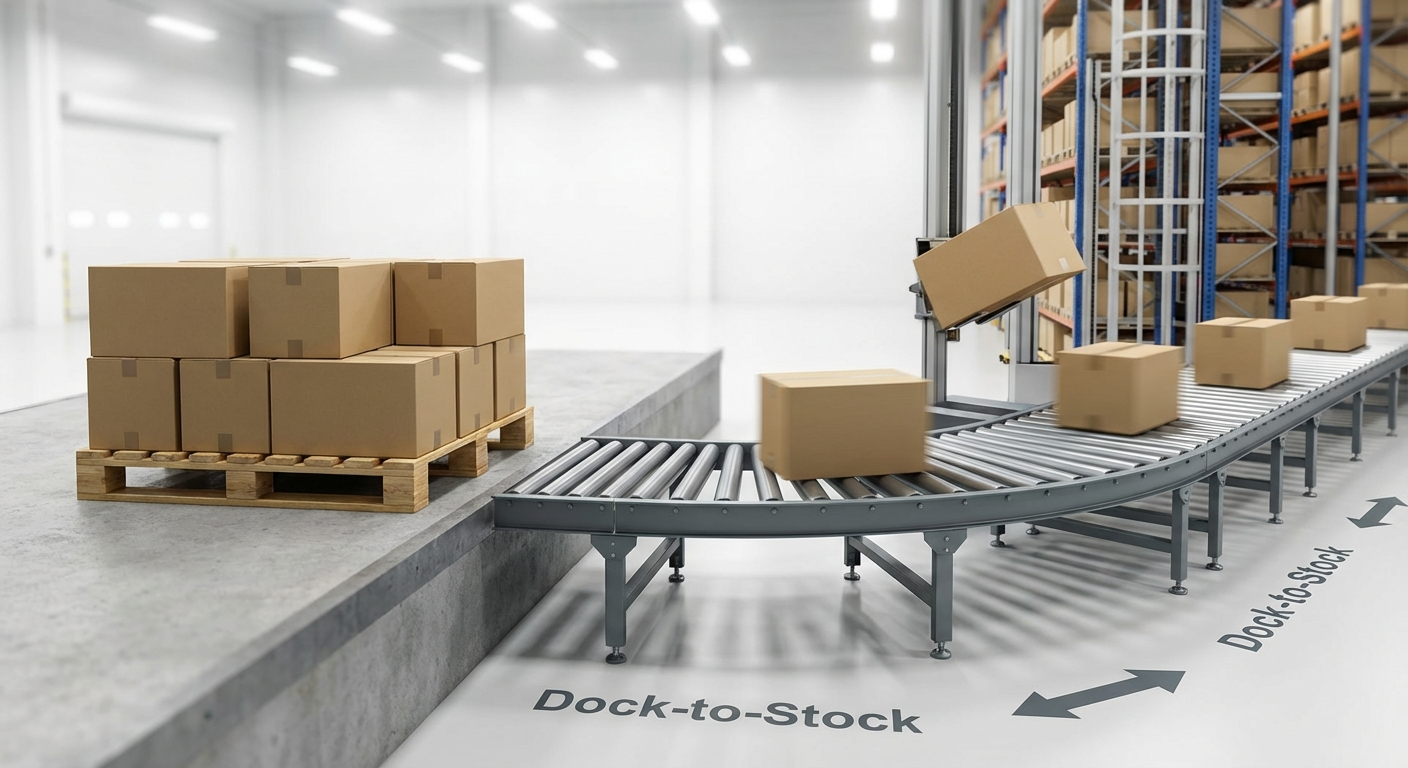
• Enforce dock-to-stock SLA targets (e.g., ≤24 hours) to ensure product availability.
• Monitor inventory aging and velocity to identify slow movers and obsolete stock.
5. Replenishment and Picking
• Automate replenishment triggers moving stock from reserve to forward pick zones based on min/max thresholds.
• Execute pallet pulls for wholesale orders, cross-dock operations, or kitting feeds.
• Record all movements into the WMS to maintain location and quantity accuracy.
6. Kitting Integration (If Applicable)
• Stage pallets adjacent to kitting cells for easy component picking.
• Use work order backflushing or consumption tracking linked to lot numbers to ensure traceability and yield accuracy.
7. Regular Audits and Reporting
• Conduct weekly location audits to resolve discrepancies in high-variance areas.
• Review monthly dock-to-stock and inventory accuracy scorecards to ensure SLA adherence.
Above all, disciplined scanning, labeling, and accurate record-keeping via the WMS form the backbone of error-free pallet storage.
Pallet Storage KPIs and SLAs to Watch
Tracking key performance indicators (KPIs) and service-level agreements (SLAs) around pallet storage enables you to hold your 3PL accountable and optimize your operations continuously. Below is a KPI comparison with industry benchmarks and All Points’ targets.
KPI: Inventory accuracy
Industry standard: 99.5%
All Points target: 99.9%
Why it matters: Prevents costly mispicks, stockouts, and write-offs.
KPI: Dock-to-stock time
Industry standard: 24–48 hours
All Points target: ≤24 hours
Why it matters: Speeds availability for timely order fulfillment.
KPI: On-time ship rate
Industry standard: 95–98%
All Points target: 98%+
Why it matters: Maintains customer satisfaction and retailer SLAs.
KPI: Order cycle time
Industry standard: 1–3 business days average
All Points target: 1–2 business days
Why it matters: Enables brand agility in meeting demand variability.
By holding your 3PL to these metrics, you reduce risk, improve inventory turns, and lower overall supply chain costs.

What Drives Pallet Storage Pricing Up or Down?
Several practical factors influence pallet storage costs, making it essential to understand how your inventory’s characteristics and operational needs impact pricing.
1. Pallet Dimensions and Cube Utilization Efficiency
A standard pallet covers a 48" × 40" footprint and may have a 60"–72" height cap. Pallets that exceed this standard footprint or height often get billed as 1.5–2 pallet positions. Maximizing stackability improves density and lowers unit cost, while non-stackable pallets increase costs significantly.
2. Billing Method: Snapshot vs. Daily Average vs. Pro-Rated
• Snapshot billing charges on a fixed day (e.g., 1st of the month), potentially overcharging during inventory surges.
• Daily average billing smooths spikes by averaging daily pallet counts over the billing period for fairer costs.
• Pro-rated billing aligns charges precisely to days stored but requires sophisticated WMS and billing capabilities.
3. Frequency of Access and Handling Labor
Pallets stored long-term with minimal moves cost less. Pallets requiring frequent replenishment, pallet picks, or breaks for kitting incur additional labor fees. Each-pick off pallets or frequent pallet reworks also drive labor intensity and rates upward.
4. Compliance Requirements and Environmental Controls
Climate-controlled or temperature-sensitive storage (refrigeration, humidity control), food-grade, cosmetic-grade, and hazardous materials handling require specialized facilities with premium charges reflecting higher operational complexity and risk.
5. Market Supply, Demand, and Seasonality
Coastal and port-adjacent warehouses usually have higher real estate and labor costs, which translate into higher pallet storage rates. Q3 and Q4 periods often see rate increases due to capacity constraints, while stable inland hubs like Atlanta maintain more predictable pricing year-round.
6. Integration with Kitting and Other Value-Added Services
Pallets feeding active kitting cells or special packaging projects need closer staging, increasing labor but often reducing total fulfillment cost per order by shortening pick paths and improving cycle time.
Realistic Benchmark Ranges (For Context)
• Ambient pallet storage: $12–$25 per pallet per month in balanced markets such as Atlanta; higher on coastal metros.
• Climate-controlled storage: $20–$40+ per pallet per month depending on strictness of controls.
• Pallet handling fees: $5–$20 per pallet move depending on complexity.
A Quick Math Example on Billing Method Impacts
Suppose you hold: Days 1–10: 140 pallets; Days 11–20: 100 pallets; Days 21–30: 80 pallets.
Snapshot billing on day 1 charges for 140 pallets for the entire month: 140 pallets × $18/pallet × 1 month = $2,520.
Daily average billing calculates: ((10×140 + 10×100 + 10×80) ÷ 30) = 106.7 pallets average; 106.7 pallets × $18/pallet = $1,920.
This shows a $600 difference for the same inventory, emphasizing why billing method transparency is crucial.

Common Risks and How to Mitigate Them
Identifying and proactively managing common risks prevents cost overruns and service breakdowns.
• Overstocking leading to excessive storage fees
Mitigation: Conduct frequent SKU rationalization and aged inventory reviews. Implement discount, kitting, or disposal strategies for slow movers.
• Poor pallet organization creating picking errors and height penalties
Mitigation: Enforce strict SOPs for palletization: one SKU/lot per pallet, capped height, and clear labeling.
• Unexpected climate or compliance requirements increasing costs midstream
Mitigation: Profile all SKUs for storage class before inbound. Assign and communicate storage locations matching SKU needs.
• Inaccurate or delayed WMS data causing dock-to-stock lags and stock location errors
Mitigation: Use real-time inventory systems with disciplined cycle counts and audit schedules.
• Billing surprises from snapshot policies or hidden surcharges
Mitigation: Negotiate daily average or pro-rated billing. Understand aging surcharge policies (e.g., after 120+ storage days).
The Atlanta Advantage: Why Location Matters for Pallet Storage Costs
Atlanta’s logistics ecosystem offers distinct cost and operational advantages that directly impact your pallet storage expenses.
• Strategic Distribution Hub: Atlanta offers 2-day ground reach to approximately 80% of the U.S. population. This reduces inbound freight costs and outbound parcel transit times compared to coastal metro hubs.
• Lower Cost Base: Warehouse rents and labor costs in Atlanta are typically below coastal markets, yielding more stable, predictable pallet storage pricing.
• Robust Infrastructure: Efficient intermodal rail facilities, highways, and parcel hubs streamline both inbound container/pallet moves and outbound parcel/LTL shipments.
• Centralized Operations: Many warehousing providers, including All Points, integrate kitting, printing, and fulfillment under one roof—allowing pallets to be staged adjacent to work cells, reducing shuttling and manual touches.
• Total Logistics Cost Reduction: The combined effect is lower total landed cost, not just cheaper pallet rent, supporting better profitability for your brand.
How Pallet Storage Supports Faster Fulfillment
Effective pallet storage is not just about cost; it directly impacts turnaround time and customer satisfaction.
• Reserve-to-forward pick replenishment keeps pick paths short and maintains inventory availability to meet fulfillment cutoff times reliably.
• Pallets staged near kitting and packout cells minimize travel time and manual labor, accelerating order build.
• Clear slotting of high-velocity SKUs reduces replenishment frequency and picking errors, improving productivity.
Integrated warehouse and fulfillment solutions help maximize these advantages: https://www.allpointsatl.com/services/e-commerce-order-fulfillment
What You Get with All Points
• Operator-grade pallet storage: SOP-backed accuracy and predictable SLAs with transparent pallet storage pricing tied to your product dimensions, height, climate, and handling needs. More: https://www.allpointsatl.com/services/warehousing-distribution
• Custom kitting and printing: Pallet stock feeds into custom assembly workflows, managed tightly to avoid chaos and errors. More: https://www.allpointsatl.com/services/custom-kitting-product-assembly
• Responsive family-owned service: Since 1995, our Atlanta-based team has focused on “whatever it takes” service with transparent billing.
• Integrated ecommerce fulfillment: We optimize pick paths and reduce pallet access costs to speed order cycle time. More: https://www.allpointsatl.com/services/e-commerce-order-fulfillment
Questions to Ask Any 3PL About Pallet Storage Costs
When evaluating pallet storage partners, these questions ensure clarity and help you avoid hidden costs.
• What exactly counts as one pallet position in terms of footprint and maximum height? At what threshold do over-height charges apply?
• How do you bill storage: snapshot billing, daily average, or pro-rated per day? Which method do you recommend and why?
• Are pallet moves (inbound/outbound) included in storage fees or billed separately?
• How do you manage stackable versus non-stackable pallets on billing and storage?
• Do you apply surcharges for aged inventory? If so, at what storage duration thresholds?
• What is your dock-to-stock SLA, and how do you measure compliance?
• Can you stage pallets near kitting or value-added work areas? Are there additional fees?
• How do you track lot and expiration data? What is your cycle count frequency?
• What inventory accuracy level do you maintain, and how often do you share audit results?
• How do operations and rates change during peak seasons like Q4?
Insightful answers here help you align expectations and budget appropriately.
FAQ
1. How are pallet storage costs usually calculated?
Most 3PLs charge by pallet position per day or month, with tiered rates for pallet height and footprint. Over-height or heavy pallets commonly incur 1.5–2× standard position fees. Some providers bill by cubic foot if their WMS supports detailed volume measurement.
2. Can All Points handle temperature-controlled pallet storage?
Yes. We offer climate-controlled options for sensitive product storage with transparent pricing linked to specific facility and handling requirements.
3. What’s a typical dock-to-stock SLA for pallet receipt?
Industry standard is 24 to 48 hours. All Points targets 24 hours or less, ensuring rapid availability for fulfillment and minimizing delays.
4. Does pallet storage impact order cycle time?
Absolutely. Effective reserve-to-forward pick replenishment, optimized slotting, and close integration with fulfillment workflows reduce cycle time, enabling faster delivery and improved flexibility.
5. Why choose an Atlanta-based 3PL for pallet storage?
Atlanta’s central location yields shorter transit times and lower freight costs to most U.S. customers, alongside stable pricing and operational advantages from consolidated kitting and fulfillment services.
Ready to See If All Points’ Pallet Storage Fits Your Brand?
Get a kitting quote and start a conversation with our Atlanta 3PL experts. We will map your pallet storage needs precisely and provide SLA-backed pricing you can budget against with confidence.
Contact: https://www.allpointsatl.com/contact
Download the 3PL Guide for deeper insight into logistics best practices, pricing nuances, and operational tips:
https://www.allpointsatl.com/resources/3pl-guide-for-e-commerce-and-amazon-sellers
About All Points
All Points is a family-owned Atlanta-based 3PL founded in 1995, delivering end-to-end logistics solutions—from custom kitting and ecommerce fulfillment to warehousing, distribution, and printing. Our focus is accuracy, reliability, and scaling your brand with predictable, transparent storage and fulfillment costs.
Disclaimer: This article is for informational purposes only and does not constitute a binding offer or contract. Pricing ranges mentioned are illustrative and subject to client-specific circumstances and market fluctuations.
Additional Resources
For further reading on factors affecting warehousing and fulfillment costs, consider these industry links:
• Fulfillment Center Pricing: How Is It Determined? (Meyer Inc.) https://www.meyerinc.com/resource-center/fulfillment-center-pricing-how-is-it-determined/
• Fulfillment Costs Explained (Kase) https://kase.com/blog/fulfillment-costs/
• Factors That Affect Warehousing Costs (ITS4logistics) https://www.its4logistics.com/blog/factors-that-affect-warehousing-costs
• Fulfillment Costs and Pricing Breakdown (The Fulfillment Advisor) https://www.thefulfillmentadvisor.com/fulfillment-costs-and-fulfillment-pricing-explained/
• How Warehousing Fulfillment Fees Work (Printful) https://help.printful.com/hc/en-us/articles/360014067379-How-do-the-Warehousing-Fulfillment-fees-work
Harness this knowledge to choose a 3PL partner aligned with your brand’s growth and operational needs, avoiding pitfalls and unlocking fulfillment efficiency.
Conclusion
Managing pallet storage costs is vital for DTC brands scaling fulfillment. This guide covers pricing models, cost drivers, efficient workflows, and KPIs to optimize storage expenses. Learn how partnering with Atlanta-based All Points ensures transparency, operational clarity, and faster order cycles to boost your bottom line.
.webp)
.webp)
.webp)
.webp)
.webp)


