


Kitting: What It Is, Costs, Workflows & the Atlanta Advantage
Lead
Kitting combines multiple products or materials into a single, ready-to-ship unit, a vital service for DTC brands and retail marketers looking for reliable fulfillment partners. This article explains how kitting works, key performance metrics, pricing drivers, and what to expect from an Atlanta-based 3PL like All Points.

1. What Is Kitting and When Should You Use It?
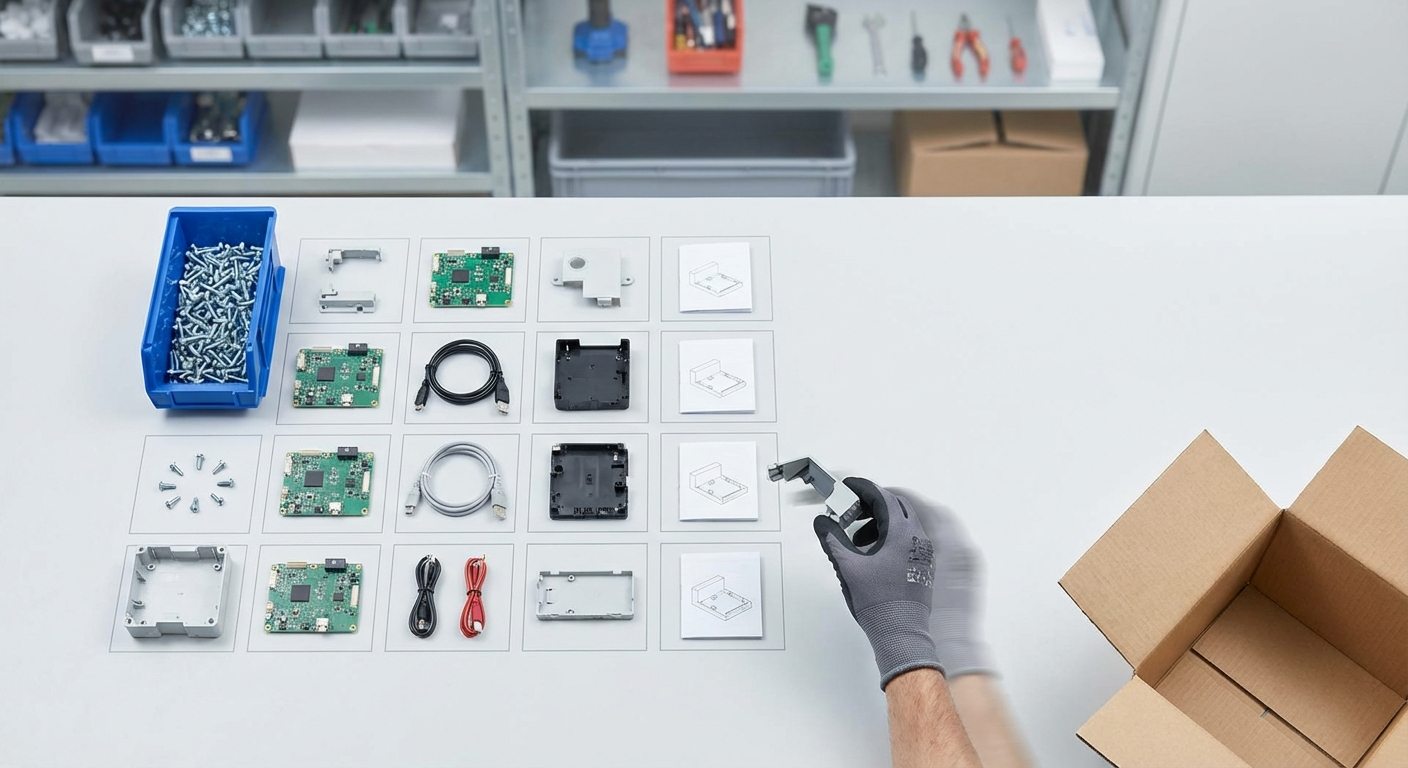
Kitting is the process of grouping individual SKUs or printed materials into one custom package or assembly, designed to streamline shipping and enhance customer experience. Essentially, it involves collecting multiple items—varying from products to marketing inserts—and bundling them into a single ready-to-ship kit. This service is critical for many direct-to-consumer (DTC) founders, retail brand marketers, and operations leads who want to simplify order fulfillment without compromising accuracy.
Common use cases for kitting include subscription boxes, promotional campaigns, gift packs, and bundled product offerings. For instance, a brand may combine several skincare products with informational brochures and gift packaging to create a cohesive brand experience. Similarly, marketers often rely on kitting to prepare seasonal promotions or limited-edition bundles that require special packaging and inserts.
The importance of kitting cannot be overstated. By delivering products already grouped, brands reduce the steps customers take to unpack and organize their orders, leading to faster, more satisfying unboxing moments. Additionally, kitting helps maintain branding consistency by ensuring that all components—including printed collateral and packaging—convey the right message and look cohesive. It also streamlines shipping processes by consolidating multiple SKUs into a single shipment, reducing handling complexity and shipping costs.

2. Step-by-Step Kitting Workflow
Kitting workflows break down into clear, operator-focused Standard Operating Procedures (SOPs) that warehouse and fulfillment staff follow to guarantee accuracy and efficiency:
- Receive Individual SKUs and Printed Assets Separately: The process begins when the warehouse accepts components arriving from suppliers or in-house printing operations. These items include individual products, packaging, and marketing materials.
- Inspect Incoming Inventory for Damage or Discrepancies: Dock-to-stock accuracy is critical. Warehouse associates verify that quantities and quality match paperwork or advanced shipment notices (ASNs). Any damage or mismatches are logged immediately to prevent errors downstream.
- Assemble Components Based on Predefined Work Orders or Pick & Pack Lists: Using detailed bills of materials (BOMs), operators gather components for each kit. Assembly follows standardized instructions to ensure each kit contains the correct combination of parts. This step often includes bundling SKUs, inserting printed collateral, and packaging items carefully.
- Quality Check for Missing or Wrong Items and Verify Pack Counts: To prevent costly errors, QC personnel or operators perform a double-check—verifying each kit against its work order to confirm nothing is missing or incorrectly included.
- Seal, Label, and Stage Finished Kits for Outbound Shipping: Completed kits are packed in branded boxes or polybags, labeled with shipping information, and moved to staging areas ready for carrier pickup. Optimal staging reduces handling time during shipping.
- Update Warehouse Management System (WMS) and Electronic Data Interchange (EDI) Records: Operators close work orders and update inventory levels in real time. Properly completed 940/945 EDI transactions ensure accurate data synchronization with trading partners and customers.
Attentive adherence to this workflow ensures kit accuracy and efficient shipping, especially important as order volumes scale.
For a deeper dive into these processes, you can learn more about custom kitting and product assembly services: https://www.allpointsatl.com/services/custom-kitting-product-assembly
3. Kitting SLA/KPI Table
Meeting strict Service Level Agreements (SLAs) and Key Performance Indicators (KPIs) ensures kitting operations sustain high quality and dependability. Below is a breakdown of the most critical metrics for kitting performance:
KPI: Pick Accuracy | Typical Target: 99.8%+ | Why It Matters: Errors inflate costs, customer returns, and wasted labor. Precision reduces these risks.
KPI: Order Cycle Time | Typical Target: <48 hours | Why It Matters: Quick kit assembly limits backlogs and improves delivery predictability.
KPI: Dock-to-Stock | Typical Target: 99.9% | Why It Matters: Ensures inventory accuracy, preventing stockouts and order failures.
KPI: On-Time Ship | Typical Target: 98%+ | Why It Matters: Critical for meeting customer delivery promises and maintaining satisfaction.
During seasonal volume spikes or promotional campaigns, these KPIs often face pressure. For instance, pick accuracy might slightly dip if increased labor leads to fatigue or training lapses. However, at All Points, rigorous SOP enforcement, real-time WMS visibility, and scalable workforce plans help maintain these benchmarks even under stress, preventing costly mistakes and service failures.
4. What Drives Kitting Pricing?
Pricing for kitting services hinges on several operational and product considerations:
- Labor Intensity: Kitting ranges from simple manual assembly to semi-automated processes. More hands-on work—like inserting promotional cards, wrapping, or delicate packaging—adds cost due to extended labor time.
- SKU Complexity and Number of Items Per Kit: Kits with many SKUs or complicated configurations require more handling, increasing per-unit labor costs.
- Custom Printing/Packaging Attached: Brands adding printed materials, unique labels, or customized packaging incur added expenses, especially if requiring version control or special handling.
- Volume Cadence: During peak seasons, kitting costs usually rise as warehouses hire temporary labor or pay overtime rates. Additionally, production lines may operate extended shifts to meet demand.
- Storage Needs: Pallet storage for kit components adds to warehousing fees. Bulkier or fragile kit elements require specialized storage or handling, which impacts pricing.
- Special Handling or Sequencing Requirements: Kits needing precise packing sequences, fragile item protection, or special inserts often attract premium pricing to ensure quality.
Understanding these drivers helps DTC founders and retail marketers anticipate budget needs, negotiate effectively with 3PLs, and structure kits cost-efficiently.

5. Risks & Mitigations in Kitting
Several risks can escalate errors or costs in kitting operations as order volumes grow:
- Increased Error Rates from Rushed or Understaffed Workflows: Pressures to meet volume peaks without adequate labor or training can lead to missing items, mispacks, or incorrectly assembled kits.
- SKU Sprawl Complicating Inventory Management: A growing number of SKUs and variants expand the picking complexity and increase the chance of picking the wrong component.
- WMS Update Lags Resulting in Inventory Discrepancies: Delayed scanning or misaligned data flows can produce stock inaccuracies, causing out-of-stock conditions or shipment failures.
To mitigate these risks, All Points implements several proven strategies:
- Strict SOP Adherence: Standardized procedures prevent shortcuts and ensure each kit is assembled consistently.
- Batch Picking and Wave Planning: Grouping similar picks into batches lessens picker movement and cognitive load.
- Cross-Training Labor: Skilled, flexible workforces rotate through kitting, picking, and packing roles, maintaining quality even under variable demand.
- Real-Time WMS Integration: Immediate data updates reduce stock errors and enable faster replenishment cycles.
- Secondary Quality Control (QC) Checks: Multiple QC touchpoints catch issues early, avoiding downstream rework or returns.
Such mitigations are vital to maintain accuracy and efficiency, particularly for subscription models or promotional kits where brand reputation hinges on precise fulfillment.
6. The Atlanta Advantage for Kitting & Fulfillment
Atlanta’s strategic location delivers unique benefits to brands seeking fast, accurate kitting and fulfillment services:
- Proximity Benefit: Atlanta-based 3PLs like All Points offer two-day ground shipping coverage to approximately 80% of U.S. addresses. This reduces transit times and lowers shipping costs compared to coastal or regional warehouses.
- Family-Owned, Operator-Driven Service Since 1995: Long-standing local leadership offers operational stability combined with personalized service and continuous workflow improvements.
- Integrated Printing + Custom Kitting Under One Roof: Combining printing and kitting consolidates the value chain, minimizing handoffs and errors commonly caused by split vendors. This integration enhances brand-aligned packaging experiences with fewer delays.
- Case Snippet: Porsche Printing/Kitting Example: All Points’ high-precision packouts display their ability to handle luxury brand requirements involving strict material control and intricate kit assembly with in-line quality checks.
- Ideal for Brands Needing Consistent ATL Ecommerce Fulfillment: Businesses relying on Atlanta’s shipping corridors benefit from streamlined outbound logistics, inventory visibility, and on-time delivery guarantees.
These attributes provide a compelling reason for brands to consider Atlanta-based 3PLs when evaluating partners for complex kitting and order fulfillment needs.

What You Get With All Points
Partnering with All Points means comprehensive kitting and fulfillment tailored to your SKU complexity and order velocity demands:
- End-to-End Kitting and Assembly: All Points designs assembly lines optimized for your kit specifications, balancing manual labor and automation where feasible. See: https://www.allpointsatl.com/services/custom-kitting-product-assembly
- Tight SLA/KPI Discipline for Accuracy and Speed: Maintaining 99.8%+ pick accuracy and sub-48-hour cycle times are core commitments, supported by robust QC processes and data tracking.
- Cross-Functional Service: Beyond kitting, All Points offers linked warehousing, ecommerce fulfillment, and printing/marketing materials support. This integration ensures BOM accuracy, brand consistency, and smooth logistics execution. Learn more: https://www.allpointsatl.com/services/printing-marketing-materials
- Scalable Operations That Handle Volume Spikes: Seasonality and promotions require flexible staffing and equipment. All Points manages surges without sacrificing quality through effective workforce planning and cross-training.
- Seamless Onboarding & Implementation Support: Clients receive tailored SKU hygiene audits, slotting plans, picking wave designs, and real-time KPI baselines for smooth transitions.
All Points’ disciplined approach and decades of Atlanta-based experience position them as a dependable partner for direct-to-consumer brands and retail marketers.
Call to Action
Get a kitting quote: Explore how All Points can tailor kitting and fulfillment for your brand. Request a personalized quote today: https://www.allpointsatl.com/services/custom-kitting-product-assembly
Compare and refine your strategy: Download our expert 3PL resource to compare providers and optimize your logistics choices: https://www.allpointsatl.com/resources/3pl-guide-for-e-commerce-and-amazon-sellers
FAQ
1. What affects kitting pricing the most? Labor intensity, SKU complexity, custom printing or packaging, seasonal volume fluctuations, and storage requirements are primary factors that influence pricing. The more manual and customized the kit, the higher the per-unit cost.
2. How does All Points maintain pick accuracy during volume spikes? By deploying more frequent, smaller picking waves, enforcing strict scan-to-pack controls, utilizing risk-weighted quality control, and staffing labor aligned to takt times with cross-trained floaters, All Points sustains high accuracy even under busy conditions.
3. What is the typical turnaround time for kitting orders? Most kitting orders ship within 48 hours or less. Pre-building common kits off-peak and daily batch runs support meeting tight cutoffs without sacrificing quality.
4. Can All Points handle printed materials & marketing inserts with kits? Yes, All Points offers integrated printing and marketing materials services, managing version control and staging to ensure inserts are always accurate and included. Learn more: https://www.allpointsatl.com/services/printing-marketing-materials
5. What geographic coverage does your Atlanta location provide? From Atlanta, two-day ground transit reaches roughly 80% of U.S. addresses, offering brands expansive coverage with reduced shipping costs and faster delivery windows.
References and Further Reading
- Atomix Logistics blog: https://www.atomixlogistics.com/blog/fulfillment-accuracy-reducing-errors
- VeryableOps article: https://www.veryableops.com/blog/order-accuracy-a-critical-kpi-for-warehousing-and-logistics
- GetProductiv blog: https://www.getproductiv.com/blog/challenges-in-order-fulfillment
- IDS Fulfillment resource: https://idsfulfillment.com/blog/fulfillment-strategy-tips/5-proven-strategies-to-improve-order-accuracy-in-fulfillment/
Meta
Meta Title: Kitting: What It Is, Costs, Workflows & the Atlanta Advantage
Meta Description: Discover how kitting streamlines fulfillment with key workflows, costs, and KPIs. Learn why Atlanta-based 3PL All Points is the smart choice for scalable, accurate kit assembly.
Boilerplate
All Points is an Atlanta-based, family-owned 3PL founded in 1995. We deliver end-to-end logistics—from custom kitting and ecommerce fulfillment to warehousing, distribution, and printing—so your brand ships accurately, on time, and at scale.
Disclaimer: This article is for informational purposes only and does not constitute professional advice. Performance metrics and operational recommendations may vary depending on specific business requirements and market conditions.
Conclusion
Kitting streamlines fulfillment by bundling products and marketing materials into ready-to-ship kits, boosting accuracy and customer experience. Learn key workflows, pricing drivers, and quality metrics—plus why Atlanta-based 3PL All Points offers fast, reliable, and scalable kitting solutions tailored for growing DTC brands.
.webp)
.webp)
.webp)
.webp)


