


How to Prevent Warehouse Errors in Shopify: A Practical Guide for DTC Brands
Warehouse errors in Shopify can slow fulfillment, inflate costs, and frustrate customers. This guide is for DTC founders, operations managers, and retail marketers comparing 3PLs. Learn the key steps, pricing factors, SLAs, and workflows that stop errors before they start—so your brand ships accurately and on time.
What Does It Mean to Prevent Warehouse Errors in Shopify — and When Should You Care?
Warehouse errors typically include mis-picks, packing mistakes, SKU mismatches, and stock inaccuracies. These disrupt order fulfillment, increase return rates, and diminish customer satisfaction. Preventing warehouse errors means implementing systems and standards that ensure the right product, variant, quantity, and packaging reach the customer every time.
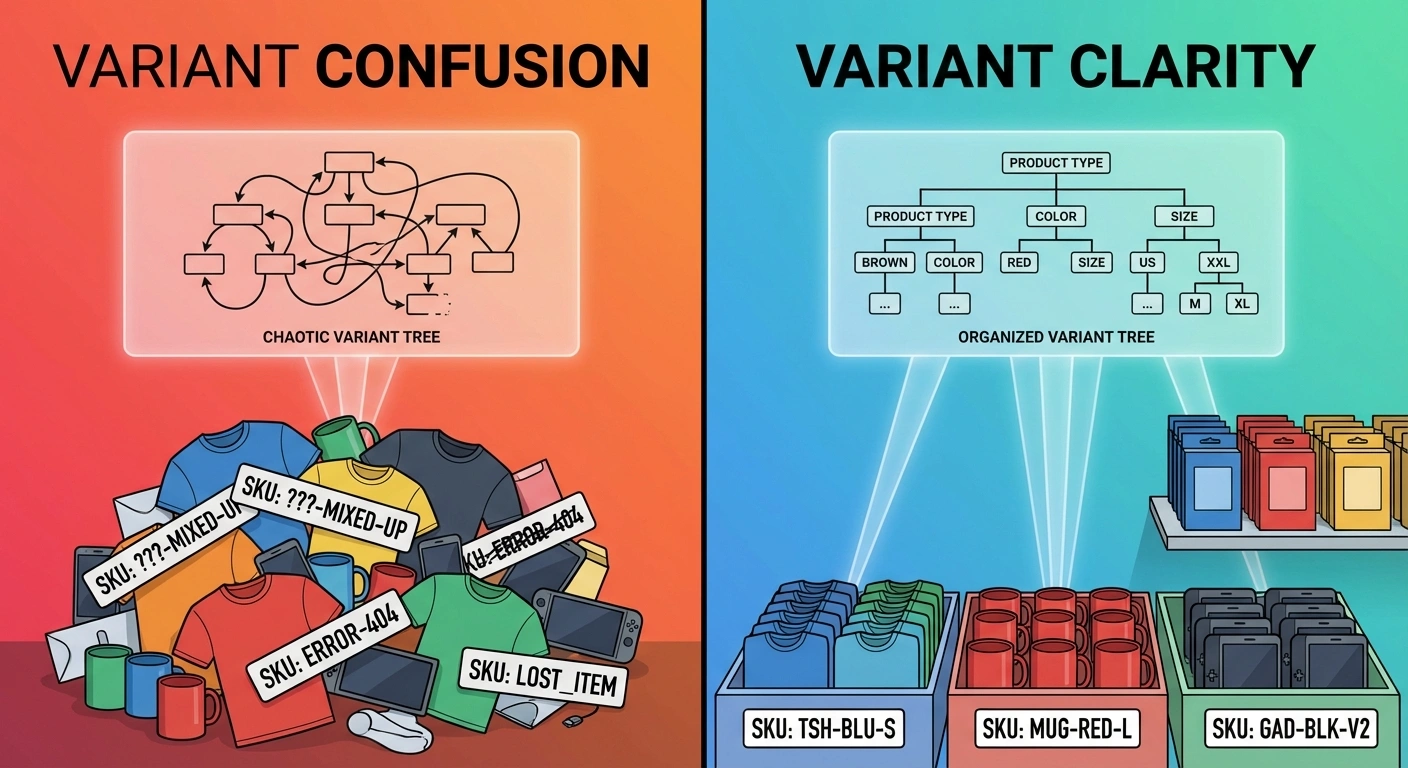
Shopify’s platform introduces unique risks due to the complexity of managing product variants, bundles, and SKU sprawl. Unlike simpler retail setups, Shopify fulfillment involves tracking multiple option layers like colors, sizes, and styles. This complexity demands precise SKU management and operational discipline at the warehouse level.
You should care about preventing warehouse errors in Shopify when:
- Your order volumes increase, making manual error correction costly.
- Product catalogs expand with more variants and bundles.
- You are onboarding or switching to a new 3PL partner.
- Promotional bundles, samples, or gift-with-purchase items become common.
Common triggers for warehouse errors include inconsistent SKU naming conventions, unclear or ambiguous product names, and manual data entry mismatches between Shopify and warehouse systems. These create confusion and amplify error rates in picking and packing.
Reference: Shopify SKU naming best practices, What Is a SKU Number?
Step-by-Step Workflow to Prevent Warehouse Errors in Shopify
Adopting a clear, repeatable operational workflow is critical. Below is a detailed, stepwise approach to eliminate errors:
- Standardize SKU Formatting
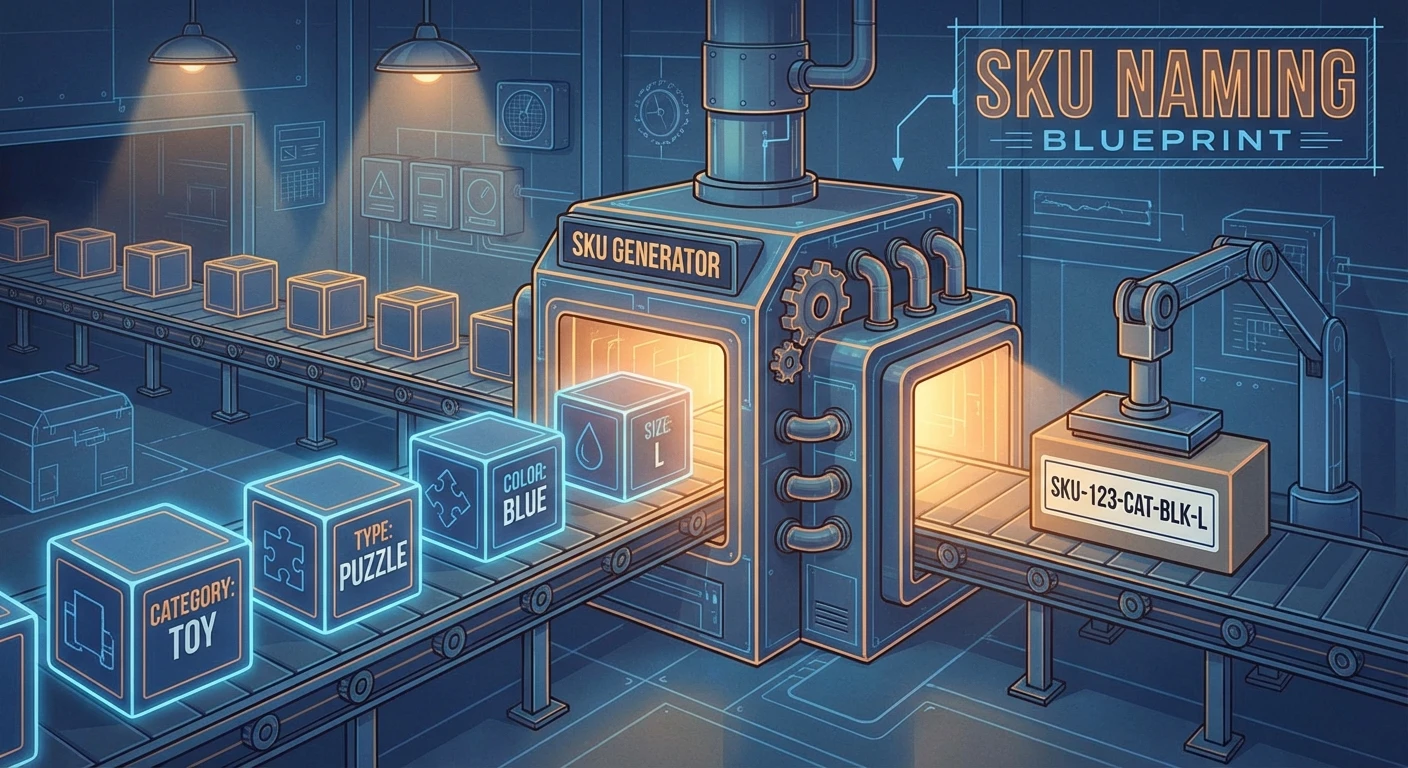
Use simple alphanumeric SKUs with no confusing symbols or zeros. For example:[PRODUCTTYPE]-[COLOR]-[SIZE]
Example SKU:TSHRT-BLK-M
This naming style is easy to read and scan, meeting barcode scanner requirements. - Implement Consistent Naming Conventions Across Shopify & Warehouse WMS
SKUs must be identical in Shopify and your warehouse management system (WMS) to avoid mismatches. Maintain a shared data dictionary that defines SKU, barcode, product title, and variant fields clearly.
- Train Warehouse Staff on Shopify Product Variant Logic
Shopify stores product options hierarchically. Warehouse teams should understand how variants (size, color, material) map to SKUs to avoid picking incorrect items. - Use Batch Picking Aligned with Shopify Order Waves
Organize picking by waves that group similar SKUs together to reduce picker fatigue and errors. Picking in batches improves throughput and accuracy. - Match SKU Scanning to Shopify Order Verification
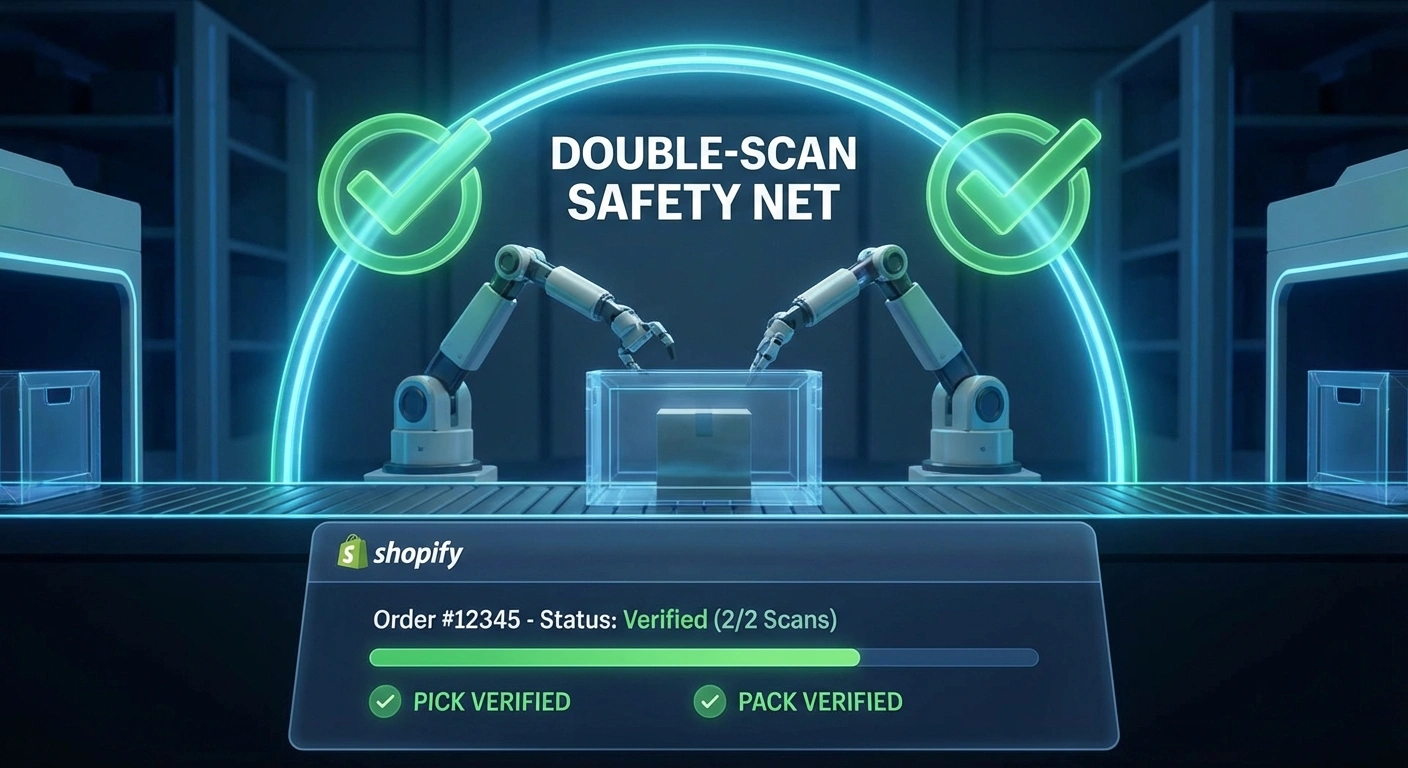
Require barcode scanning at both pick and pack stages. This double-scan method prevents packing wrong SKUs or quantities. - Daily Reconciliation of Inventory Counts vs Shopify Stock Levels
Compare warehouse physical stock against Shopify to find discrepancies early. This reduces overselling and stockouts. - Regular Audits and Dock-to-Stock Checklists
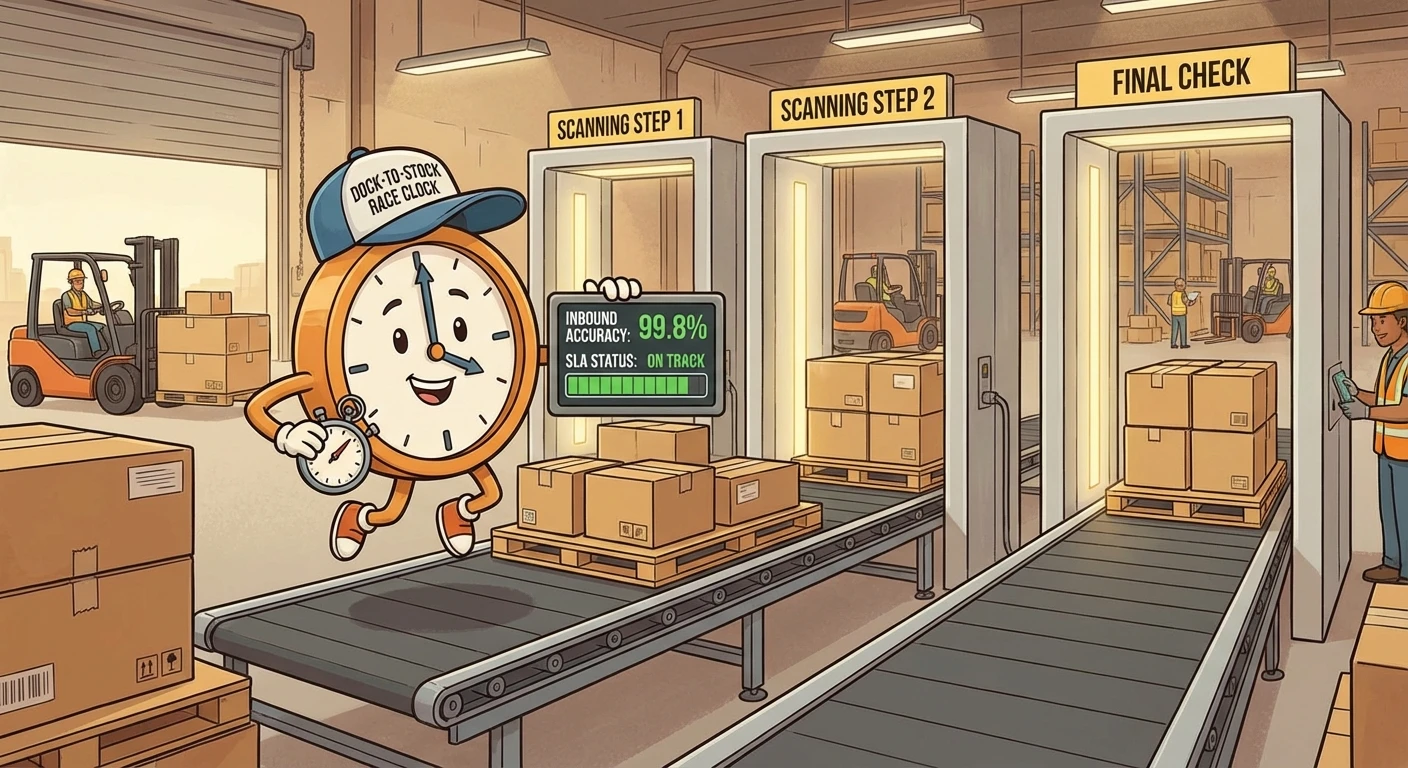
Maintain dock-to-stock time SLAs (ideally ≤ 4 hours) and conduct routine audits to ensure incoming inventory is logged correctly and fast, minimizing mismatch risk. - Use ASNs (Advance Shipping Notices) and Lot Tracking Where Relevant
Automated receiving notifications containing SKU details, lot numbers, and case pack sizes streamline inbound processes and inventory accuracy.
Following this workflow protects against common fulfillment mishaps in Shopify environments where SKU and option complexity grows daily.
Related reading: How to avoid common mistakes in Shopify inventory management
Key SLAs and KPIs to Track for Error Prevention in Shopify Fulfillment
KPITargetWhy It MattersPick Accuracy≥ 99.5%Prevents costly wrong shipmentsPack Accuracy≥ 99.5%Ensures order quality before shippingOrder Cycle Time≤ 48 hoursSupports fast, predictable deliveryDock-to-Stock Time≤ 4 hoursKeeps inventory data fresh and syncedOn-Time Shipping≥ 98%Maintains customer trust and loyaltyInventory Accuracy≥ 99%Prevents stockouts and overselling
Tracking these KPIs enables proactive management of warehouse operations and prevents errors from impacting customer experience.
Pricing Drivers Influencing Warehouse Error Prevention Costs
Understanding what affects fulfillment costs tied to error prevention allows for smarter negotiations and planning:
- SKU Complexity:
More variants and nested options require more complex scanning, system logic, and staff training—raising operational overhead. - Volume Spikes:
Sudden, unpredictable surges strain picking systems, reducing accuracy unless SOPs are highly flexible. - Custom Software or Integration Layers:
Integrating Salesforce Shopify stores to warehouse WMS APIs or EDI systems may require additional developer hours and testing. - Labor Costs:
Adding quality assurance steps such as double scanning, weight validation, or manual checks demands more trained labor. - Printing and Labeling:
Crisp, legible barcode labels reduce scanning errors. High-quality label printing (including color-coded or branded labels) may factor into cost. - Kitting Complexity:
Multi-part bundles or subscription boxes require careful component checks, increasing prep time and error risk if unmanaged.
Investing in robust SKU standardization, real-time inventory reporting, and efficient 3PL partnerships can offset many costs related to warehouse error prevention.
Risks of Poor Warehouse Error Prevention and How to Mitigate Them
- SKU Confusion Leading to Mis-Picks and Returns
Mitigation: Enforce SKU standardization and require barcode scanning for pick and pack validation. - Overstock or Stockouts from Inventory Mismatch
Mitigation: Daily reconciliation with Shopify stock levels and enforce dock-to-stock SLAs within 4 hours. - Labor Errors During High Volume Periods
Mitigation: Use batch picking processes, cross-train staff on Shopify variant logic, and simplify picking sequences. - System Integration Delays Causing Order Bottlenecks
Mitigation: Thoroughly test EDI 940/945 or API workflows before go-live, including SKU and barcode consistency. - Poor Training Resulting in Repeated Errors
Mitigation: Implement ongoing operator education, daily checklists, and spot audits focusing on new SKUs, bundles, or promotions.
These risks negatively impact fulfillment SLAs, damage brand reputation, and generate costly rework and expediting fees.
The Atlanta Advantage for Shopify Warehouse Error Prevention
- Fast Reach:
Serving 80% of the U.S. within 2 days by ground reduces urgency and rushed picks, which often cause errors. - Family-Owned Since 1995:
Deep operational expertise managing SKU complexity and Shopify workflows builds a trusted partnership. - In-House Printing and Kitting:
Prevents multi-vendor handoff errors on barcode labels and packaging inserts, ensuring consistency. - Hands-On Onboarding and Process Reviews:
Tailored workflows based on Shopify’s variant model ensure your team and warehouse are aligned.
This proximity and experience allow brands to reduce warehouse errors while scaling Shopify fulfillment operations efficiently.
What You Get with All Points
- Custom SKU Standardization Consulting integrated into onboarding, ensuring all SKUs meet scanning and operational requirements.
- Shopify-Aligned SOP Development for picking, packing, and daily reconciliation that matches your specific product variants and bundles.
- Real-Time Inventory Accuracy Reporting combined with strict dock-to-stock discipline to keep Shopify and warehouse stocks synchronized.
- Printing of Barcode Labels, Marketing Materials, and Branded Kitting under one roof reduces errors and operational delays.
See: Printing and labeling - Atlanta-Based 3PL Support delivering the ATL advantage for speed and a true partnership mindset.
Learn more about our ecommerce fulfillment and custom kitting services.
Call to Action:
Get a kitting quote to see how All Points helps you prevent warehouse errors in Shopify → https://www.allpointsatl.com/request-free-quote/fulfillment-services
Secondary CTA: Download the 3PL Guide for more operational insights and best practices.
FAQ: Common Questions on Preventing Warehouse Errors in Shopify
How long does it take to implement clean SKU rules with a 3PL?
Typically 2–4 weeks, depending on SKU count and catalog complexity. The process includes SKU audit, naming convention updates, and system testing.
Do I need barcodes if I already have SKUs?
Yes. SKUs identify products; barcodes enable rapid and accurate scanning. Assign readable barcodes (GTIN or internal Code 128) for all sellable SKUs and units of measure.
What if my bundles change frequently?
Use pick-to-assemble kits managed through a bill of materials (BOM), enabling flexible bundles with version-controlled SKUs.
What SLAs should I require of my 3PL?
Aim for pick/pack accuracy ≥ 99.5%, on-time shipping ≥ 98%, dock-to-stock ≤ 4 hours, and inventory accuracy ≥ 99%.
How much can scanning reduce errors?
Implementing barcode scanning at pick and pack typically reduces mis-pick rates by 50–80%, especially where SKUs are similar or variants numerous.
Meta Title: Prevent Warehouse Errors in Shopify with Better SKU Rules | All Points
Meta Description: Use proven Shopify SKU naming rules, pick/pack workflows, and SOPs to cut mis-picks and inventory errors. Atlanta-based 3PL since 1995 with kitting, printing, and dock-to-stock discipline.
URL Slug: /prevent-warehouse-errors-shopify
Image Alt Text: prevent warehouse errors in Shopify with clean SKU barcodes
All Points is an Atlanta-based, family-owned 3PL founded in 1995. We deliver end-to-end logistics—from custom kitting and ecommerce fulfillment to warehousing, distribution, and printing—so your brand ships accurately, on time, and at scale.
For more detailed insights on SKU management in Shopify, visit:
- Shopify SKU Number Explained
- Stock Keeping Unit Best Practices
By implementing the above best practices and partnering with an experienced 3PL like All Points, your Shopify fulfillment operation will minimize errors, improve customer satisfaction, and scale smoothly as your DTC brand grows.
Conclusion
Prevent warehouse errors in Shopify by standardizing SKUs, aligning workflows, using barcode scanning, and tracking KPIs. Learn how clear processes and the right 3PL partner, like Atlanta-based All Points, ensure accurate, on-time fulfillment—boosting customer satisfaction and scaling your DTC brand with confidence.

.webp)
.webp)
.webp)
.webp)


