


Poly Mailers vs Boxes for Apparel Ecommerce Brands
Apparel brands ship millions of soft goods that don’t need a box. Others ship structured or premium items where a box pays for itself. Here’s a direct breakdown of poly mailers vs boxes: cost, protection, labor, speed, sustainability, and when to use each. Use this to set packaging rules that match your SKU mix, SLAs, carrier strategy, and throughput goals.
If you want help implementing, our e-commerce order fulfillment solutions in Atlanta tie packaging, kitting, and inserts into one clean workflow: https://www.allpointsatl.com/services/e-commerce-order-fulfillment
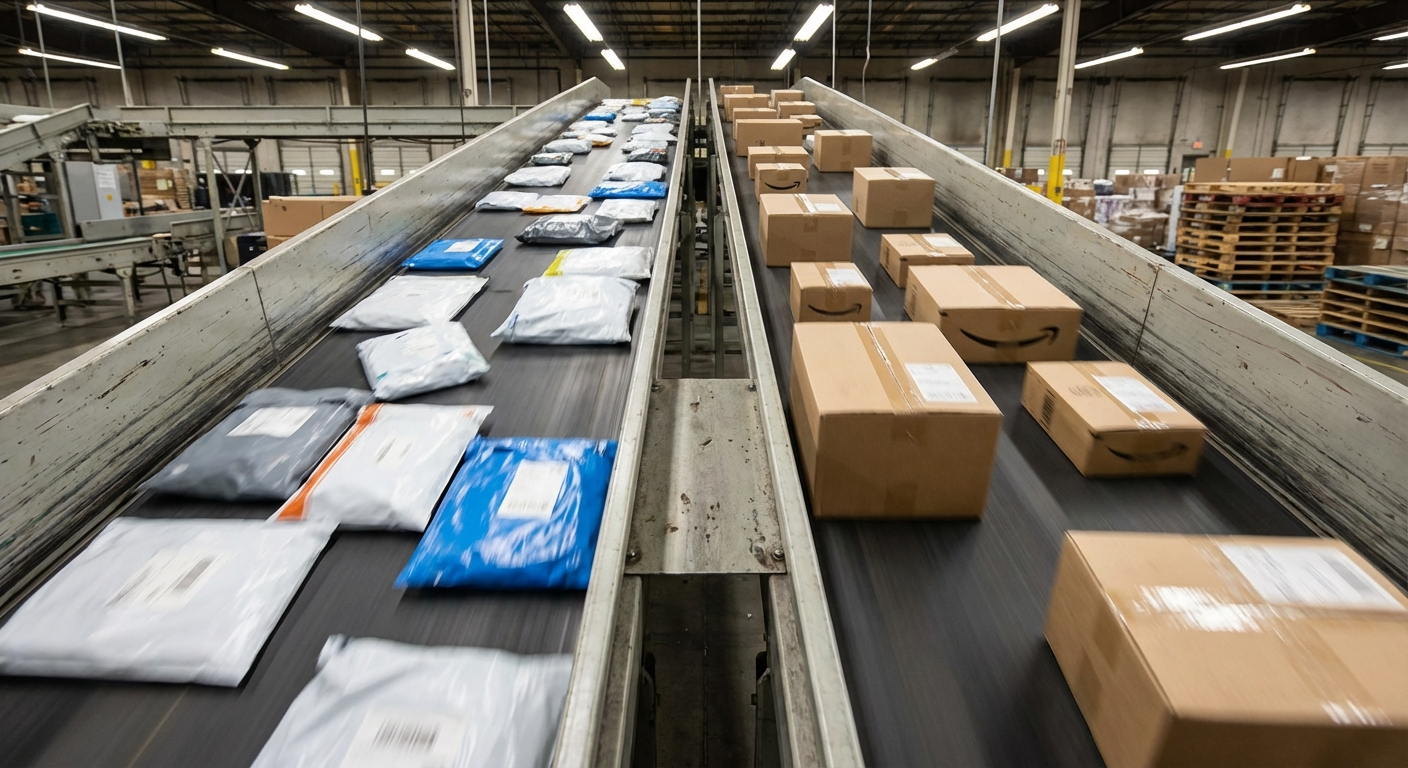
What Are Poly Mailers and Boxes? When to Use Each for Apparel Ecommerce
Poly mailers: Lightweight, flexible polyethylene or recycled poly envelopes. Self-seal. Common for T-shirts, leggings, joggers, hoodies, and soft accessories. Add an inner poly bag for moisture control and hygiene if your SKUs aren’t already bagged. Poly mailers offer a slim profile that cuts carrier dimensional weight fees and simplify pack operations.
Corrugated boxes: Rigid cardboard cartons (single-wall, sometimes E-flute/small parcel optimized). Necessary for structured goods (hats, belts with buckles), bundles with odd shapes, multi-SKU gift sets, or premium presentation. Boxes provide physical protection, reduce damage, and allow branding opportunities that poly mailers cannot match.
When Poly Mailers Make Sense
Use poly mailers when products are soft, compressible, and non-fragile (tees, sweatpants); orders are low line count (typically one to three units with similar sizes); throughput, packing speed, and labor reduction matter more than unboxing theatrics; dimensional weight is a priority (UPS/FedEx DIM divisor typically 139); and lowest per-unit packaging and labor cost is critical.
When Boxes Make Sense
Use boxes for higher-value apparel (premium denim, cashmere) where protection and presentation matter; structured goods prone to crease or deform (hats, footwear); bundles or multi-line sets needing inserts/tissue/gift wrapping; heavier or multi-item shipments where cartonization/right-sizing can reduce DIM charges; and premium customer experience expectations (seasonal/gift-themed orders).
Most apparel catalogs run a hybrid: mailers for 70–90% of orders, boxes for the rest. The right 3PL builds pack-out rules based on SKU type, order line count, and value, enforcing them through integrated WMS controls.
Further reading (sustainability and lifecycle comparisons): https://www.pac.com/box-vs-mailer-which-is-more-environmentally-friendly/ ; https://www.ecoenclose.com/blog/choosing-between-a-mailer-or-a-shipping-box/ ; https://www.partnership.com/blog/post/forget-boxes-when-to-use-poly-mailer-packaging ; https://wertheimerbox.com/poly-mailers-or-corrugated-boxes-5-packaging-considerations/ ; https://www.halfpricepackaging.com/blog/apparel-boxes-vs-poly-mailers-for-clothing-brands
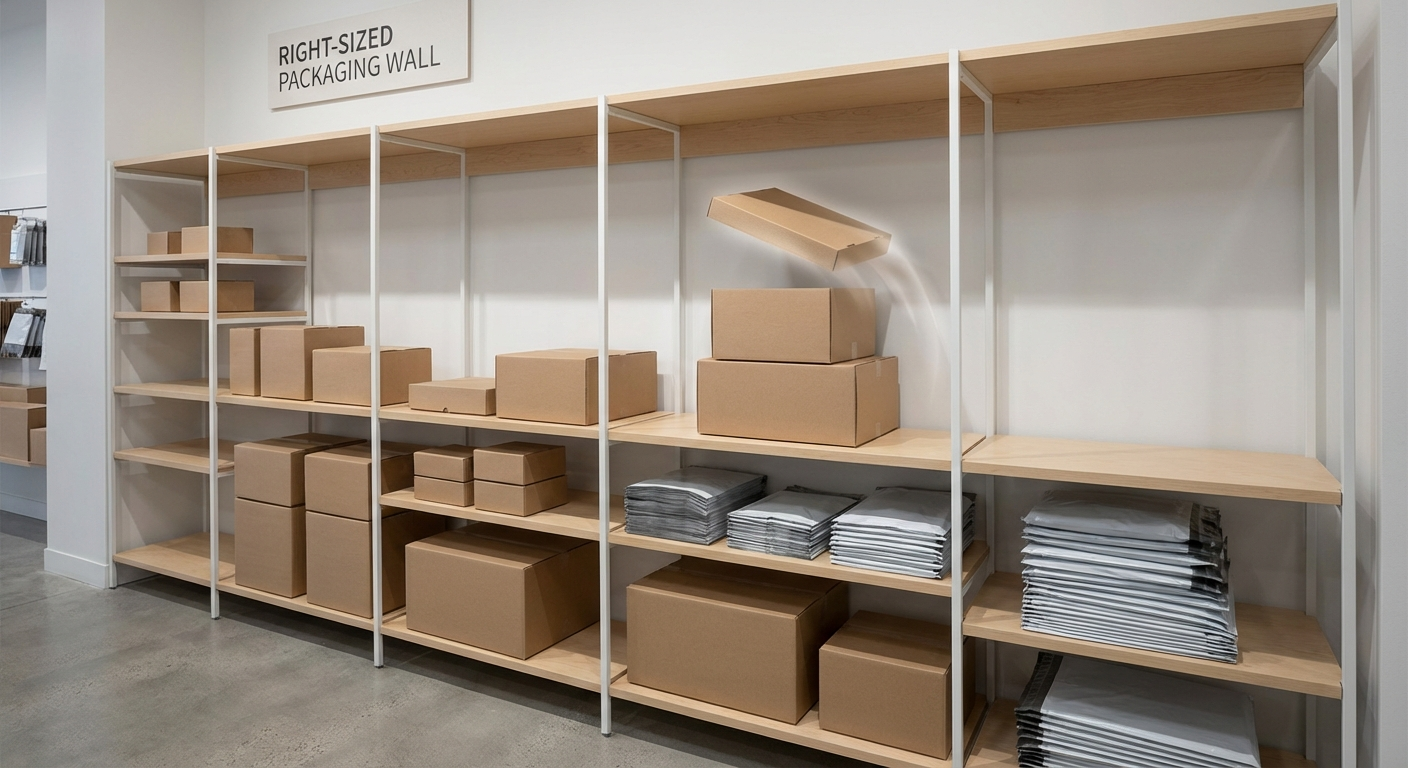
Step-by-Step Packaging and Fulfillment Workflow Comparison
Poly Mailer SOP (Typical)
1) Pick: Batch wave by size/color; scan items to tote; confirm pick on RF device.
2) Prep: Verify SKU and size; fold apparel to a standard template; add inner poly bag if required for moisture protection.
3) Inserts: Add promotional or return cards per campaign; scan insert profile for accuracy.
4) Pack: Load apparel into mailer; expel excess air; seal securely; visually inspect seal integrity.
5) Label: Auto-print shipping label; apply squarely to the flat surface; scan and verify.
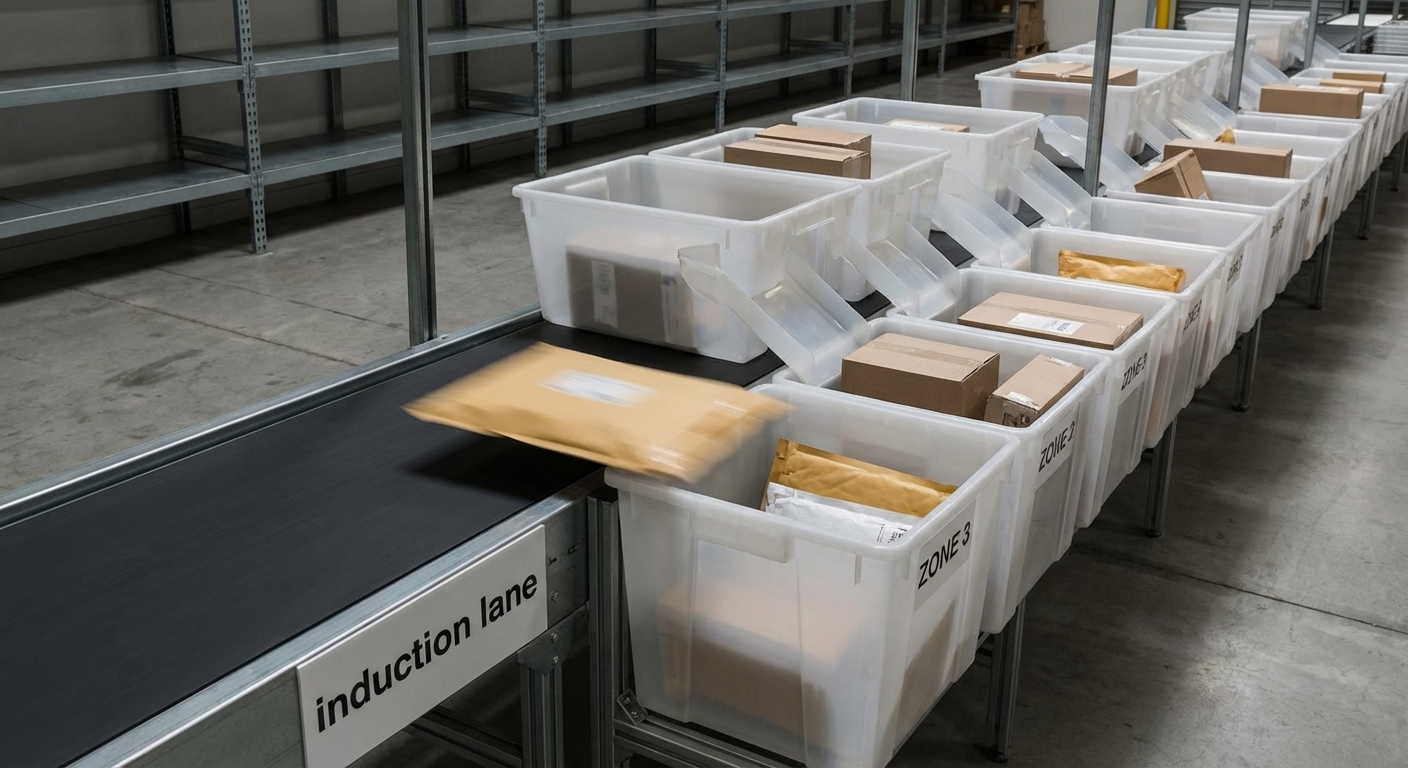
6) Induct: Sort mailers into carrier lanes and finalize manifest.
Operational notes: Approximately 30–60 seconds per order under disciplined batch flow. Minimal packing materials necessary and limited exception handling required.
Box SOP (Typical)
1) Pick: Batch wave picking; scan items; use WMS logic or cartonization rules to identify correct carton size.
2) Cartonize: Erect box from flat pack; tape bottom securely; add void fill to prevent shifting.
3) Prep: Fold and stack apparel; optionally add branded tissue or sleeves; place order-specific inserts and promo materials.
4) Pack: Load items; stabilize with paper pads or bubble wrap if required; tape and seal top (H-tape for larger boxes).
5) Label: Print/apply shipping label; scan for package verification; apply fragile or premium stickers if applicable.
6) Induct: Weigh/dimension for compliance if needed; sort to carrier lane; manifest completed.
Operational notes: Usually 60–120 seconds per order depending on carton complexity, dunnage needs, and presentation standards. Requires additional worker training and quality control checks.
Workflow Impacts Overview
Line speed: Mailers offer faster processing due to fewer materials and simpler pack motions.
Labor mix: Mailers largely require pick/pack operators; boxes introduce cartonization, void fill, and quality control stations.
Storage and staging: Mailers store flat and use minimal space; boxes require designated staging areas for erecting cartons and managing corrugated waste recycling.
Quality controls: Mailers focus on seal integrity and SKU accuracy, especially with similar styles; boxes require tests for crush resistance, proper cartonization, and secure taping.
All Points integrates packaging with custom kitting and printing workflows. Campaign inserts, branded tissue, multi-SKU sets, and promotional collateral are coordinated under the same defined SOPs to maintain batching efficiency and reduce errors.

Packaging KPIs and SLAs for Apparel Fulfillment
Pick Accuracy: Poly Mailers ≥ 99.8% | Corrugated Boxes ≥ 99.8% | Notes: Consistent WMS-driven scanning discipline critical for both.
Order Cycle Time: Poly Mailers 1.5 hours per batch | Corrugated Boxes 2+ hours per batch | Notes: Additional carton erecting, void fill, and taping slow box ops.
Dock-to-Stock Time: Poly Mailers 24 hours average | Corrugated Boxes 24 hours average | Notes: Unaffected by packaging choice.
On-time Ship Rate: Poly Mailers 99% | Corrugated Boxes 98–99% | Notes: Slight dip on peak days for heavier box workflows.
Damage Rate (soft goods): Poly Mailers ~0.1–0.3% | Corrugated Boxes ~0.05–0.2% | Notes: Boxes reduce damage on structured or premium products.
Return Handling Touch Time: Poly Mailers Lower labor time (fewer unboxing steps) | Corrugated Boxes Higher labor (includes void fill removal) | Notes: Box returns add handling time at RMA.
Pricing Drivers — What Moves Poly Mailer and Box Costs Up or Down
Materials
Poly mailers: Base cost ranges from $0.06 to $0.25 each for plain mailers, $0.30 to $0.60 for custom printed versions. Recycled content or thicker gauges increase price. They require no additional dunnage.
Corrugated boxes: Single-wall cartons typically cost $0.35–$1.20 each depending on size and print complexity. Additional tissue or paper void fill runs $0.05–$0.20 per order; tape adds a few cents more. Custom printing raises MOQs and lead time.
Labor
Mailers pack faster: 30–60 seconds per order in clean batch operations.
Box packing requires carton erection, careful load stabilization, and taping—commonly 60–120 seconds per order. Operator training level directly affects throughput.
Shipping Weight and Dimensional Weight
UPS and FedEx DIM divisor of 139 (domestic) penalizes bulky packages, favoring slim mailers. Box shipments typically incur higher dimensional weight fees.
USPS and others apply DIM rules over ~1 cubic foot; rules vary by carrier. Effective right-sizing cartons is paramount to controlling cost.
Returns and Damage
For premium or structured items, boxes reduce crease, crush, and damage, lowering costly return rates. A 1% damage rate on a $120 item can justify higher packaging spend.
For soft basics under $50, poly mailers paired with inner bags typically maintain damage rates to acceptable levels.
Volume Thresholds and Economies
At very high volumes, boxes may achieve marginal material cost savings, but labor and DIM fees often keep mailers lower total cost.
Brands primarily shipping lightweight, low-value apparel find mailers the most cost-efficient choice.
Risks and Mitigations in Choosing Poly Mailers or Boxes
Product damage in poly mailers. Mitigation: Restrict mailers to soft, compressible goods; increase mailer gauge to 2.5–3.0 mil; add inner poly or kraft wraps; package with “Do Not Bend” labels on fragile items.
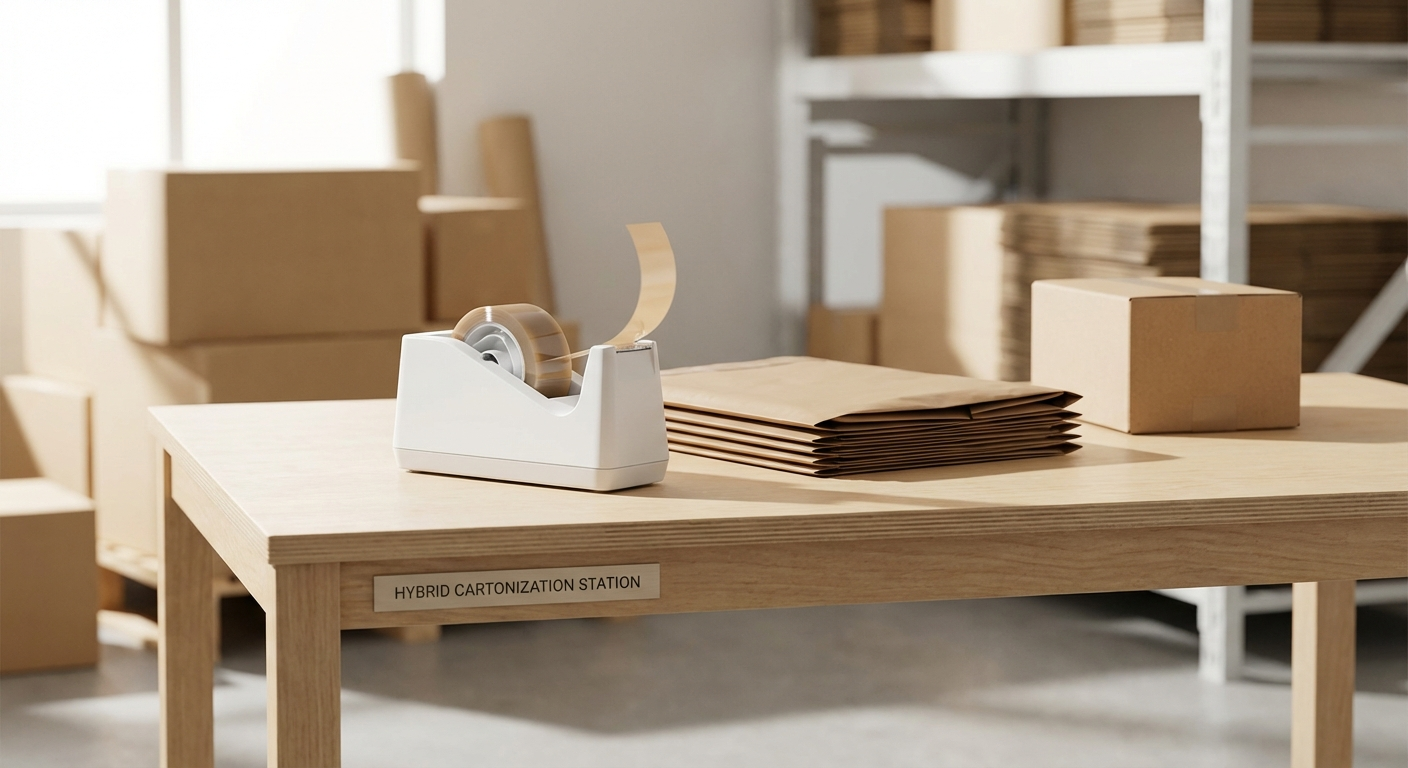
Higher shipping fees for boxes. Mitigation: Enforce strict cartonization rules; maintain a limited set of right-sized cartons (4–6 SKU-optimized sizes); audit shipments regularly; ship from Atlanta to reduce transit distance and shipping zones.
Customer perception of poly mailers as less premium. Mitigation: Invest in custom branded poly mailers; include well-designed inserts and upscale inner packaging (tissue, sleeves) for VIP tiers or special campaigns; align packaging spend to products’ price points.
Environmental impact debates. Mitigation: Use recycled-content poly mailers or recyclable paper mailers where feasible; right-size corrugate; reduce void fill via improved pack engineering; maintain take-back and recycling guides in return portals. Environmental analysis is nuanced; poly mailers often reduce transport emissions due to lower weight, while corrugated is curbside recyclable and biodegradable. Avoid absolutes and build a transparent, data-driven sustainability program.
Step-by-Step Decision Rules We Implement for Apparel
SKU rule: Use boxes for structured items with brims, buckles, or stiff panels; mailers for soft knit goods under 2” stacked height.
Line-count rule: Pack with boxes for more than three mixed-size units or multi-category (accessory plus apparel) orders unless dimensional weight analysis favors mailers.
Value rule: Ship orders valued above $150 in boxes with branded tissue and inserts.
Carrier rule: Favor mailers when they keep shipments in lower weight tiers (e.g., sub-1 lb USPS Ground Advantage).
Seasonality rule: Shift packaging mix seasonally (e.g., gift season orders more often boxed to protect presentation).
The Atlanta Advantage for Apparel Packaging and Fulfillment
Faster zones: Our Atlanta location reaches roughly 80% of the U.S. within two ground transit days, reducing courier zone-based fees and cutting transit damage risk.
Balanced labor market: We flex trained labor for cartonization during peak seasons, running fast mailer lines the remainder of the year.
Integrated kitting and print under one roof: Seasonal inserts, branded sleeves, gift bundles, and promo collateral don’t bounce between vendors, protecting cutoff times and reducing errors during spikes.
Scalable operations: With 30 years onboarding apparel-focused brands, workflows are adapted to your catalog, managing surges, new SKUs, and mix-pack complexity seamlessly.
What You Get With All Points — Custom Kitting, Printing, and Warehousing for Apparel
A single source handling the entire logistics workflow: from receiving and dock-to-stock to pick/pack, packaging, inserts, and kitting — all under one roof in Atlanta.
Packaging rules embedded in our WMS, configurable by SKU, order size, value, and campaign to limit exceptions and boost accuracy.
SOPs fine-tuned for apparel specifics: consistent folding, inner bagging, VIP pack-outs, carton audits, daily cutoff rigor.
Custom product assembly and subscription set kitting tailored to retail-ready packs without sacrificing margin or accuracy.
Warehouse technology that enforces discipline via lot/location control, scan validation, pack prompts, and comprehensive exception reporting.
Learn more about our custom kitting and product assembly services: https://www.allpointsatl.com/services/custom-kitting-product-assembly
Pricing Snapshots (Directional)
Plain 10x13 poly mailer: $0.08–$0.14; branded poly mailer: $0.35–$0.55.
Small apparel carton (12x9x4): $0.45–$0.80; branded cartons may require MOQs and longer lead times.
Dunnage and tissue: $0.05–$0.20 per order, depending on presentation requirements.
Labor time: 30–60 seconds per mailer order; 60–120 seconds per box order.
Actual costs vary based on mix, carrier contracts, DIM impacts, and packaging rules. We provide tailored quotes following SKU, order, and dimension audits.
Real-World Examples
Basics brand (tees & hoodies): 85% mailers, 15% boxes (for larger hoodies and multi-line winter orders). Resulted in ~35% packing time reduction versus box-only fulfillment and lowered UPS billed weight by one tier on 40% of shipments.
Premium denim: 70% boxes featuring branded tissue; 30% mailers for sale items under $120. Damage claims dropped from 0.8% to 0.2%; NPS scores improved; net shipping costs held flat after right-sizing and zone optimizations through Atlanta.
Hat/accessory label: 90% boxes to protect brims. Introduced a 4-carton set and reduced overfill void fill. DIM costs dropped 18% quarter-over-quarter.
Implementation Steps if You Switch Packaging Strategies
1) Audit SKUs and historical order data, separating soft versus structured items, typical line counts, and DIM weight traps.
2) Define and codify decision rules into your WMS; deliver operator training to enforce them.
3) Rationalize packaging SKUs—1–2 mailer sizes and 4–6 carton sizes meet most apparel catalogs efficiently. Avoid SKU creep.
4) Pilot for 2–3 weeks, tracking on-time shipping, damage rates, customer complaints, and cost per order.
5) Roll out broadly with daily post-pack audits for the first month. Tune rules as needed; minimize ad hoc exceptions.
FAQ
What factors impact the cost difference between poly mailers and boxes? Material expense, labor time, and dimensional weight (DIM) fees are the primary cost drivers. Poly mailers cost less to buy and pack, reduce DIM, and speed throughput. Boxes add carton, dunnage, taping, and labor costs but reduce damage and enable premium presentation. Total cost varies by SKU mix and carrier agreements.
How does packaging choice affect order fulfillment speed and accuracy? Mailers pack faster with fewer operational steps, translating to higher throughput. Accuracy should be equal if your WMS enforces scanning prompts consistently. Boxes introduce more handling steps and slower cycle times, especially during peak demand.
What SLAs can I expect for poly mailer vs box packaging? At All Points, we maintain ≥ 99.8% picking accuracy and 99% on-time shipments for mailers, with 98–99% on-time ship rates for boxes during peak periods. Dock-to-stock time remains steady at 24 hours for both.
Can All Points handle custom branded poly mailers or boxes? Yes. We source, store, and control branded packaging materials along with inserts and tissue paper. These integrate seamlessly into your kitting and packing SOPs to maintain cutoff compliance and quality.
How does All Points’ Atlanta location cut shipping time and cost? Our Atlanta facility reaches about 80% of the U.S. within two ground transit days, reducing courier zone fees and carrier surcharges. Shorter transit reduces damage risk and supports lean inventory levels.
Primary CTA
Get a kitting quote to see how poly mailers vs boxes fit your apparel fulfillment needs.
Learn more about our custom kitting and product assembly services: https://www.allpointsatl.com/services/custom-kitting-product-assembly
Secondary CTA
Download the 3PL Guide for E-commerce and Amazon Sellers to explore end-to-end best practices: https://www.allpointsatl.com/resources/3pl-guide-for-e-commerce-and-amazon-sellers
Sidebar Module
Based in Atlanta since 1995 — talk to experienced 3PL operators who understand your apparel brand’s unique needs.
Phone: [Your phone] | Email: [Your email]
About All Points
All Points is an Atlanta-based, family-owned 3PL founded in 1995. We deliver end-to-end logistics—from custom kitting and ecommerce fulfillment to warehousing, distribution, and printing—so your brand ships accurately, on time, and at scale.
Disclaimer: All pricing examples and operational times are directional and may vary based on SKU mix, carrier contracts, and fulfillment complexity. This article serves informational purposes and does not constitute a service agreement. Contact All Points for a customized quote tailored to your business.
Conclusion
Apparel brands optimize shipping with poly mailers for soft, low-value items—cutting cost and weight—while boxes protect premium or structured goods and enhance presentation. This guide helps you choose the right packaging based on SKU, order size, cost, and customer experience, with expert fulfillment support in Atlanta.
.webp)
.webp)
.webp)
.webp)
.webp)


