


Atlanta Ecommerce Fulfillment: What You Need to Know to Scale Your Brand
Running ecommerce fulfillment in-house can hold back growth when volume spikes strain capacity, costs balloon, or inventory errors rise. This guide walks DTC founders, ops managers, and retail marketers through Atlanta ecommerce fulfillment: how it works, what it costs, SLAs to expect, and the risks to watch—so you can plan your next move effectively and scale cleanly.

What Is Atlanta Ecommerce Fulfillment, and When Should You Use It?
Atlanta ecommerce fulfillment means outsourcing pick/pack, storage, kitting, and shipping to a third-party logistics provider (3PL) operating facilities in the Atlanta market. This is not just generic fulfillment—it specifically leverages Atlanta’s prime logistics location to serve ecommerce brands taking advantage of the region’s strategic advantages.
Why does Atlanta matter? The city offers logistics benefits few other U.S. markets deliver, notably its ability to reach roughly 80% of U.S. customers within 2-day ground shipping. That capability cuts or even eliminates reliance on paid expedited shipping and results in a significantly reduced average cost per order by smart zone-skipping and access to a broad network of regional carriers.
Many brands turn to Atlanta ecommerce fulfillment precisely because their in-house operations start to limit growth or drain margin. Here is a practical litmus test to know when to start evaluating 3PL partnership:
- Daily throughput capped by space or labor: When adding shifts no longer scales volume because your warehouse is fully utilized, it’s a clear bottleneck.
- Overtime is routine, not occasional: Constant OT inflates labor costs and correlates to higher error rates, undermining unit economics.
- Rising shipping costs: If your main customer destinations are Zones 6–8 and your parcel spend keeps climbing, Atlanta’s location means lower average zones and thus cost savings.
- Inventory accuracy below 98%: Frequent discrepancies from cycle counts and dock-to-stock exceeding a day reduces fulfillment speed and risks stockouts.
- Seasonal peak volume overwhelm: Last-minute scrambling for temporary labor during Black Friday or holiday spikes usually triggers mis-picks and delays.
- Leadership distraction: When your COO, founder, or leadership team spends time fixing pick paths or firefighting warehouse issues instead of growth initiatives, it’s time to re-examine.
Common use cases for Atlanta ecommerce fulfillment include brands:
- Scaling from roughly 100–500 to 2,000+ daily orders needing robust batch picking, cartonization logic, and clear daily cutoffs.
- Managing catalogs with many SKUs where kitting, assembly, or on-demand printing materially influence customer experience.
- Operating B2B/D2C hybrid models requiring EDI 940/945 transaction management and retail routing compliance alongside high D2C order velocity.
If two or more of the above signs apply, it’s time to compare 3PL cost per order (CPO), accuracy, and scaling timelines against your in-house run rate. Moving to Atlanta ecommerce fulfillment can protect your margins and provide the operational rigor needed for growth.
Learn more: https://www.stord.com/blog/outgrown-your-inhouse-fulfillment
Pros/cons of outsourced fulfillment: https://www.amsfulfillment.com/blog/in-house-vs-outsourced-fulfillment-pros-and-cons/
Step-by-Step Atlanta Ecommerce Fulfillment Workflow
The Atlanta ecommerce fulfillment daily workflow is structured for both speed and accuracy to ensure volume scales without errors or delays. If your in-house process can’t match the cadence below, it will likely become a bottleneck.
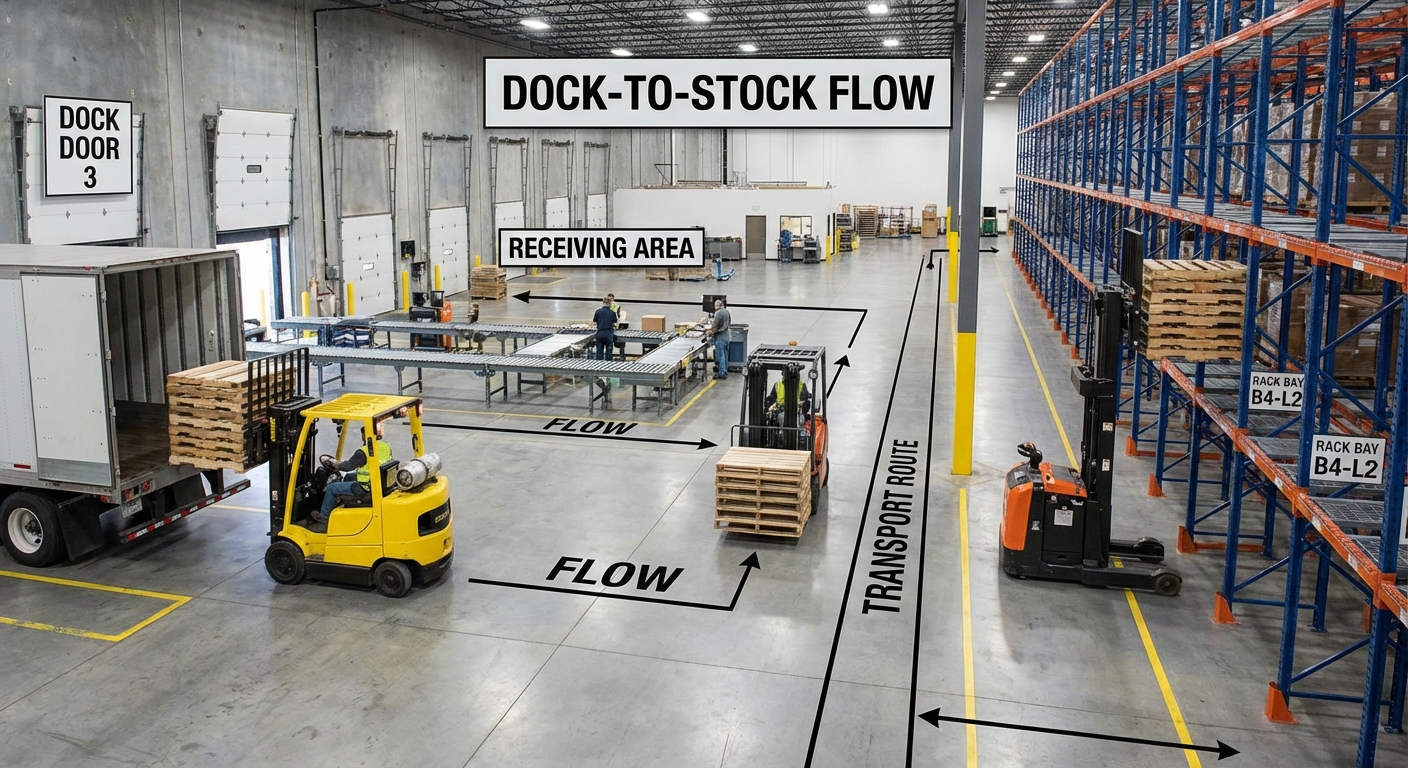
Receiving and Dock-to-Stock
- Appointment set: Load arrival coordinated with at least 24-hour notice via ASN or PO.
- Unload: Physical count, inspection, and verification of lot or expiration dates where required.
- Labeling: Apply scannable location and SKU labels if missing, ensuring system traceability.
- System receipt: WMS logs receipt with variance reporting; photos document any damages.
- Dock-to-stock SLA: Inventory placed into pickable slot locations within 4 hours of receipt.
Inventory Control
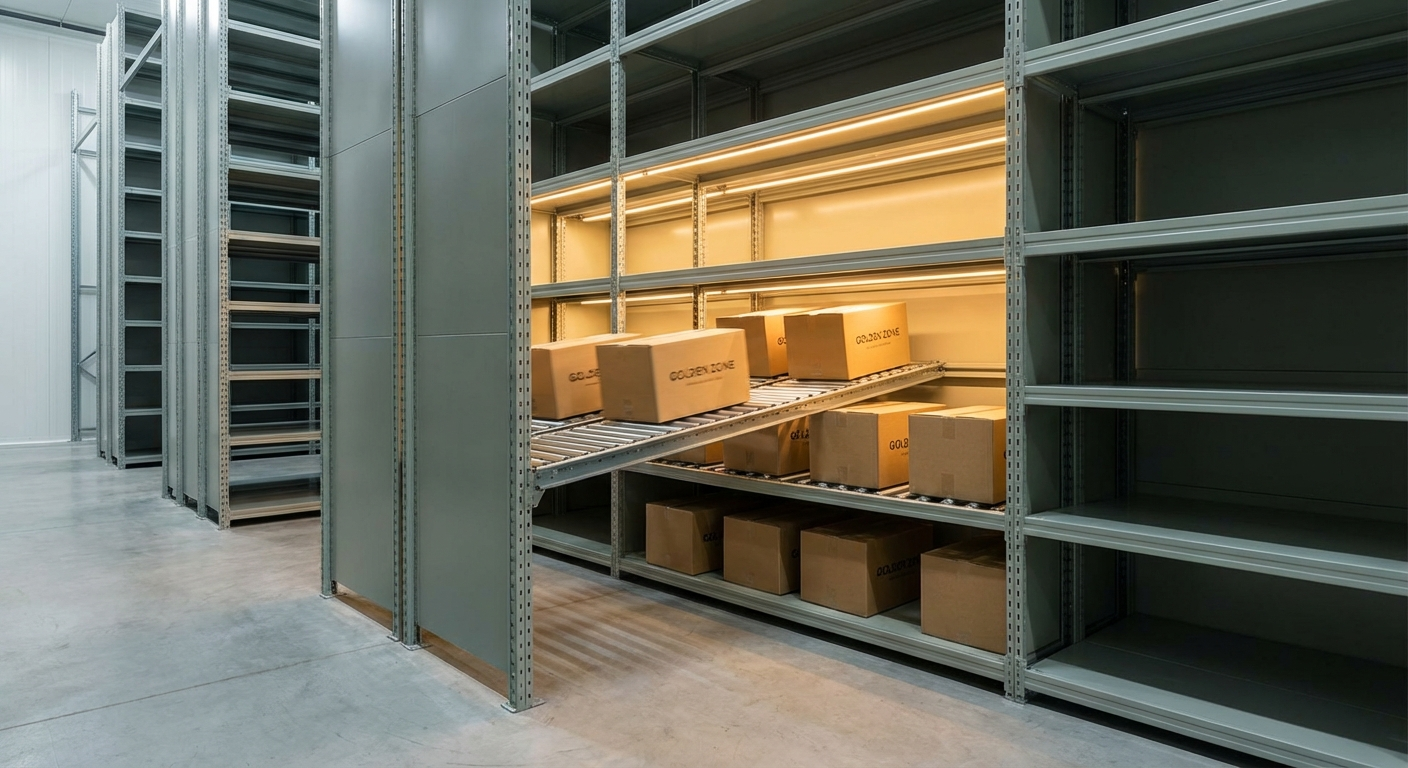
- Location strategy: High-velocity SKUs stored in golden zones near pick stations; bulky or slow movers held by pallet rack.
- Cycle counts: Regular ABC program—A SKUs counted weekly, B SKUs bi-weekly, C SKUs monthly—to catch errors early.
- Replenishment: Automated triggers based on min/max levels generate nightly or mid-shift batch moves to forward pick locations.
Order Ingestion and Wave Planning
- Cutoffs: Same-day ship cutoff (usually 2:00–3:00 p.m. ET) clearly communicated with clients and strictly enforced.
- Order routing: D2C and B2B queues separated; fraud holds and checklist flags auto-applied.
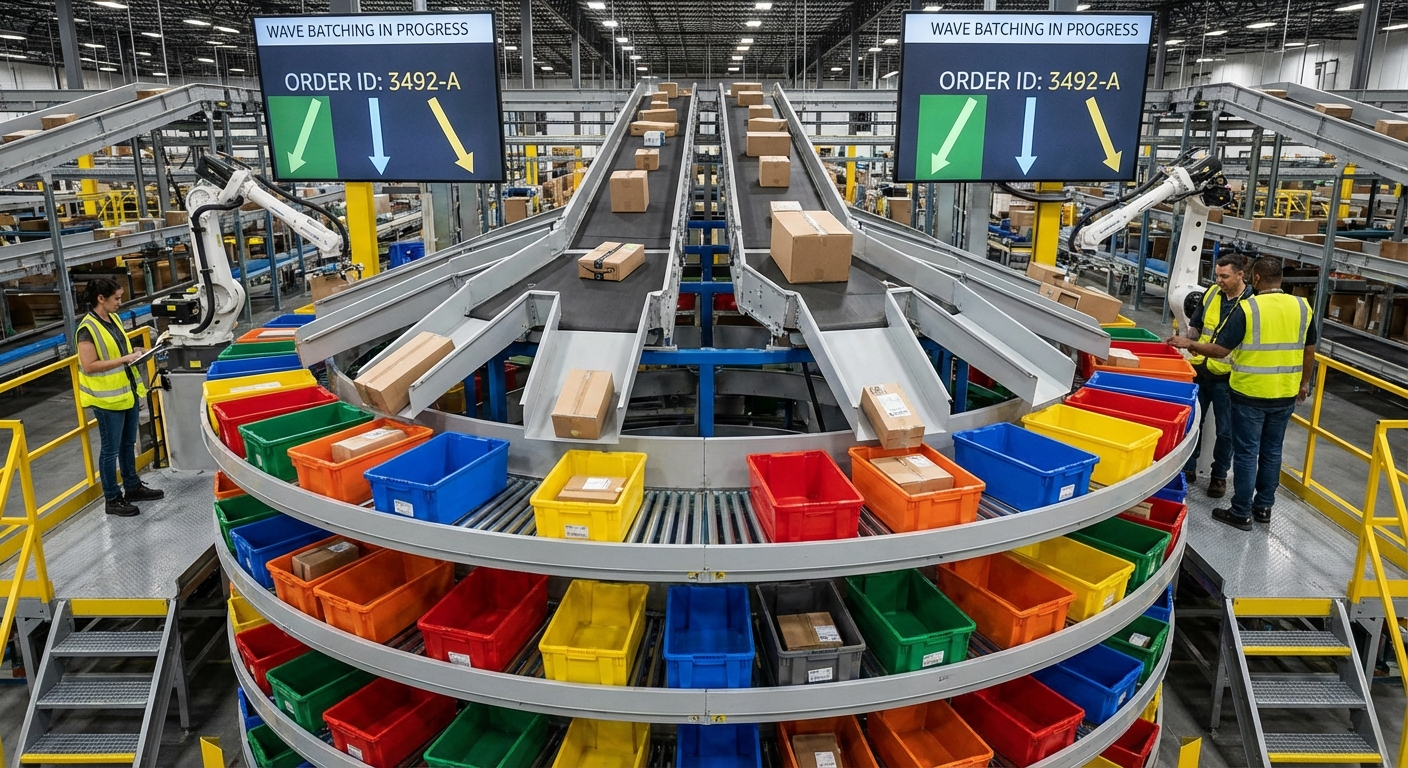
- Wave logic: Orders batched by shipping method, carrier, SKU commonality, and destination zone to reduce labor touchpoints and walking time.
Picking (Designed for Throughput and Accuracy)
- Picking methods: Single-order picking to carts for small, low-line-count orders.
- Picking methods: Batch picking by tote for overlapping SKUs to maximize efficiency.
- Picking methods: Zone picking for catalogs with large SKU counts to segment labor.
- Scanning: Each pick scanned. Exceptions trigger immediate corrections on handheld devices.
- Quality control: Tote or cart audit points after each zone or before packing, adjusted to risk profiles of SKUs.
Kitting and Light Assembly (As Applicable)
- Pre-build kits: For subscriptions, bundles, or promotions, kits assembled ahead and stored as unique SKUs.
- On-demand assembly: Bundles built at packing station using BOMs with barcode verification.
- Printing/inserts: Branded collateral or promotional inserts pulled per job ticket or printed on-site according to timing.
Packing and Shipping
- Cartonization: Automated system recommends carton size based on SKU dimensions/weight; manual overrides permitted with documentation.
- Void fill/dunnage: SOPs ensure protection without excess packing, preserving shipping cost efficiency.
- Scan-to-verify: Final scan confirms SKU and quantity before shipping label printing.
- Carrier selection: Rate shopped by SLA, zone, and cost; regional carriers prioritized where cost-effective.
- Manifest/load: Route-based closeouts with sealed trailers; pickup tracked with exception reporting.
Daily Cadence and Communication
- Morning standup: Operations huddle reviews backlog, team availability, and constraints.
- Midday check: Throughput vs. plan evaluated; additional waves or labor assigned as needed.
- Close of day: Manifest reports and accuracy/throughput summaries delivered to clients.
- Exception tracking: SLA or carrier misses are logged, root causes investigated, and corrective actions implemented.
This workflow is fundamental to Atlanta ecommerce order fulfillment services: https://www.allpointsatl.com/services/e-commerce-order-fulfillment
Additional insights: https://www.radial.com/insights/7-signs-its-time-to-scale-ecommerce-in-house-fulfillment-or-outsource-it
How to know you’ve outgrown in-house: https://lmwarehousing.com/blog/how-to-know-youve-outgrown-in-house-fulfillment/
SLAs and KPIs for Atlanta Ecommerce Fulfillment
Strict SLAs and KPIs are the heartbeat of reliable Atlanta ecommerce fulfillment. Without these, errors compound and margins erode quickly. Here are key performance indicators and their industry benchmark targets:
Key SLA/KPI Targets
Pick accuracy: ≥ 99.5% — Minimizes costly re-shipments and customer returns.
Order cycle time: ≤ 24 hours — Orders shipped same day if received before cutoff.
Dock-to-stock time: ≤ 4 hours — Receiving speed quickly replenishes inventory for picking.
On-time shipping rate: ≥ 98% — Keeps delivery promises and protects brand reputation.
Inventory accuracy: ≥ 99% — Reliable counts prevent surprise backorders and stockouts.
Why do these metrics matter?
- Pick accuracy: Errors lead to returns, unhappy customers, and wasted labor.
- Cycle time: Fast order dispatch means better customer experience and meets expectations especially during high velocity sales events.
- Dock-to-stock: Slow receiving delays inventory availability, raising risk of stockouts mid-day.
- On-time shipping: Missing shipping cutoffs or carrier pick-ups damages brand reliability.
- Inventory accuracy: Without accurate counts, replenishment and safety stock decisions fail.
At All Points, these KPIs are maintained through:
- Strict WMS discipline requiring scan-verified transactions.
- Exception logging to identify and correct root causes of errors.
- Structured wave planning to batch similar orders and optimize labor.
- ABC cycle count audits weekly with variance investigations.
- Labor calibration and cross-training with rapid feedback loops.
Meeting these SLAs reduces surprises and controls fulfillment costs for growing brands.
Pricing Drivers for Atlanta Ecommerce Fulfillment
Outsourcing to a 3PL like All Points in Atlanta doesn’t mean unpredictable fees. Several main factors define costs:
- Labor: The single largest driver. Influenced by order line counts, SKU complexity, kitting steps, and pick path efficiency. SKU sprawl inflates costs by forcing longer walks and multiple touches. Rationalizing SKUs and variants optimizes labor usage.
- Storage: Costs vary by pallet vs. bin utilization, cubic density, seasonality, and length of stay. Long-term dead stock often requires clearance or removal to protect margins.
- Pick & pack fees: Charged per order and per line, with surcharges for special handling like lot/serial traceability, gift wrap, inserts, or printing. Kitting pricing depends on whether kits are pre-built (per unit) or built on-demand (per BOM step).
- Shipping: Influenced by weight, dimensions, ship zones, carrier choice, and negotiated rates. Atlanta’s geography drives down average shipping zone, which decreases costs. Regional carrier use further lowers expense on Southeast and Midwest shipments.
- Technology and EDI fees: Integrations with Shopify, Amazon, NetSuite, EDI 940/945 transactions, custom reports, and portal access each may carry fees. Timely support and good data hygiene avoid delays and added charges.
- Value-Add Projects: Includes rework, relabeling, returns processing (RMA triage/refurbishment), subscription box assembly, and other customized services priced separately.
- Volume tiers: Scale economies kick in as order volume rises and catalogs stabilize, lowering CPO via batching, carton optimization, and better carrier leverage.
If your in-house fulfillment cost per order is unclear or rising, it’s usually a symptom of chaos and inefficiency. A well-run Atlanta ecommerce fulfillment program clarifies unit economics often within 30–60 days of steady-state operations.
Custom kitting and product assembly solutions: https://www.allpointsatl.com/services/custom-kitting-product-assembly

Risks & Mitigations in Atlanta Ecommerce Fulfillment
No warehouse is risk-free. Recognizing and mitigating risks separates top operators from the rest.
Common Risks
- Labor shortages in peak seasons: Low unemployment and seasonal spikes can leave teams short-handed.
- SKU sprawl: Excessive variants or slow movers increase pick path length and error risk.
- Inventory miscounts: Poor dock-to-stock discipline or missed scans cause stock discrepancies and slow order fulfillment.
- Carrier delays: Weather or network disruptions can delay shipments and break delivery promises.
- Data drift: Faulty or outdated EDI/integration mappings cause order holds or inaccurate statuses.
How All Points Mitigates
- Flexible labor scaling with a cross-trained baseline team and vetted seasonal labor pools together with robust SOPs to maintain quality under pressure.
- SKU rationalization consults to merge excess variants, encourage kits, and design packaging/pack architecture for efficient picking.
- Rigid inventory control enforcing dock-to-stock within 4 hours, ABC cycle counts, photo documentation, and variance tracking reported daily.
- Diverse carrier network with strong national and regional relationships plus backup labels and dynamic rerouting plans.
- Continuous data hygiene with automated monitoring of EDI and API queues, alerting on exceptions and controlled change management.
For more on risks and outsourcing advantages:
https://www.radial.com/insights/7-signs-its-time-to-scale-ecommerce-in-house-fulfillment-or-outsource-it
https://www.prologis.com/what-we-do/resources/in-house-vs-outsourced-fulfillment
The Atlanta Advantage for Ecommerce Fulfillment
Atlanta’s geographic and operational advantages make it a pragmatic logistics hub for direct-to-consumer (D2C) and B2B ecommerce brands alike.
- 2-day ground shipping to ~80% of U.S. population: This reach reduces reliance on costly air freight and enables faster delivery promises.
- Lower average shipping zones (Zones 2–5): Compared to coastal markets that ship Zones 7–8 regularly, Atlanta lowers cost per shipment.
- Carrier diversity and capacity: Multiple national and regional carriers ensure flexible capacity during seasonal peaks.
- Proximity to major ports, intermodal rail, and highways: Improves inbound supply reliability and outbound shipment predictability.
- Local Southeast-based teams: Enable faster onboarding, site visits, and operational communication.
- Integrated kitting and printing under one roof: This coordination streamlines fulfillment of complex promotions, bundles, and inserts — as successfully demonstrated by projects for Porsche-branded materials that require precise assembly and printing timing.
The central location consolidates logistical complexity into a single scalable solution, freeing brands to focus on marketing and growth instead of scrambling fulfillment.
What You Get with All Points
- Seamless integration of custom kitting, printing, and ecommerce fulfillment to deliver a coordinated brand experience without vendor fragmentation.
- Experienced, operator-run programs with clear SLAs, daily cadence, and direct fulfillment team access.
- Ecommerce workflows optimized for scale, using batch picking, scan-to-verify processes, automated cartonization, and disciplined cutoff enforcement.
- Transparent, upfront pricing including storage, fees, projects, and technology support with no surprises during peak seasons.
- Atlanta-based support team invested in your long-term success with a partnership mindset.
Explore:
Custom kitting and product assembly solutions: https://www.allpointsatl.com/services/custom-kitting-product-assembly
Atlanta ecommerce order fulfillment services: https://www.allpointsatl.com/services/e-commerce-order-fulfillment
Printing and marketing materials services: https://www.allpointsatl.com/services/printing-marketing-materials
All Points has been proudly based in Atlanta since 1995. As a family-owned business, we scale brands without drama and with operational rigor.
Call to Action
Primary: Get a kitting quote → https://www.allpointsatl.com/services/custom-kitting-product-assembly
Secondary: Download the 3PL guide for ecommerce and Amazon sellers → https://www.allpointsatl.com/resources/3pl-guide-for-e-commerce-and-amazon-sellers
FAQ
Q: What are the typical pricing components for Atlanta ecommerce fulfillment?
A: Pricing includes storage (pallet/bin), receiving (pallet/ASN), pick and pack fees (base + per line), kitting/assembly (per BOM step or kit), shipping (carrier pass-through), project fees (returns, rework), and technology/EDI fees (integrations and transactions). Volume, SKU, and kitting complexity drive variance.
Q: How does All Points maintain 99.5%+ pick accuracy and 98%+ on-time shipping?
A: By batching similar orders, enforcing scan-to-verify at pick and pack stages, conducting ABC cycle counts, strict cutoff adherence, and logging exceptions with root cause analysis to implement continuous improvements.
Q: How quickly can we onboard?
A: Typical onboarding ranges from 2-4 weeks, provided data and catalog clean-up is done. Parallel test runs start by week two. Larger catalogs or heavy kitting require more time for BOM validation and kit pre-builds.
Q: What order volumes fit best for Atlanta ecommerce fulfillment?
A: We support brands scaling from 100–500 daily orders up to 10,000+ orders/day, including B2B/D2C hybrids. SKU discipline and SLA alignment are key to success.
Q: How does an Atlanta location reduce shipping costs?
A: Many orders ship within Zones 2–5, lowering parcel costs, and the location reduces reliance on paid expedited shipping since 2-day ground reaches most customers efficiently.
Disclosure
All Points is an Atlanta-based, family-owned 3PL founded in 1995. We provide end-to-end logistics—from custom kitting and ecommerce fulfillment to warehousing, distribution, and printing—enabling brands to ship accurately, on time, and at scale. This content reflects best practices as of publication and is for informational purposes only. Individual results vary by operation. Contact All Points or other providers for specific advice.
Related Resources
Outgrown Your In-House Fulfillment? https://www.stord.com/blog/outgrown-your-inhouse-fulfillment
In-House vs. Outsourced Fulfillment Pros and Cons: https://www.amsfulfillment.com/blog/in-house-vs-outsourced-fulfillment-pros-and-cons/
7 Signs It’s Time to Scale Ecommerce Fulfillment: https://www.radial.com/insights/7-signs-its-time-to-scale-ecommerce-in-house-fulfillment-or-outsource-it
How to Know You've Outgrown In-House Fulfillment: https://lmwarehousing.com/blog/how-to-know-youve-outgrown-in-house-fulfillment/
In-House vs. Outsourced Fulfillment – Prologis Resource: https://www.prologis.com/what-we-do/resources/in-house-vs-outsourced-fulfillment
Conclusion
Unlock growth with Atlanta ecommerce fulfillment—leveraging its prime location for faster, cost-effective shipping to 80% of U.S. customers. Learn when to outsource, key workflows, SLAs, pricing factors, risks, and the benefits of partnering with All Points for scalable, accurate, and efficient DTC fulfillment.
.webp)
.webp)
.webp)
.webp)


