


Kitting: How to Scale Your Brand’s Assembly & Packaging Without Adding Labor
Kitting streamlines your product assembly process without the costly need to hire more staff. For DTC founders, retail brand marketers, and procurement leads evaluating 3PLs or kitting partners, this article breaks down what kitting entails, how implementation looks, key metrics, pricing factors, risks to watch, and why Atlanta-based All Points simplifies scaling.

What is Kitting and When to Use It
Kitting means bundling multiple SKUs or components into a single, ready-to-ship kit or package. Instead of picking many individual items each time an order comes in, you assemble the kit once, assign it a unique SKU, and ship it just like any other product. This approach drastically simplifies fulfillment and reduces errors.
Common uses for kitting include:
- DTC bundles and sets: Starter kits, seasonal packs, gift sets
- Subscription boxes: Fixed or semi-fixed curated monthly selections
- Promotional packs: Sampling kits, influencer gifts, BOGO (buy one, get one) deals
- Retail displays: Counter units, PDQs (point of display), shelf-ready packaging with inserts and labeling
Why brands use kitting:
- Reduces picking errors: Cutting down the number of individual picks lowers mistakes.
- Speeds shipping: Picking one SKU instead of many accelerates your fulfillment process.
- Simplifies inventory management: One SKU per kit means easier stock control in your Warehouse Management System (WMS).
- Ensures consistency: Standardized inserts and packaging provide a reliable brand experience every time.
When not to DIY kitting:
- During rapid volume spikes or flash sales where labor capacity is tight
- When kits have complicated SKUs or include many small parts requiring careful assembly
- If warehouse space is limited and cannot accommodate dedicated assembly and staging areas
- Without disciplined WMS processes to manage Bills of Materials (BOMs), versioning, and substitutions
The case for outsourcing kitting:
Outsourcing kitting to a third-party logistics (3PL) provider with deep kitting expertise becomes essential when you want steady throughput without increasing headcount. Expert 3PL partners apply strict Standard Operating Procedures (SOPs), barcode scanning, and quality assurance (QA) controls in the assembly process. Kitting operations that tie directly into ecommerce fulfillment and retail distribution reduce errors and speed delivery. Moreover, 3PLs that offer integrated printing, labeling, and packaging under one roof give brands streamlined workflows and better quality control.

Kitting Workflow: Step-by-Step Process
A disciplined and efficient kitting workflow is critical to scaling assembly and packaging operations without adding labor. Here is the step-by-step process:
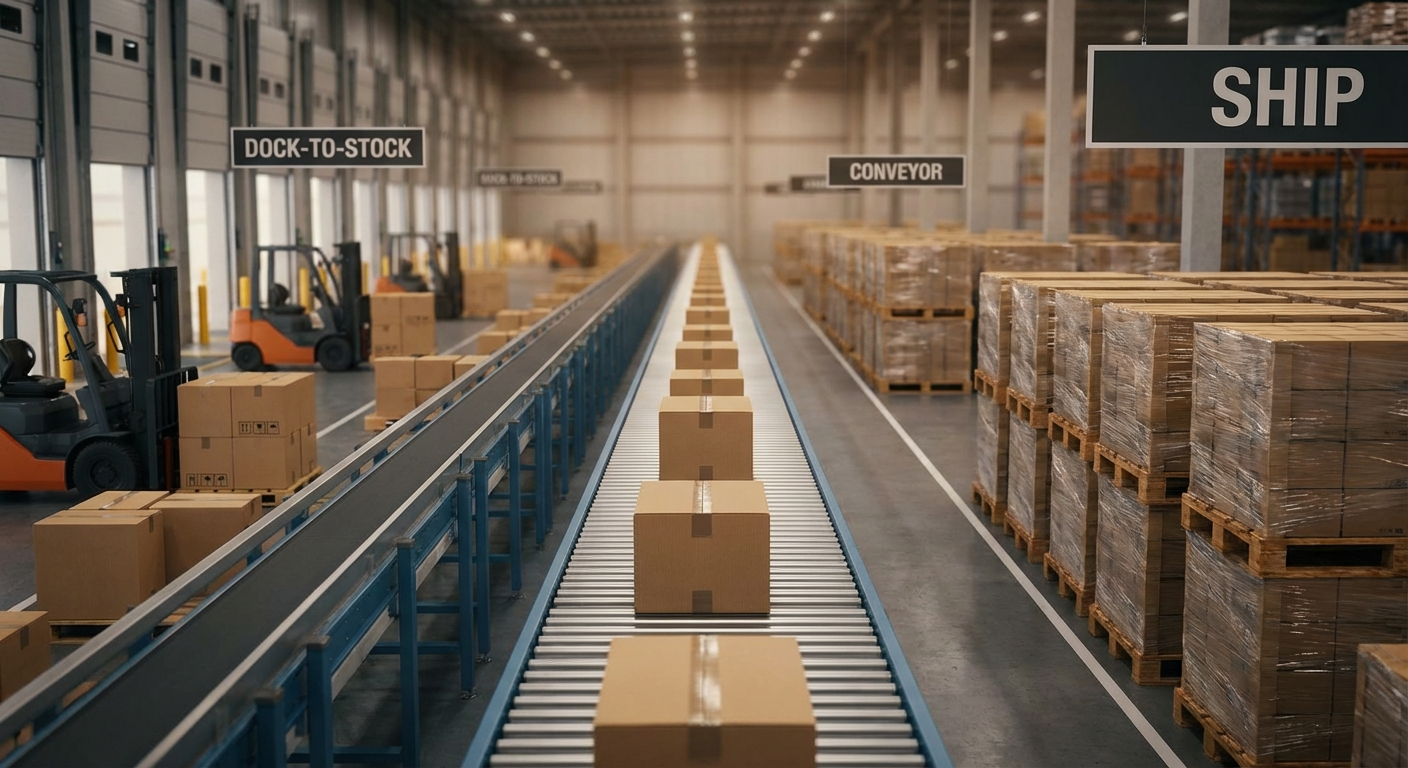
1. Receive and verify components: Arriving raw SKUs or components come with advanced shipping notices (ASNs). Warehouse teams count, inspect, and record lot or expiration date information if applicable. Dock-to-stock processes ensure inventory is put away within 24 hours to prevent downstream delays.
2. Store components appropriately: Fast-moving SKUs go to forward pick bins for easy access. Fragile, oversized, or specialty items are stored on dedicated racks or areas. Clear units of measure (each/inner case/case) prevent counting errors and confusion.
3. Batch pick components for kit builds: Warehouse staff pick items in batches based on demand forecasts and reorder points. Batching reduces travel time and labor by consolidating picks for multiple kits at once. Quality control sampling occurs before assembly starts.
4. Assemble kits on dedicated lines: Operators follow visual SOPs with photo standards at each station. Each component’s barcode is scanned to verify SKU and quantity accuracy. Label printing for each kit happens on the line, with lot and date information if needed. Marketing inserts such as instructions, coupons, or brand cards are added according to specification.
5. Perform in-line quality checks: Weight checks help detect missing items. Second-operator verifications are conducted for complex or high-value kits, and any exceptions are immediately set aside in designated bins for quick resolution.
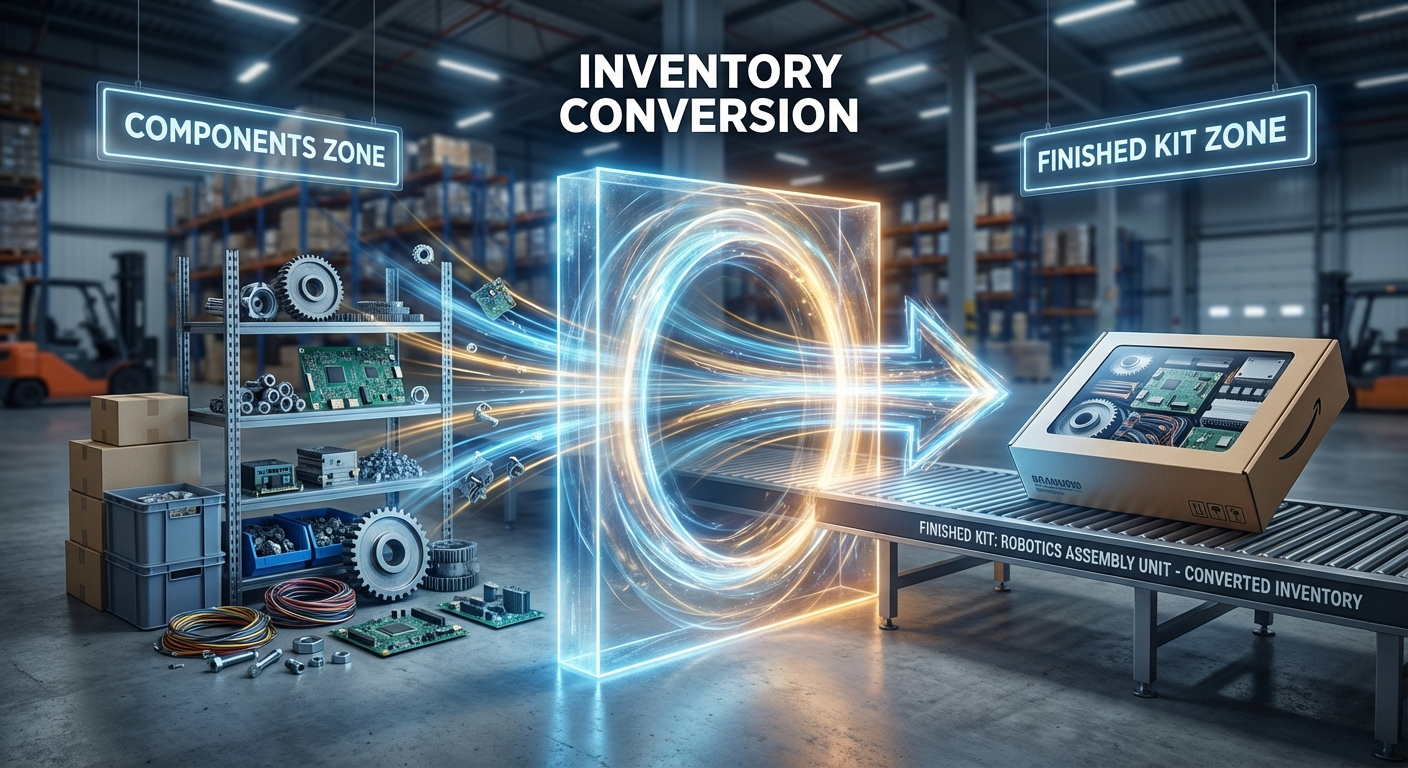
6. Convert inventory in your WMS: The WMS consumes inventory for the component SKUs and creates the finished kit SKU. This process is tied to BOMs and version numbers to maintain version control. Labor and yields are tracked to monitor cost and productivity.
7. Packout and store finished kits: Finished kits are packed using retail-ready or direct-to-consumer (DTC) packaging. Inner cases or pallets are created as per customer requirements. Kits are stored in forward pick locations for rapid order fulfillment.
8. Ship on a reliable daily cadence: Orders go out according to strict DTC cutoff times (e.g., early afternoon). Carrier pickups are scheduled based on volume and service level demands. SLAs typically support same-day or next-day turnaround times.
Understanding this workflow allows you to evaluate a 3PL’s capability to meet your brand’s fulfillment needs efficiently and without unnecessary labor costs.

Key KPIs and SLAs for Kitting Services
If your 3PL cannot reliably report on these KPIs weekly, they are operating without data-driven precision. Tracking these metrics ensures your kits are assembled correctly and shipped on time.
Pick accuracy (components): Ideal ≥ 99.5%. Notes: Ensures each kit contains the correct parts.
Finished kit accuracy: Ideal ≥ 99.5%. Notes: Includes correct version and labeling.
Dock-to-stock speed: Ideal same day or < 24 hrs. Notes: Speeds inventory replenishment.
Order cycle time: Ideal 24–48 hours. Notes: From kit finished to ready for shipment.
On-time ship rate: Ideal ≥ 98%. Notes: Meets client-agreed delivery windows.
Error rate (returns/claims): Ideal < 0.5%. Notes: Minimizes cost and customer dissatisfaction.
Throughput (kits/hour/line): Ideal tracked and trended. Notes: Enables planning for volume and labor.
Yield/scrap: Ideal documented. Notes: Monitors waste and quality control.
How All Points tracks and reports:
At All Points, every stage includes barcode scanning, line-side checklists, and supervisor signoff to build a clear audit trail. Our Warehouse Management System (WMS) supports native BOM and version control to prevent obsolete kits from shipping. Daily dashboards track receipts, builds, inventory, and shipments, while weekly review meetings enable continuous process improvements and batch size optimization.
Pricing Drivers for Kitting: What Moves Costs Up or Down
The cost of kitting breaks down primarily into labor time per unit, packaging material costs, and operational complexity. Understanding pricing drivers helps you budget and optimize your setup.
Key factors influencing pricing:
- SKU complexity: Kits with many components or visually similar SKUs slow down packing lines due to increased verification steps. Variations in color or size increase labor time.
- Batch size and turnover: Stable, large batch sizes reduce labor per unit through efficiency gains. Small, frequent run sizes increase setup time and labor costs.
- Packaging and presentation: Custom inserts, tissue paper, printed sleeves, or retail-ready boxes all add packaging material costs and assembly time. Pre-printed labels speed lines compared to on-demand printing but require inventory management.
- Handling and storage requirements: Fragile, hazardous, or oversized components add costs due to special handling, care, and expanded storage space needs.
- Versioning and frequency of kit changes: Frequent SKU swaps or kit reconfigurations drive operational overhead for retraining, obsolete inventory, and more configuration errors.
- Systems integration quality: Clean integration of Order Management System (OMS) and WMS data with kit SKUs, BOMs, and substitution rules lowers manual labor and errors. Electronic Data Interchange (EDI) or API syncing reduces data entry and shortens cycle time.
Bottom line: To lower unit costs, stabilize your BOMs, increase batch sizes, simplify packaging, and standardize reorder cycles. Efficient kitting lines are designed with these realities in mind.
Risks and Mitigations in Kitting
Kitting success depends on well-defined processes and controls. Here are common risks and how All Points mitigates them:
- Miscounts or wrong components: We enforce barcode scanning on every part, alongside weight checks on finished kits and photo standards within SOPs.
- Inventory stockouts mid-build: Real-time inventory syncing via OMS/WMS, build cadence tied to reorder points, and approved substitution rules help avoid delays.
- Labor bottlenecks during volume spikes: Modular batch plans sized to forecasted volumes, cross-trained operators, and scalable lines flex throughput without adding headcount.
- Quality drift over time: Standardized operator training, documented SOPs with version control, internal audits, and first-article inspections maintain quality standards.
- Shipping delays from rework or errors: In-line QA checkpoints catch errors before packing seals kits. Tight cutoff schedules coupled with proactive carrier communication prevent last-minute delays.
- Version confusion leading to incorrect kit shipment: Our WMS maintains BOM and version control, with quarantine processes for obsolete SKUs to prevent outdated products from shipping.
Through these mitigations, All Points ensures reliable kitting execution for growing brands.
The Atlanta Advantage for Kitting and Fulfillment
Location matters when scaling kitting and fulfillment operations:
- Two-day ground reach to ~80% of the U.S. population: Atlanta’s logistics hub status means ground service delivers quickly and cost-effectively across most of the country.
- Dense parcel and Less-Than-Truckload (LTL) carrier networks: Multiple daily pickups are available, even during volume spikes, ensuring flexibility and speed.
- Local vendor relationships: Close partnerships with packaging, printing, and material suppliers shorten lead times, enhance quality, and streamline supply chain coordination.
- Integrated services under one roof: Having kitting, ecommerce fulfillment, warehousing, and printing all in the same Atlanta facility reduces handling, streamlines workflows, and minimizes the risk of shipment or assembly errors.
All Points’ Atlanta advantage lowers your transit time and costs while providing reliable, scalable kitting services.
What You Get With All Points’ Kitting Services
All Points is a family-owned 3PL since 1995, trusted by fast-growth DTC and B2B brands to build and ship their kits efficiently—without increasing labor costs.
- Operator-grade assembly: Dedicated lines with barcode scanning, SOPs, and quality checks baked in. BOM/version control, lot tracking, and weight checks as needed.
- Integrated collateral and labeling: Branded labels, inserts, and sleeves printed and applied inline by the same experienced team.
- Real-time visibility: Dashboards that show inventory accuracy, build status, and SLA adherence. Daily update cadence with clear ship cutoffs.
- Ecommerce fulfillment integration: Kits flow directly into pick, pack, and ship for DTC and wholesale orders. One partner manages kitting and shipment to reduce errors and handoffs.
- Proven scalability: Modular lines flex up or down to handle volume spikes without proportional labor increases. Batch-size planning optimizes throughput.
- Straightforward onboarding: We blueprint your BOMs, packaging specs, and QA steps before first builds. Pilot builds with signoff ensure smooth full-scale rollout.
Explore more and get started today:
- All Points Kitting & Assembly Services: https://www.allpointsatl.com/services/custom-kitting-product-assembly
- Ecommerce fulfillment services: https://www.allpointsatl.com/services/e-commerce-order-fulfillment
Combine with warehousing, distribution, and printing for full brand control:
- Warehousing & Distribution: /services/warehousing-distribution
- Printing & Marketing Materials: /services/printing-marketing-materials
Kitting FAQs
What is kitting in logistics? Kitting pre-assembles multiple SKUs into a ready-to-ship kit with its own SKU. It reduces individual picking touches and improves fulfillment accuracy.
How does All Points handle kitting implementation? We map your BOMs, packaging, QA steps, and system integrations. After pilot builds and approval, we finalize SOPs and establish ongoing production with agreed SLAs.
What are typical SLAs for kitting accuracy and ship times? Pick and kit accuracy typically equals or exceeds 99.5%, with on-time shipping rates ≥ 98%. Dock-to-stock usually measures under 24 hours, and order cycle times run between 24–48 hours.
How does pricing vary for kitting services? Pricing depends on component count, packaging complexity, batch sizes, frequency of changes, special handling needs, and system integration quality. Stable SKUs reduce costs.
How quickly does Atlanta-based shipping reach customers? Atlanta serves roughly 80% of the U.S. population within two days ground transit, reducing transit times and costs without expensive air shipping.
Ready to Ship More Kits Without Increasing Labor?
Get a kitting quote: https://www.allpointsatl.com/services/custom-kitting-product-assembly
Need more insight? Download the free 3PL Guide: https://www.allpointsatl.com/resources/3pl-guide-for-e-commerce-and-amazon-sellers
Based in Atlanta Since 1995
Ask for an operations consultation to review your BOMs, packaging, and forecast and scope the right kitting line and SLA for your brand.
Disclaimer: This article is for informational purposes only and does not constitute legal or financial advice. Consult your operations or legal experts before implementing third-party fulfillment or assembly services. All Points is not responsible for individual business outcomes.
Additional Resources
For further reading on scaling order volume without hiring more staff and improving fulfillment efficiency, consider the following:
- How to Scale Order Volume Without Hiring More Staff (Tejas Software): https://www.tejassoftware.com/en/knowledge-center/blog/oms-how-to-scale-order-volume-without-hiring-more-staff.aspx
- 3 Ways to Speed Up Order Fulfillment Without Adding Staff (SKU.IO): https://www.sku.io/3-ways-to-speed-up-order-fulfillment-without-adding-staff/
- 5 Best Automated Order Fulfillment Solutions (CheckoutChamp): https://checkoutchamp.com/media/5-best-automated-order-fulfillment-solutions-271
- How to Improve Order Fulfillment Efficiency (Conexiom): https://conexiom.com/blog/how-to-improve-order-fulfillment-efficiency
- Fulfillment Efficiency (DCL Corporation): https://dclcorp.com/blog/fulfillment/fulfillment-efficiency/
By leveraging professional kitting services like All Points, brands can scale their assembly and packaging processes efficiently and accurately—without the overhead of additional labor—unlocking faster shipping, better inventory management, and a more consistent customer experience.
Conclusion
Kitting bundles multiple SKUs into ready-to-ship kits, streamlining assembly and fulfillment without adding labor. Learn how outsourcing to experts like All Points ensures accuracy, speeds shipping, simplifies inventory, and scales your brand efficiently with proven workflows and Atlanta’s logistic advantages.

.webp)
.webp)
.webp)
.webp)


