


Improving Order Accuracy Without Slowing Shipping: Operator-Grade Strategies for DTC Brands
Order accuracy drives repeat purchases. But most teams “fix” it by adding checks that slow shipping. You don’t have to trade speed for quality. Here’s how to improve order accuracy without slowing shipping, with the exact workflows, KPIs, pricing drivers, and risks we manage daily as an Atlanta 3PL.

What Is Order Accuracy and When to Prioritize It?
Order accuracy in fulfillment means making sure the exact right SKUs (stock keeping units), correct quantities, and appropriate packaging leave your facility on time and intact. This is not just a vanity metric — accuracy directly impacts customer trust, reduces costly returns, prevents re-shipments, lowers customer support tickets, and protects your brand reputation. Order errors can also hide deeper root causes, such as poor slotting, bad SKU logic, or weak warehouse management system (WMS) discipline.
Why Order Accuracy Matters
Customer satisfaction hinges on receiving the right products as expected, in perfect condition, and on time. Consistently high order accuracy builds brand loyalty — consumers are more likely to abandon repeat purchases after a negative order experience. One mis-shipped item can trigger expensive returns and damage your brand image.
Accuracy is also cost containment: returns and re-shipments eat into margins, while extra customer support consumes team bandwidth and adds friction to the customer journey.
When to Tighten Accuracy Controls
Prioritize order accuracy when:
• SKU count is growing, especially with many lookalike variants (similar sizes/colors).
• You introduce complex subscription boxes, custom kitting, or promotional inserts.
• You onboard retail/wholesale customers requiring routing guides, EDI labels, and retailer mandates.
• Order velocity spikes seasonally or due to campaigns, requiring rapid scaling of labor and processes.
Common Tradeoffs and How to Avoid Them
Many brands assume accuracy must come at the cost of slower shipping by adding inspection late in the workflow. This “inspect everything” approach kills throughput, stresses labor, and can still miss errors introduced earlier.
The better solution is shifting accuracy upstream — starting from receiving and slotting, through bill-of-materials (BOM) enforcement and lightweight verification during pick/pack — reserving full inspection only for high-risk SKUs or orders.
Further reading: Atomix Logistics (https://www.atomixlogistics.com/blog/fulfillment-accuracy-reducing-errors), ID’s Fulfillment (https://idsfulfillment.com/blog/fulfillment-strategy-tips/5-proven-strategies-to-improve-order-accuracy-in-fulfillment/), NetSuite (https://www.netsuite.com/portal/resource/articles/erp/order-accuracy.shtml).

Step-by-Step Workflow to Increase Accuracy Without Sacrificing Speed
Here’s a practical, operator-grade standard operating procedure (SOP) designed to eliminate errors at each stage while keeping touches low and throughput high.
1. Receiving and Dock-to-Stock
• Scan at pallet and case level against the advanced shipping notice (ASN) using barcode technology.
• Validate item, lot, and expiry dates before putaway to catch upstream errors early.
• Print scannable pallet labels when vendor labeling is weak or inconsistent.
• Fix bad barcodes immediately—don’t wait until pick or pack stages where errors are costlier.
• Target dock-to-stock time under 4 hours to ensure real-time sellable inventory availability.
2. Putaway and Slotting
• Slot high-velocity SKUs in the golden zone (waist to shoulder height) near pack stations to reduce travel.
• Separate lookalike variants physically using bin dividers and visual cues.
• Store kits and individual components in dedicated, labeled bins to avoid commingling.
• Lock all slotting decisions in the WMS—avoid shortcuts or “tribal knowledge.”
3. Kit Build (If Applicable)
• Use BOMs (bills of material) with version control; scan components during build and the finished kit at pack.
• Pre-build common kits in batches and perform sample-based QC following Acceptable Quality Levels (AQL) by assessed risk.
• Affix kit ID labels with barcodes to enforce scan validation during later picking and packing.
4. Wave Planning and Batching
• Batch orders by like SKUs, ship method, and zone to reduce travel and context switching.
• Create dedicated exception waves for fragile SKUs, orders with gift messages, or substitutions.
• Schedule waves to align with carrier cutoffs and avoid starving pack stations.
5. Picking
• Enforce mandatory scan-to-confirm on each pick.
• Provide pick tickets with SKU images and descriptions to distinguish lookalike SKUs.
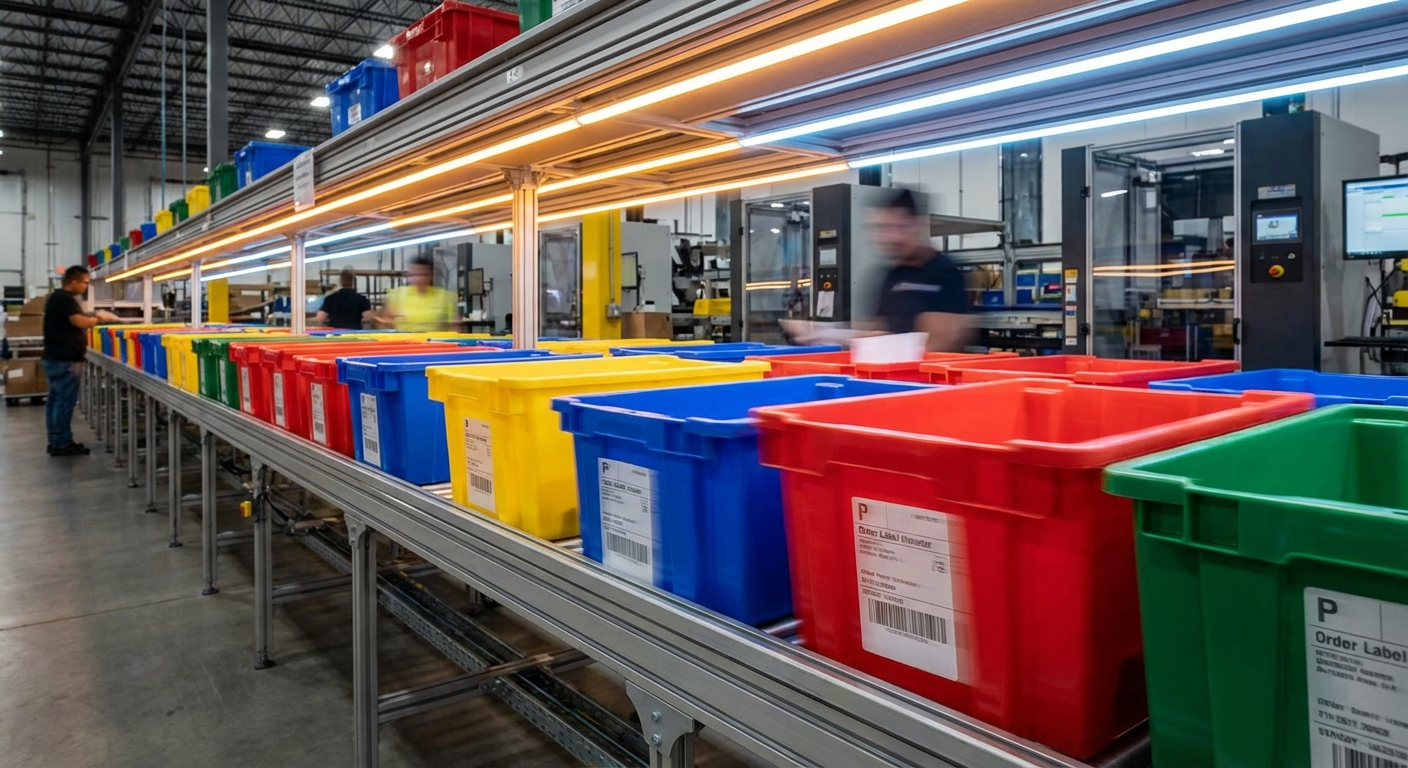
• Pick to color-coded totes labeled with order IDs—avoid loose paper labels on random boxes.
• Set a realistic picker speed target balancing volume and accuracy—speed without scans is theater.
6. Packout
• Scan every item into the order and require a final “order complete” scan before label printing.
• Use integrated scales and dimensioners to identify mis-picks or missing items via weight/size tolerance.
• Capture photos of packed boxes for high-value or frequently disputed SKUs; store photo URLs linked to order records.
• Standardize packing inserts and dunnage per SKU or kit to remove guesswork.
• Maintain an ergonomic, consistent pack station layout: scanner on left, scale centered, tape to the right, monitor at eye level.
7. Quality Control — Use It Surgically
• Avoid 100% inspection of every order; it kills throughput and frustrates teams.
• Use smart sampling (10–20% spot checks) focused on new SKUs, newly onboarded labor, or orders flagged as high risk.
• Reserve 100% QC only for retailer routing guide compliance, chargeback-sensitive SKUs, or critical customer segments.
8. Ship Confirm and Handoff
• Auto-map shipping methods to avoid misclassification or late delivery.
• Manifest orders aligned with carrier pickup windows; maintain a live dashboard of staged vs. in-process orders.
• Audit retailer carton labels (GS1-128/UCC128) diligently; label errors here cost chargebacks.
9. Daily Cadence Review
• Start the shift with a 15-minute huddle covering volume, cutoffs, hot orders, and staffing needs.
• Review the previous day’s misses with root-cause analysis to develop immediate fixes—no blame, all learning.
• Maintain a live KPI board visible on the fulfillment floor: pick accuracy, on-time shipping, cycle time, dock-to-stock, and rework.
SLA and KPI Targets That Prove You’re Winning
Measuring both speed and accuracy yields actionable insights tied to behaviors you can control.
KPI Targets
KPI: Pick Accuracy Rate | Target: 99.5%+ | Why it matters: Prevents costly returns, refunds, and re-picks | How All Points executes: Mandatory barcode scans; golden-zone slotting; lookalike SKU separation; weight checks at pack
KPI: Order Cycle Time | Target: Same-day if in by cutoff; 24–48 hours standard | Why it matters: Keeps delivery promises and customer satisfaction | How All Points executes: Batch processing; exception waves; balanced labor deployment
KPI: Dock-to-Stock Time | Target: Under 4 hours | Why it matters: Ensures inventory accuracy and immediate availability | How All Points executes: ASN-based receiving; scan validation; efficient putaway
KPI: On-Time Shipping % | Target: 98%+ | Why it matters: Maintains marketplace SLAs and customer trust | How All Points executes: Strict cutoff discipline; Atlanta 2-day ground carrier reach
KPI: Inventory Accuracy (Cycle Count) | Target: 99%+ location-level accuracy | Why it matters: Prevents phantom stockouts and mis-picks | How All Points executes: ABC cycle counting; locked slotting configuration; variance management
Further reading: SC Logistics (https://www.sclogistics.com/resource-center/blog-posts/ensuring-quality-accuracy-in-order-fulfillment/), iDrive Logistics (https://www.idrivelogistics.com/blog/how-to-improve-order-accuracy-and-reduce-fulfillment-errors/).

Pricing Drivers Tied to Accuracy and Speed
Tradeoffs between accuracy and speed often come down to labor, technology, SKU complexity, and volume.
• Labor intensity: Adding QC checks raises labor time per order. Steps like scan-to-pack and weight verification often reduce net costs by avoiding expensive error fallout (often $5–$15 per avoided error).
• Technology investments: Barcode scanners, integrated scales, dimensioners, and photo capture systems add upfront/per-order costs but reduce reships and chargebacks.
• SKU complexity: Lookalike SKUs, bundles, and promotional inserts require better slotting, training, and BOM maintenance, increasing setup costs.
• Batch size and order velocity: High-volume batch waves increase throughput and lower cost per order; erratic spikes strain labor models, increasing error risk and overtime.
• Kitting strategy: Pre-building popular kits in batches is typically lower cost and higher accuracy than on-the-fly kitting during packout.
• Packaging breadth: Many box sizes and custom inserts slow pack speeds. Tight cartonization rules and a limited packaging menu keep speed high.
• Returns handling: Strong reverse logistics prevent “mystery inventory” from contaminating forward stock and disrupting accuracy.

Risks to Watch and How to Mitigate Them
Risk: Over-inspection bottlenecks create throughput drain | Mitigation: Use sampling QC based on risk and AQL; expand upstream quality controls in receiving and slotting.
Risk: Picker and packer burnout chasing speed targets | Mitigation: Set realistic pick rates, rotate tasks, design ergonomic stations, and automate repetitive processes.
Risk: Poor WMS discipline leads to inventory discrepancies | Mitigation: Enforce barcode scans at every key step; lock down manual overrides; conduct regular slot audits.
Risk: SKU sprawl and lookalike confusion | Mitigation: Rationalize SKUs; apply distinctive labeling and imagery; physically separate in slotting.
Risk: Bad barcodes and vendor labels | Mitigation: Validate barcodes at receiving; re-label with your own print if necessary.
Risk: Promotion complexity causing mix-ups | Mitigation: Pre-kit promotions when possible; flag orders with special inserts; assign to exception waves.
Risk: Retail routing guide non-compliance risking chargebacks | Mitigation: Use detailed checklists for labels (e.g., GS1-128), carton contents, and ASN timing; apply 100% QC on retail orders.
Risk: Seasonal labor influx creating errors | Mitigation: Cross-train early; assign new hires to low-risk picks; pair with experienced teammates.
The Atlanta Advantage for Fast, Accurate Fulfillment
All Points leverages the unique advantages of its Atlanta location to serve DTC and retail brands striving for both speed and quality.
• Two-day ground reach to ~80% of the U.S.: Geography enables a buffer on order cycle time without paying for costly air freight, reducing last-minute rushes and errors.
• Dense carrier network and airport proximity: Reliable carrier pickups with late cutoffs help prevent missed shipping windows.
• Lower facility and labor costs relative to coastal hubs: Enables reinvestment in training, technology, and quality measures.
• Integrated printing and kitting under one roof: Fewer handoffs mean tighter control of inserts, labels, and branded materials.
• Centralized fulfillment node: One Atlanta location serves most volume efficiently, adding satellites only when SKU mix or velocity justifies complexity.
What You Get with All Points
• Custom kitting and printing integrated under one roof. Learn more: https://www.allpointsatl.com/services/custom-kitting-product-assembly
• Ecommerce fulfillment tuned for speed and accuracy with operator-grade SOPs and real-time WMS discipline. Explore: https://www.allpointsatl.com/services/e-commerce-order-fulfillment
• Disciplined receiving and dock-to-stock practices to ensure inventory accuracy from arrival.
• Daily cadence reviews and KPI dashboards that drive continuous improvement.
• Atlanta-based network hitting aggressive carrier cutoffs and enabling 2-day ground delivery to most customers.
Real-World Execution Examples
• Subscription kits: Pre-build weekly A/B/C kit variants with BOM version control, scan components in/out, 10–20% sample QC per batch, and weight-check at pack. Result: 99.7% accuracy with same-day ship by cutoff.
• Retail + DTC mix: Separate waves for retailer POs requiring GS1-128 labels and 100% QC on carton contents, while running DTC through batch processing with scan-to-pack and integrated scales. Result: Avoid chargebacks without slowing DTC throughput.
• Lookalike apparel: Golden-zone slotting, strong SKU imagery on pick tickets, bin separators, and 2 oz weight tolerances at pack. Result: Fewer mis-picks without adding checkers.
FAQ
How much does “higher accuracy” add to my cost per order?
Expect 3–8% higher cost per order if you move from basic scan-to-pack to scan-to-pack plus weight verification and photo capture. Returns avoided and customer satisfaction improvements usually pay this back quickly.
What accuracy SLA should I hold my 3PL to?
Aim for pick accuracy of 99.5%+ and on-time shipping at 98%+. Dock-to-stock under 4 hours is essential for inventory accuracy. Tie misses not only to credits, but to root-cause analysis and corrective actions.
Can I get same-day shipping and high accuracy?
Yes, if orders arrive before cutoff, you batch intelligently, apply scans and weight checks consistently, and leverage transit advantages such as Atlanta’s 2-day ground network.
What’s the typical onboarding timeline to get this right?
Typically 2–6 weeks depending on SKU complexity, kitting needs, and integration scope, using a staged plan covering data audits, SKU standards, WMS rule configuration, pilot waves, and full scale-up.
Which integrations matter most for accuracy?
Barcode-enforced WMS scanning, clean SKU master data (unit of measure, weights/dimensions), carrier mapping, and for wholesale, EDI 940/945 with carton content detail. Without clean data, automation just speeds mistakes.
Sidebar Module
Based in Atlanta since 1995 | Call [phone] | Email [email]
Primary CTA
Get a kitting quote and see how All Points keeps orders accurate without slowing your shipping. Talk to an Atlanta 3PL operator about your workflow: https://www.allpointsatl.com/services/custom-kitting-product-assembly
Secondary CTA
Download the 3PL Guide to compare partners confidently: https://www.allpointsatl.com/resources/3pl-guide-for-e-commerce-and-amazon-sellers
Meta Title
Improving Order Accuracy Without Slowing Shipping | Atlanta 3PL
Meta Description
Practical tactics to improve order accuracy without slowing shipping. See workflows, KPIs, pricing drivers, risks, and the Atlanta advantage from a 30-year 3PL.
Disclaimer
All Points is an Atlanta-based, family-owned 3PL founded in 1995. We deliver end-to-end logistics—from custom kitting and ecommerce fulfillment to warehousing, distribution, and printing—so your brand ships accurately, on time, and at scale.
Conclusion
Learn how to boost order accuracy without slowing shipping using proven workflows, KPIs, and risk management from an Atlanta 3PL. Optimize receiving, slotting, picking, and packing to improve customer satisfaction, reduce returns, and maintain fast fulfillment—all while controlling costs and leveraging local logistics advantages.

.webp)
.webp)
.webp)
.webp)


