


Ecommerce Fulfillment: How It Works, Costs, and Key Risks for DTC Brands
Ecommerce fulfillment can make or break your direct-to-consumer brand’s reputation. This guide breaks down how fulfillment workflows run, what impacts pricing, and key service guarantees. If you’re a founder, ops manager, or procurement lead comparing 3PL partners, here’s what you need to know to pick the right fit.

What Is Ecommerce Fulfillment and When Should You Use It?
Ecommerce fulfillment is the backbone of any online retail operation. Put simply, it means the process of receiving, storing, picking, packing, and shipping online orders to customers. This end-to-end workflow ensures that goods ordered on an ecommerce platform reach the customer accurately, quickly, and in perfect condition.
For direct-to-consumer (DTC) brands, ecommerce fulfillment becomes critical once order volumes grow beyond what can be efficiently managed in-house. Many companies start fulfilling orders themselves, but as demand scales, internal fulfillment often suffers from delays, inaccuracies, and high labor costs.
This is when it makes sense to outsource to a specialized third-party logistics (3PL) provider. High-quality ecommerce fulfillment delivers several advantages:
Efficiency at scale — Handling larger volumes with industrialized workflows and technology.
Improved customer retention — Accuracy and fast delivery create repeat buyers.
Brand reputation — Late or damaged shipments can directly erode trust.
Cost management — Avoid fixed overhead by paying-as-you-go storage and labor.
Ecommerce fulfillment also makes sense whenever SKU complexity, customization requests, or customer service needs exceed internal operational bandwidth. Outsourcing fulfillment allows brand teams to stay focused on growth, marketing, and product innovation rather than daily logistics fights.
The key metric for deciding when to shift is volume — usually when order counts surpass 500 per day regularly, or when fulfillment errors and delays threaten customer satisfaction. At that scale, a professional 3PL partner combines better systems, optimized processes, and shared risk to grow smoothly with your brand.
Step-by-Step Ecommerce Fulfillment Workflow
Understanding every stage in the fulfillment workflow will help you align expectations and spot opportunities for cost savings or risk reduction.
1. Receive Products: Your 3PL warehouse accepts inbound shipments from factories or vendors. This includes verifying shipment quantities and performing quality control checks to flag damaged or incorrect goods.
2. Put-away per SKU Location: Products get stored in designated locations within the warehouse. These might be bin storage for small items or pallet storage for bulk goods. Proper slotting improves picking speed.
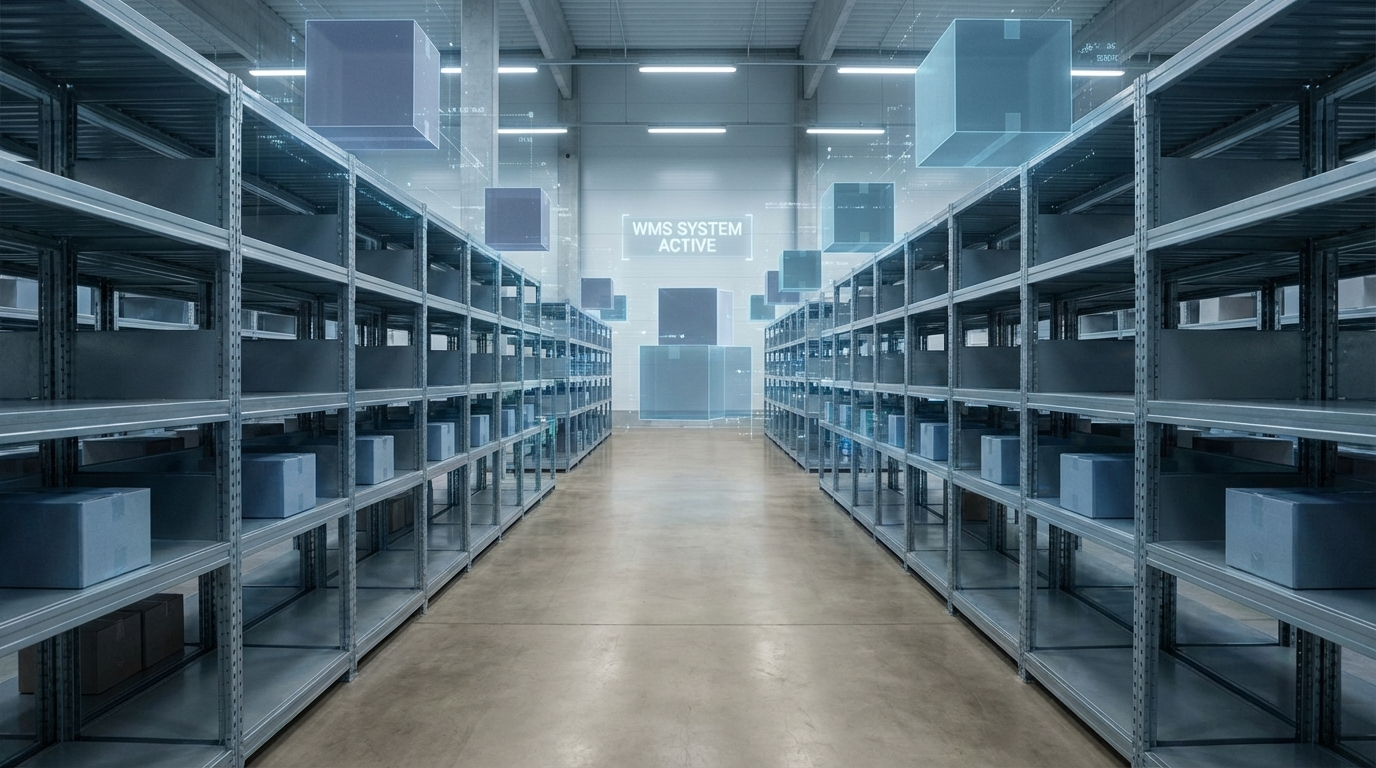
3. Manage Inventory Accuracy: Warehouse Management System (WMS) software tracks every unit’s location and status in real-time. Cycle counts and inbound quality control help maintain inventory integrity daily, reducing out-of-stocks and mispicks.
4. Process Inbound Orders: Customer sales orders flow into the WMS through integrations such as EDI 940/945 files or API connections with your ecommerce platform and order management system (OMS).
5. Batch Picking: Orders are grouped into optimized pick waves arranged along efficient pick paths to minimize travel time for warehouse operators. This reduces labor and speeds fulfillment.
6. Pack Orders: Picked items move to packing stations, where custom kitting, bundling, and inserting printed marketing materials take place as requested. Packing accuracy and presentation are brand touchpoints.
7. Stage for Outbound Shipping: Completed orders are staged near the shipping docks and loaded onto carrier trucks before established cutoff times to meet promised delivery windows.
8. Provide Shipment Tracking and Updates: Integrated technology allows customers to receive proactive email or SMS notifications with tracking information. Transparency reduces customer inquiries and improves the delivery experience.
These workflow stages are the operational heart of ecommerce fulfillment. When executed well, they underpin scalable, reliable delivery that delights customers and lowers your cost per order.

Ecommerce Fulfillment KPIs and SLAs to Expect
When selecting a 3PL partner, it’s critical to understand the key performance indicators (KPIs) and service-level agreements (SLAs) they commit to. These metrics govern fulfillment quality, speed, and accuracy.
Pick Accuracy: Typical benchmark ≥ 99.5%. Why it matters: Prevents costly returns and customer dissatisfaction from wrong items.
Order Cycle Time: Typical benchmark 24–48 hours. Why it matters: How quickly orders move from receipt to shipment impacts customer delivery speed.
Dock-to-Stock Time: Typical benchmark ≤ 24 hours. Why it matters: Fast inventory put-away ensures product is sellable immediately upon arrival.
On-Time Ship Rate: Typical benchmark ≥ 98%. Why it matters: Supports reliable delivery promises and boosts customer satisfaction.
Consistently meeting or exceeding these benchmarks requires rigorous operational discipline, strong technology integration, and often a partnership approach between brand and 3PL so there are no surprises.

Pricing Drivers for Ecommerce Fulfillment
Fulfillment pricing can vary widely based on operational complexity and service levels. Key drivers include:
Volume: Economies of scale often reduce per-unit costs with larger batch sizes; very small volumes tend to attract higher fees.
SKU Complexity: A high number of SKUs increases picking complexity and requires more detailed slotting and inventory management.
Custom Kitting and Printing: Labor-intensive processes such as bundling multipart kits or printing marketing inserts add time and material costs.
Storage Type: Pallet storage tends to be cheaper than picking from bins, but smaller items require more precise management and thus higher expenses.
Shipping Options: Carrier selection, shipping zones, and delivery speeds directly affect transportation costs passed on to your fulfillment bill.
Integration Level: API or EDI automation cuts errors but requires setup fees and ongoing IT support.
Non-Standard Requests: Last-minute order changes, rush shipments, or special packaging add surcharges.
Understanding these pricing components allows you to tailor your fulfillment plan for cost efficiency and better predict monthly expenses.
Key Risks and How to Mitigate Them
Operating ecommerce fulfillment at scale carries several risks that can impact brand reputation and margin if left unchecked. Common risks and mitigation strategies include:
Labor Shortages: Insufficient staffing can lead to delayed picking. Mitigate with cross-training and predictable batch scheduling to balance workloads.
SKU Sprawl: An excessive number of SKUs increases picking errors and inventory confusion. Address with SKU rationalization programs and disciplined slotting.
Inventory Inaccuracy: Poor WMS data updates cause overselling or stockouts. Conduct daily cycle counts and enforce strict inbound quality control.
Shipping Cutoff Misses: Missing carrier pickup deadlines delays deliveries. Enforce strict cutoff SOPs and maintain contingency carrier backups.
Communication Lapses: Failure to proactively inform customers about issues leads to support volume spikes. Implement multi-channel updates—email, SMS, branded tracking pages—with automated triggers.
Transparent communication practices coupled with solid warehouse processes reduce the impact of fulfillment issues when they inevitably occur.
The Atlanta Advantage for Ecommerce Fulfillment
All Points operates a centrally located Atlanta fulfillment hub that delivers major competitive advantages for DTC brands:
Speed to Customers: The Atlanta location enables ground delivery to over 80% of U.S. addresses within two days. This reduces reliance on costly expedited air shipping and helps maintain delivery promises.
Cost Reduction: Proximity to most population centers lowers shipping costs and return rates.
Scalable Facilities: Our warehouse supports in-house custom kitting and printing services that accelerate packout and resolve quality holds faster.
Proven Workflow Expertise: Years of servicing high-volume DTC brands have honed our processes to reliably hit KPIs and SLAs.
Family-Owned Reliability: Since 1995, All Points has cultivated a partnership mindset that prioritizes long-term brand trust over short-term margins.
This local advantage, combined with integrated capabilities, makes All Points a strong fulfillment partner for ambitious ecommerce brands.
What You Get with All Points
Partnering with All Points means access to seamless ecommerce fulfillment integrated with additional services, all under one roof:
Custom kitting and assembly services tailored to your SKU requirements — https://www.allpointsatl.com/services/custom-kitting-product-assembly
Printing and marketing materials solutions to enhance branded packaging and in-box inserts — https://www.allpointsatl.com/services/printing-marketing-materials
Our operator-grade execution rests on real standard operating procedures (SOPs), measurable KPIs, and transparent pricing. Being Atlanta-based means you benefit from faster, more cost-efficient shipping to the majority of your customers without the guesswork.
Rather than offering bargain pricing that sacrifices reliability, we emphasize clean scale and risk mitigation so your fulfillment operation grows predictably alongside your brand.

How to Communicate Fulfillment Issues to Customers
Every ecommerce brand hits bumps: missed cutoffs, SKU shortages, or carrier delays. What separates professional brands is how fast and clearly they communicate issues, and what options they provide customers to recover trust.
Here is a practical playbook recommended for DTC teams managing fulfillment delays without damaging margins or goodwill.
What Counts as a “Fulfillment Issue” (and Why Customers Care)
Common fulfillment challenges your customers will notice:
Missed shipping cutoff: Orders picked but not loaded on the truck in time.
Carrier exceptions: Weather, mechanical failures, or lost scans delaying delivery.
Inventory stockouts or QC holds: Items listed as available but held due to quality or inbound delays.
Address problems: Incomplete or incorrect delivery information.
Mispicks or damage: Wrong items shipped or products arriving damaged.
Split shipments: Multi-item orders shipped separately without clear customer communication.
Customers evaluate your brand by two criteria: Did you notify them quickly and honestly? Did you provide reasonable next steps? Delays in communication usually cause support call spikes (“Where is my order?”), bad reviews, and lower repurchase rates.
Further reading: https://www.shipnetwork.com/post/9-tips-to-communicate-shipping-delays-to-customers and https://squareup.com/us/en/the-bottom-line/reaching-customers/communicate-to-customers-about-delivery-delays
The Operator’s Rulebook: Timing, Channels, Ownership
Timing: Notify customers within 24 hours of recognizing you’ll miss your SLA. For urgent issues like expedited order risk or address problems, communicate within 1 hour.
Channels: Use a layered stack of communication tools based on impact.
Product Detail Page/cart ETA and site banner for broad incidents (e.g., severe weather).
Post-purchase order confirmation page updates plus email/SMS for order-specific messages.
Branded tracking pages showing real-time status.
Direct email or SMS alerts for exceptions.
Ownership: Assign one team member accountable for root cause analysis and recovery (operations preferred) and one for customer messaging (CX team). Avoid ping-pong between departments by using shared incident codes, centralized Slack/Teams channels, and executive sponsorship.
Incident Tiers and Communication Approaches
Tier 1: Minor Carrier Lag — Scenario: 1–2 days late but still moving. Customer message example: “Your package is in transit but delayed due to carrier issues.” Actions/compensation: Email with updated ETA; no compensation recommended.
Tier 2: Missed Cutoff — Scenario: Shipment delayed to next business day. Customer message example: “We missed today’s cutoff; your order will ship tomorrow.” Actions/compensation: Prioritize next pick wave. Upgrade shipping if expedited paid and at risk.
Tier 3: Stockout/QC Hold — Scenario: Item on hold; unknown ship date. Customer message example: “Order held due to quality or replenishment delay.” Actions/compensation: Offer wait with ETA, free swap, partial ship, or cancellation. Compensation if delay exceeds policy.
Tier 4: Lost Package — Scenario: No carrier scans for 3+ business days. Customer message example: “Carrier not scanning package; investigating now.” Actions/compensation: File trace. Offer reship or refund immediately for VIP/time-sensitive.
Tier 5: Widespread Event — Scenario: Severe weather or carrier outage affecting many orders. Customer message example: “Severe weather delaying shipments. Expect +2–3 days.” Actions/compensation: Site banner, updated PDP ETAs, post-purchase emails. Suppress expedited options temporarily.
Message Structure That Works
Keep messages short, clear, and actionable:
Subject: We’re on it: Update on Order #12345
Opener: Quick status summary (late/missing/held).
Cause: Plain explanation without jargon.
Action: What you did (reprioritized, upgraded shipping, filed trace).
Options: Customer choices via one-click buttons (cancel, wait, swap).
New ETA: Realistic time frame, not over-promise.
Apology + contact: Human sign-off with reply-to address, no “do-not-reply.”
Tracking: Link to real-time order status page.
Example (missed cutoff):
Subject: Update on your order #12345
Hi [Name], we missed today’s shipping cutoff while processing your order. We’ve moved it to the first pick-and-pack wave tomorrow and upgraded your shipping to help keep delivery on track.
- New estimated delivery: Wed–Thu
- Track your order: [link]
If you’d prefer to cancel, reply here and we’ll process it right away. Sorry for the delay—we’re on it.
—All Points Ops
Front-End Fixes That Reduce Support Tickets
Display true ETAs — avoid promising expedited delivery when capacity can’t support it.
“Order by [time] for same-day shipping” messaging tied to live carrier cutoffs.
Honest stock warnings (“Ships in 3–5 business days” instead of “In stock” when out).
Live order status pages with milestone updates (picked, packed, label created, first scan, exception).
Data and Systems You Need to Do This Well
Clean WMS Events: Receiving, put-away, pick complete, pack complete, manifested, carrier pickup timestamps.
Carrier Exception Feeds: Missed scan alerts, shipping delays, banned address flags, return-to-sender codes.
OMS Rules Engine: Automate communications based on event triggers (e.g., label created but no scan after 48 hours).
ESP/SMS Integration: Personalize with order metadata, customer VIP flags, and promised delivery windows.
Support System: Use macros tied to incident codes, timers, and first-contact resolution tracking to maintain efficiency.
Communication KPIs and SLAs That Matter
Time-to-notify on delay: Benchmark <24 hours from detection. Reason: Reduces “Where Is My Order” (WISMO) tickets and maintains trust.
Address verification outreach: Benchmark <1 hour of order placement. Reason: Prevents shipping mistakes and same-day cutoff misses.
First response time: Benchmark <2 business hours. Reason: Decreases customer churn and chargebacks.
Resolution time (Tier 1–2): Benchmark same business day. Reason: Avoids unnecessary compensation payouts.
Handling VIP expedite breaches: Benchmark automatic upgrade + notification <1 hour. Reason: Protects high-value customers.
Incident SOP You Can Copy
1. Detect: Use WMS/carrier events that flag exceptions (e.g., no first scan in 48 hrs).
2. Classify: Assign tier incident code (T1–T5), promised-by date, and priority tags.
3. Decide: Follow matrix to choose action (upgrade, reship, partial, refund).
4. Communicate: Send tailored messages by email/SMS and update order status pages.
5. Fix: Reprioritize picking, upgrade shipping, correct address, or reship as required.
6. Close: Confirm delivery, log resolution codes, and identify root cause.
7. Review: Weekly meetings to analyze incident trends and implement prevention.
Prevention Beats Apology: Operational Fixes
Cutoff Discipline: Assign single owner responsible for cutoff board. Use overflow triggers early if volume exceeds forecast by 15%.
Smart Batch Picking: Group orders by carrier, method, and zone to maximize truck loading efficiency.
Slotting & SKU Rationalization: Keep fast-moving SKUs easy to pick; retire obsolete variants.
Cycle Counts & Inbound QC: Daily inventory accuracy checks, reject faulty pallets on arrival.
Address Validation Upfront: Auto-validate addresses at checkout; flag issues for same-day CX intervention.
Dynamic Throttling: Adjust order lead times on-site rather than breaking promises.
Compensation Without Training Bad Behavior
Ship upgrades at your cost only when you breach paid-expedite or exceed 48-hour late SLA.
Offer 10–15% discounts or store credit only after 5+ business days delay or repeated failures with a customer.
Replace or refund lost/damaged packages immediately.
Do not blanket compensate for carrier-wide events; set expectations early.
Working With Your 3PL on Communications
To keep end customers informed smoothly, require the following from your 3PL partner:
Daily ship log by carrier and method with actual pickup timestamps.
Missed-cutoff reports including root cause and remediation notes.
Exception feeds for labels missing first scan after 24/48 hours, carrier holds, and returns to origin.
SLAs on dock-to-stock and order cycle times aligned to your published ETAs.
At All Points, we:
Enforce hard cutoffs with secondary pickups during volume spikes to avoid missing trucks.
Push event-level WMS data directly to your OMS/ESP for proactive comms or trigger branded notifications on your behalf.
Support scripted options for backorders or QC holds and same-day partial packouts to show progress.
Learn more: https://www.allpointsatl.com/services/e-commerce-order-fulfillment
The Atlanta Advantage: Fewer Delays to Begin With
Shipping from our Atlanta hub gives brands a powerful delivery speed advantage. Ground freight reaches over 80% of U.S. addresses within two days, cutting the need for more costly air shipping to meet SLAs. Fewer “in-transit, delayed” exceptions occur because ground transit routes are more predictable than air during peak seasons.
More on warehousing and distribution: https://www.allpointsatl.com/services/warehousing-distribution
Branded Make-Goods You Can Deploy Quickly
When you need to apologize in the box, timing is critical.
We produce and insert branded apology cards, VIP letters, or limited-time offers right onsite—no cross-vendor lag.
For QC holds requiring SKU swaps, our team executes custom kitting on the fly to provide accurate, brand-aligned replacements without delay.
Explore custom kitting and assembly: https://www.allpointsatl.com/services/custom-kitting-product-assembly
What You Get with All Points
An operator who flags risks early and communicates clearly—not a silent partner causing support fallout.
Event-level data and disciplined cutoffs that ensure your promises match real capability.
Under-one-roof execution including custom kitting and assembly as well as printing and marketing materials solutions so your inserts and apology cards ship the same day they’re needed.
Atlanta-based network delivering ground shipments mostly within two days, lowering expedite spend when crisis recovery is necessary.
Family-owned and operated since 1995. We prioritize long-term trust and partnership over squeezing short-term margins.
Get a Kitting Quote or Talk to an Atlanta 3PL Expert
Learn how our ecommerce fulfillment team supports brand growth through proactive exception handling and clear customer communication.
Get a quote: https://www.allpointsatl.com/services/custom-kitting-product-assembly | Talk to an expert: https://www.allpointsatl.com/contact
FAQ
1. What determines ecommerce fulfillment pricing? Pricing depends on volume, SKU complexity, storage type, kitting/printing needs, shipping options, integration level, and special requests.
2. What SLAs should I expect from a 3PL? Typical SLAs include ≥99.5% pick accuracy, 24–48 hours order cycle time, ≤24 hours dock-to-stock, and ≥98% on-time ship rate.
3. How does All Points handle order volume spikes? We employ secondary carrier pickups, dynamic batch scheduling, and overflow measures to meet demand surges without missing cutoffs.
4. What does the Atlanta location mean for delivery speed? Atlanta enables ground delivery to more than 80% of U.S. customers within two days, reducing expedited shipping needs and transit exceptions.
5. How do you communicate fulfillment delays to end customers? We support automated multi-channel updates with tailored messaging based on incident severity, plus transparent options for swappins, partial shipments, or cancellations.
Based in Atlanta since 1995, All Points is a family-owned, full-service 3PL delivering end-to-end logistics—from custom kitting and ecommerce fulfillment to warehousing, distribution, and printing—so your brand ships accurately, on time, and at scale.
Disclaimer
This article is provided for informational purposes only and does not constitute legal, financial, or professional advice. All Points disclaims any liability for actions taken based on the content herein. Always consult your own operational and compliance experts when implementing fulfillment or customer communication strategies.
References and Further Reading
9 Tips to Communicate Shipping Delays to Customers | ShipNetwork: https://www.shipnetwork.com/post/9-tips-to-communicate-shipping-delays-to-customers
How to Communicate to Customers About Delivery Delays | Square: https://squareup.com/us/en/the-bottom-line/reaching-customers/communicate-to-customers-about-delivery-delays
Shipping Delay Email Examples: What to Say to Customers | Loop Returns: https://www.loopreturns.com/blog/shipping-delay-email-examples-what-to-say-to-customers/
Order Fulfillment Communication Best Practices | Ecommerce Fulfilment: https://www.ecommercefulfilment.com/en_US/resources/ecommerce-insights/order-fulfillment-communication-best-practices/
How to Handle Shipping Delays in Your Ecommerce Business | EasyPost Blog: https://www.easypost.com/blog/2024-03-11-how-to-handle-shipping-delays-in-your-ecommerce-business
This comprehensive guide equips DTC brands with the knowledge and operational insight necessary to select the right ecommerce fulfillment partner and execute fulfillment and communications flawlessly to build lasting customer trust.
Conclusion
This guide covers ecommerce fulfillment essentials for DTC brands: how workflows run, pricing drivers, key KPIs, and risks. Learn when to outsource, choose the right 3PL, and master customer communication to ensure fast, accurate deliveries that build trust and scale your brand effectively.

.webp)
.webp)
.webp)
.webp)


