


Aligning Marketing Calendars with Fulfillment Operations: A Practical Guide for Retail Brands
Marketing calendars drive demand, but without tight alignment with fulfillment operations, brands risk stockouts, delayed shipments, and inflated costs. If you’re not aligning marketing calendars with fulfillment operations, you’re paying for clicks you can’t ship, creating backorders and burning customer service tickets. This guide shows founders and operations leaders how to connect promos, inventory, and warehouse capacity so campaigns convert cleanly, delivering better customer experiences and preserving brand reputation.

What Is Aligning Marketing Calendars with Fulfillment Operations — and When to Use It
Aligning marketing calendars with fulfillment operations means syncing your promotional plans, campaign timelines, creative launches, and offer mechanics with the reality of inventory position, inbound supply chains, warehouse capacity, kitting and packout readiness, and carrier cutoff schedules. It’s much more than a checklist or a meeting; it’s a proactive and ongoing workflow that streamlines operations, reduces risk, and brings marketing closer to supply chain realities.
When to use this approach is key. Alignment is essential when launching major product campaigns—whether new SKUs, variant expansions, or bundles—and during seasonal peaks, like Black Friday Cyber Monday (BFCM) and back-to-school sales. It also applies heavily to channel pushes, such as retail drops, influencer code events, or subscription box launches, where pre-building kits and customized inserts require earlier lock-in of materials and lead time. Whenever marketing increases spend or anticipates order velocity spikes of 3–10x in a single day, alignment ensures the warehouse can scale smoothly without breaking down.
Why is this critical? Most campaign failures are not creative in origin. Instead, they stem from operational misalignments—wrong inventory, slow dock-to-stock turnaround, kitting delays, or missed carrier cutoffs—that manifest as stockouts, partial shipments, overtime labor costs, and elevated cost per order. These issues break promises to customers and erode margins.
For more industry insights: https://www.marinsoftware.com/blog/how-to-align-marketing-campaigns-with-inventory-and-operations and https://www.qad.com/documents/white-papers/promotions-planning-for-supply-chain-planning.pdf

Step-by-Step Workflow to Align Marketing and Fulfillment
Successful alignment requires a detailed cadence and cross-functional communication that evolves as the promo approaches.
8–12 Weeks Out (Big Promos or Product Launches)
Share the promotional calendar with dates, offer mechanics, target spend, projected daily orders, SKUs involved, and expected take rates by option/size/color.
Provide a rolling demand plan including a baseline run rate plus lift from promotion, segmented by channels (D2C vs. B2B) and call out bundles or curated kits.
6–8 Weeks Out
Confirm inventory and inbound supply plans: current on-hand stock, open purchase orders, supplier lead times, safety stock buffers.
Book inbound appointments and plan dock-to-stock capacity to target ≤48 hours.
Finalize kitting and packout specs—inserts, labels, gift wrap, promo codes, and any required rework—and lock what can be pre-built.
Confirm print runs for all materials, dielines, UPC/lot rules, and quantities. Early ordering avoids rush print fees.
4–6 Weeks Out
Model throughput by translating the forecast into pick and pack hours, kitting hours, and staffing needs.
Validate that daily volume can be cleared within SLA, considering current staffing and pick path efficiency.
Adjust the promotional plan if needed—shifting spend, staggering drops, limiting variants, or front-loading preorders. It’s better to move a launch date than break SLAs and disappoint customers.
2–3 Weeks Out
Wave planning: set batch sizes by SKU/zone, pre-pull fast movers, stage materials, and pre-build kits where possible.
Finalize carrier strategy with service levels, projected delivery zones, peak capacity caps, and surcharges.
Complete systems checks for promo mechanics (bundles, discounts), inventory buffers, and routing/SLA configurations.
7–10 Days Out
Conduct a pre-promotional readiness review involving marketing, operations, procurement, and CX teams—review forecast, on-hand stock, PO statuses, dock-to-stock progress, kitting completion, and cutoffs.
Freeze windows to lock creative affecting packout and bundle rules—minor changes may occur, but late packaging changes are costly.
Live Week
Maintain a daily cadence: 9 a.m. reporting on prior day’s orders, pick accuracy, backlog, and carrier scans.
Monitor a rolling 72-hour view of inbound components and kitting progress to anticipate pinch points.
Adjust spend immediately if backlog exceeds 24 hours or pick accuracy falls below targets.
Update customer experience messaging on-site and in post-purchase communications to reflect any SLA shifts.
Post-Campaign
Conduct a retrospective within five business days to review forecast vs. actual orders, labor/cost deltas, and rework or return volumes.
Update SOPs and promotional calendar management to incorporate learnings.
References: https://danielhedrick.com/2026/01/16/align-your-marketing-teams-with-a-strategic-calendar/ and https://us.fitgap.com/stack-guides/align-promotional-cadence-with-inventory-and-fulfillment-constraints

Key SLA and KPI Metrics to Track Alignment Success
Measuring operational metrics in near real-time during promotional periods is essential to quickly surface misalignments and avoid costly disruptions.
KPI: Pick Accuracy | Target: ≥ 99.5% | Why it matters: Fewer errors minimize returns, delays, and customer dissatisfaction.
KPI: Order Cycle Time | Target: ≤ 24 hours (post-cutoff) | Why it matters: Faster fulfillment improves customer experience and reduces backlog.
KPI: Dock-to-Stock Time | Target: ≤ 48 hours (≤ 24 hours peak) | Why it matters: Quicker inventory updates enable confident marketing decisions and spend.
KPI: On-Time Ship Rate | Target: ≥ 98% on business days | Why it matters: Delivering on promises preserves trust and loyalty.
KPI: Backorder Rate | Target: ≤ 1% | Why it matters: Signals accurate forecasting and healthy inventory levels.
KPI: Units Per Labor Hour (UPH) | Target: Set per SKU family or kit type | Why it matters: Reflects floor productivity; low UPH indicates inefficiencies or SKU sprawl.
Drops in any of these KPIs during promotions often indicate warehouse strain or process bottlenecks. For example, a decline in pick accuracy after a promo launch signals packing errors or insufficient pre-builds, which should trigger immediate adjustments to promotion spend or operational staffing. Regularly reviewing these KPIs alongside your marketing calendar keeps everyone aligned.
Pricing Drivers When Aligning Marketing and Fulfillment
Understanding how marketing decisions impact fulfillment costs is vital to optimizing both spend and operational efficiency.
Promo window length: Longer promotional periods store more inventory in the warehouse, increasing pallet storage and labor costs for repositioning fast movers.
SKU proliferation and bundles: Introducing new variants or bundles complicates pick paths, requiring more labor unless mitigated through efficient pre-kitting.
Kitting complexity and late changes: Changes made within 7–10 days of launch to inserts, labels, or packaging cause rework and setup fees, often requiring overtime.
Print and material sourcing: Specialty packaging, seasonal sleeves, and variable data labels increase per-unit cost and lead times. Late print orders can incur rush fees.
Systems integration: Advanced EDI 940/945 or API automation reduces manual labor and exceptions but requires upfront investment and testing.
Carrier mix and cutoffs: Faster service levels and tighter cutoffs raise freight expenses; leveraging regional advantages like Atlanta’s zoning can achieve 2-day ground delivery, reducing reliance on costly air freight.
Exception rate: Returns, reships, and quality rework inflate costs quietly. Investing in clean pre-builds and robust SOPs reduces these post-promo expenses.
A detailed understanding of these pricing drivers helps marketing teams anticipate fulfillment cost impacts and collaboratively adjust campaign scope or timing to keep costs manageable.
Common Risks and How to Mitigate Them
Marketing-fulfillment alignment presents risks that require careful identification and mitigation.
Risk: Stockouts on Hero SKUs Mid-Promo. Mitigation: Implement near real-time inventory tracking with WMS buffers, reorder alerts based on velocity, and allocate inventory with promo awareness to shift demand rapidly to in-stock alternatives.
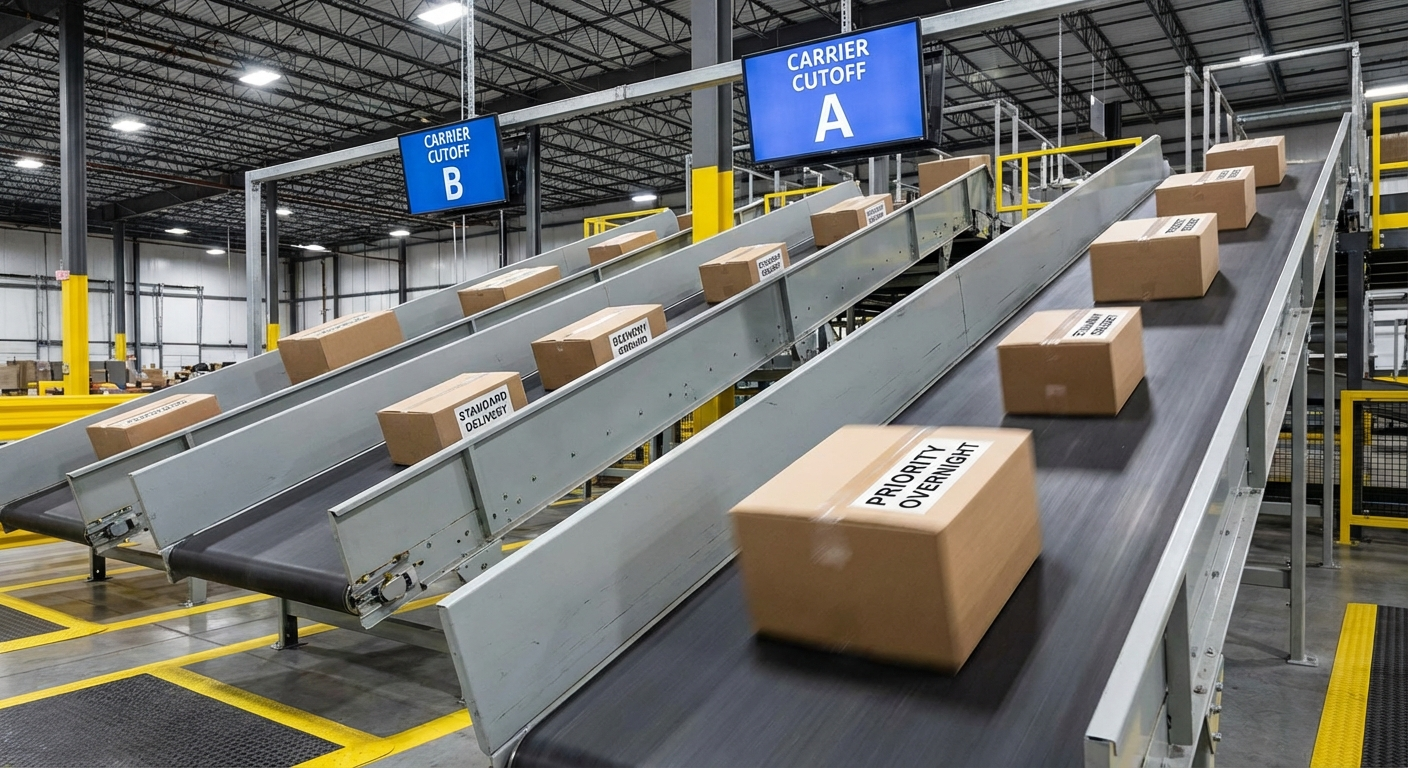
Risk: Overpromising Delivery Times. Mitigation: Establish firm carrier cutoff times and communicate them clearly across teams. If backlog or carrier scans slip beyond thresholds, update customer communications immediately to reset expectations.
Risk: Kitting Misses the Go-Live Date. Mitigation: Pre-build kits in weekly batches ramping into launch dates. Lock designs and inserts two weeks before launch. Maintain fallback plain packaging options if creatives are delayed.
Risk: Disconnected Data Silos. Mitigation: Use shared dashboards combining promo calendars, inventory status, order velocity, and SLA metrics. Assign a single owner to update data daily during promotions.
Risk: Carrier Caps and Peak Surcharges. Mitigation: Pre-commit forecast volumes with carriers, diversify shipping services, and front-load shipments where possible. Atlanta’s hub status supports maintaining 2-day ground service to a broad U.S. footprint.
Risk: WMS Rules Not Matching Marketing Logic. Mitigation: Test promotional logic (bundles, discounts, routing) in staging environments well ahead of high-volume promos. Confirm picked and packed contents match promotional offers.
Risk: Returns Spike After Promo. Mitigation: Focus on picking accuracy, clear product sizing, and enhanced QA for new bundles. Inspect first orders thoroughly for each variant during promotions.
These mitigations reflect cross-functional collaboration and discipline. Reference: https://www.forrester.com/bold/cross-functional-alignment/

The Atlanta Advantage for Marketing-Fulfillment Alignment
Location heavily influences how soundly marketing calendars and fulfillment operations can be integrated. All Points’ Atlanta-based network reaches approximately 80% of U.S. customers within two days ground transit, offering a major competitive advantage.
Later same-day cutoffs: The proximity to major population centers means marketing teams can push campaigns later into the day without relying on expensive air freight while still meeting delivery promises.
Balanced carrier capacity: Access to multiple regional carriers supports flexible routing and surge volumes with minimal risk of service disruptions or peak surcharges.
Integrated services under one roof: Printing, kitting, warehousing, and ecommerce fulfillment all co-located reduce lead times and communication breaks. This holistic setup helps marketers lock in promotional materials and align packout with warehouse throughput.
Case example - Porsche: A renowned automotive brand used All Points’ consolidated print and kitting services to support highly accurate and tightly scheduled campaigns. This co-location ensured timing precision and error reduction.
What You Get with All Points
Partnering with All Points enables retail brands to align marketing calendars with fulfillment operations seamlessly through:
Custom kitting and assembly tailored to your promotional calendar: https://www.allpointsatl.com/services/custom-kitting-product-assembly
Ecommerce fulfillment that scales with order surges: https://www.allpointsatl.com/services/e-commerce-order-fulfillment
Warehousing and distribution with disciplined inventory management: Reliable dock-to-stock times, cycle counting, and accuracy you can trust to keep marketing promises.
Integrated printing and marketing materials production: Fast turnaround for consistent, high-quality brand presentation made easier by co-location.
A true partnership mindset: Transparent SLAs and KPI dashboards ensure the marketing and fulfillment teams run the same playbook with visible accountability.
How to Run Your Next Promo the Right Way (Quick SOP)
1. Forecast by SKU/variant and share at least 8–12 weeks out.
2. Lock packout specifications and materials two weeks before launch, pre-building kits where possible.
3. Confirm carrier services and cutoff times well in advance, and avoid relying on expedited air freight to cover planning gaps.
4. Align customer experience communications with actual capabilities before launch.
5. Monitor key KPIs such as pick accuracy, cycle time, and backlog daily during live promotions and adjust spend within 24 hours if performance slips.
6. Conduct a rapid post-campaign retrospective to solidify improvements into future calendar discipline.
Following this simple SOP ensures control and responsiveness during high-stakes promotions.
Primary Call to Action
Get a kitting quote and see how your marketing schedule can drive efficient, scalable fulfillment: https://www.allpointsatl.com/services/custom-kitting-product-assembly
Secondary Call to Action
Download the 3PL Guide to learn more about operational best practices for retail brands: https://www.allpointsatl.com/resources/3pl-guide-for-e-commerce-and-amazon-sellers
FAQ
Q: What are the main KPIs for marketing-fulfillment alignment?
A: Pick accuracy (≥99.5%), order cycle time (≤24 hours post-cutoff), dock-to-stock (≤48 hours), on-time ship rate (≥98%), backorder rate (≤1%), and units per labor hour segmented by SKU or kit type.
Q: How long does implementation take?
A: For typical D2C programs with standard packout, 2–4 weeks to establish workflows; for custom kitting, print, and advanced EDI setups, 4–8 weeks to build, test, and pre-build.
Q: What pricing factors affect marketing-driven fulfillment?
A: Promo window length, SKU proliferation, kitting complexity, late creative/material changes, systems integration, carrier mix, cutoffs, and exception rates are the primary cost drivers.
Q: How often should marketing and operations meet?
A: Weekly in normal periods; daily 15–30-minute stand-ups during live promotions focused on tracking forecast vs. actual, SLA metrics, and operational constraints.
Q: What is minimum data marketing should share with a 3PL?
A: Promo calendar, SKU/day forecast, channel mix and spend, planned bundles, inbound ETAs and quantities, and any expected packout changes.
Sidebar Module
Based in Atlanta since 1995
Talk to an Atlanta 3PL expert: /contact
Phone/email: [insert your standard contact information]
Meta Information
Meta Title: Aligning Marketing Calendars with Fulfillment Operations | All Points 3PL
Meta Description: Learn how to sync marketing and fulfillment to avoid stockouts and delays. All Points details operational KPIs and workflows for retail brands.
Image Alt Text: Aligning marketing calendars with fulfillment operations workflow
Disclaimer: The information provided in this article is for informational purposes only and does not constitute legal, financial, or professional advice. Results may vary based on specific circumstances and operational factors. Please consult a professional to tailor strategies to your business needs.
Conclusion
Aligning marketing calendars with fulfillment operations ensures smooth campaign execution by syncing promotions, inventory, and warehouse capacity. This guide helps retail brands avoid stockouts, reduce costs, and improve customer experience through proven workflows, KPIs, and Atlanta-based fulfillment expertise.
.webp)
.webp)
.webp)
.webp)
.webp)


