


Shopify Fulfillment Network Explained: What DTC Brands Need to Know
DTC founders, retail marketers, and procurement leads face critical choices when moving ecommerce fulfillment off-site. The Shopify Fulfillment Network (SFN) offers integrated 3PL services, but how does it compare operationally and financially? Here’s what you need to know about SFN pricing, workflows, SLAs, and the risks before you request a quote or commit. For further guidance, download the 3PL guide for e-commerce and Amazon sellers: https://www.allpointsatl.com/resources/3pl-guide-for-e-commerce-and-amazon-sellers

What is the Shopify Fulfillment Network — and When to Use It?
The Shopify Fulfillment Network (SFN) is Shopify’s native third-party logistics (3PL) service designed to store inventory and ship orders directly on behalf of merchants. Unlike fulfillment software that helps manage warehouse operations without physically handling inventory, SFN offers a fully managed, end-to-end fulfillment experience tightly integrated with the Shopify platform. It differs from general 3PLs that operate independently, often providing more customization but requiring separate software and operational workflows.
SFN is specifically built for Shopify merchants looking for a plug-and-play solution, allowing sellers to outsource inventory storage and order fulfillment seamlessly within Shopify’s ecosystem. It excels for low to mid-volume DTC brands that focus primarily on the Shopify sales channel and prefer standardized fulfillment procedures.
When Shopify Fulfillment Network Makes Sense
• You run a Shopify DTC store with low to moderate daily order volumes (from a few hundred to a couple of thousand orders per day).
• Your product SKUs are relatively simple, without complex kits, subscriptions, or bundled sets requiring unique packouts.
• You are comfortable with the limited branding and packaging options SFN provides.
• Your sales primarily happen through Shopify, with minimal sales through Amazon, marketplaces, or wholesale channels.
• You want a simplified fulfillment process with minimal operational complexity or technical integrations.
When Shopify Fulfillment Network May Not Be the Best Fit
• Your brand requires custom kitting, stamped inserts, or branded packaging that ties directly into marketing campaigns.
• You sell across multiple channels including Amazon, wholesale, or retail EDI and need synchronized inventory visibility.
• You handle specialized or regulated goods, oversized products, or items requiring unique storage and shipping procedures.
• You need premium service levels with customized SLAs, cut-off times, or value-added services like quality control or assembly at fulfillment.
Note: Although Shopify sold its logistics assets in 2023, SFN’s operational model—partnering with warehouses to offer standardized fulfillment within Shopify’s software—remains fundamentally the same. However, customization options and service flexibility may be more limited compared to traditional 3PL relationships.

How Shopify Fulfillment Network Works — Step-by-Step Workflow
Understanding SFN’s workflow is critical for merchants to plan inventory and order management effectively. Here is the typical process from inventory to customer delivery:
1) Connect Your Shopify Store and Sync Inventory: The SFN app integrates with your Shopify store to sync SKUs, inventory levels, and order data automatically. SKU mapping and barcode standards must align with SFN guidelines to avoid order errors.
2) Bulk Ship Inventory to SFN Hubs: Merchants create advance shipment notices (ASNs) and send inventory in pallets or cartons to geographically distributed SFN warehouses. Proper labeling and cartonization are mandatory according to Shopify’s inbound compliance rules.
3) Receiving and Dock-to-Stock Process: Upon arrival, SFN facilities receive shipments, verify ASNs, count inventory, and stock items into the warehouse within 24 to 48 hours. Accurate paperwork and shipment packing speed this process.
4) Order Placement Through Shopify: When a customer places an order in Shopify, the order is routed through SFN to the nearest fulfillment center with available stock to optimize shipping time and cost.
5) Picking, Packing, and Shipping: Workers pick ordered SKUs, pack them using SFN’s standard packaging materials (without custom inserts), and ship via contracted carriers. The system batches orders with similar SKUs to improve throughput and efficiency.
6) Customer Notifications and Tracking: Shopify automatically notifies customers with tracking information and updates on order status based on carrier feeds.
7) Returns Management: Returned parcels follow a standardized routing and inspection process, with items either restocked, quarantined, or returned to the merchant if requested.
SOP Highlights for Smooth Operations
• Inventory must be prepared following Shopify’s specifications, with accurate barcode labels on sellable units.
• Oversized or restricted SKUs are typically excluded or may carry extra fees.
• Cutoff times for same-day fulfillment generally fall around 3 or 4 pm local time.
• Packaging is standardized; custom inserts, gift notes, or marketing collateral are not part of the SFN scope.
• Merchants are responsible for customer service after fulfillment events.
For comparison, SFN is not designed for complex onsite assembly or unique packaging workflows often required by growing brands.

Shopify Fulfillment Network SLAs/KPIs — What to Expect
Understanding performance metrics is essential when evaluating SFN versus other options. Below are typical SFN targets:
KPI: Pick accuracy | Typical SFN Target: 99.5%+ | Notes: Requires clean barcodes and disciplined SKU mapping
KPI: Order cycle time | Typical SFN Target: Same-day/next-day pick/ship | Notes: Orders before a 3–4 PM cutoff; varies by location
KPI: Dock-to-stock time | Typical SFN Target: 24–48 hours | Notes: Depends on inbound shipment quality
KPI: On-time shipment | Typical SFN Target: 95%+ | Notes: Carrier performance affects this, especially seasonally
KPI: Inventory accuracy | Typical SFN Target: 98–99% at location level | Notes: Can degrade with poor cartonization or rapid SKU changes
SFN provides standardized SLAs across its partner warehouses. Unlike some independent 3PLs—such as All Points—that offer customizable SLA contracts tailored to brand-specific risks and complexities, SFN’s uniform approach may not suit brands requiring flexible service terms.
Delays can arise from inventory syncing lags, inbound discrepancies, or high seasonal demand, requiring merchants to maintain discipline and plan buffers.

Shopify Fulfillment Network Pricing Drivers — What Moves Your Costs?
SFN’s fees are structured around standard fulfillment cost drivers. Understanding these can help predict expenses:
• Storage Fees: Charged monthly by pallet or cubic foot with regional rates varying. Pallet size, weight, and storage duration impact fees.
• Pick & Pack Fees: Base charge per order plus additional fees per line item or weight tiers. Composite orders with many SKUs raise costs.
• Shipping Costs: Set carrier rates within SFN contracts vary by zone and dimensional weight. Oversize and remote area surcharges apply.
• Dimensional Weight and Oversize Surcharges: Large or heavy packages incur extra fees; certain SKUs may be restricted or require special handling.
• Punch-Out or Removal Fees: Fees for removing inventory or processing returns that leave the network.
• Volume Minimums and Seasonality: Costs can increase during peak periods; overflow fees may apply if volumes spike suddenly.
• Limited Custom Kit/Print Options: With no on-demand printing or promotional inserts, these services would involve third-party providers, increasing complexity and costs.
For brands requiring customized packaging, inserts, or dynamic kit assembly, SFN’s standardized pricing and workflow may lack flexibility and cost efficiency compared to partnering with a specialized 3PL offering bespoke services.
Risks & Mitigations When Using Shopify Fulfillment Network
Risk: Reduced Brand Packaging Control | Description: Limited to standard boxes and mailers; no custom inserts. | Mitigation: Use third-party kitting or pre-assembly to add branded components.
Risk: Shopify-Only Channel Constraint | Description: Inventory tied to Shopify; complex multi-channel fulfillment is challenging. | Mitigation: For omnichannel selling, plan early or use 3PLs with unified inventory systems.
Risk: Inventory Syncing Errors | Description: Duplicate or inconsistent barcodes can cause stockouts or overselling. | Mitigation: Robust SKU standardization and barcode discipline upstream.
Risk: Capacity Constraints During Peaks | Description: Early cutoff times and batching waves may limit same-day service during holidays. | Mitigation: Level promotions, build inventory early, and provide accurate ASNs.
Risk: Product Fit Limitations | Description: Oversized, hazmat, fragile, or regulated goods face processing limitations or increased fees. | Mitigation: Early compliance review; consider 3PLs with specialized handling expertise.
Maintaining strict upstream inventory hygiene, pairing SFN with third-party kit providers as needed, and monitoring real-time analytics are essential processes to reduce risks.
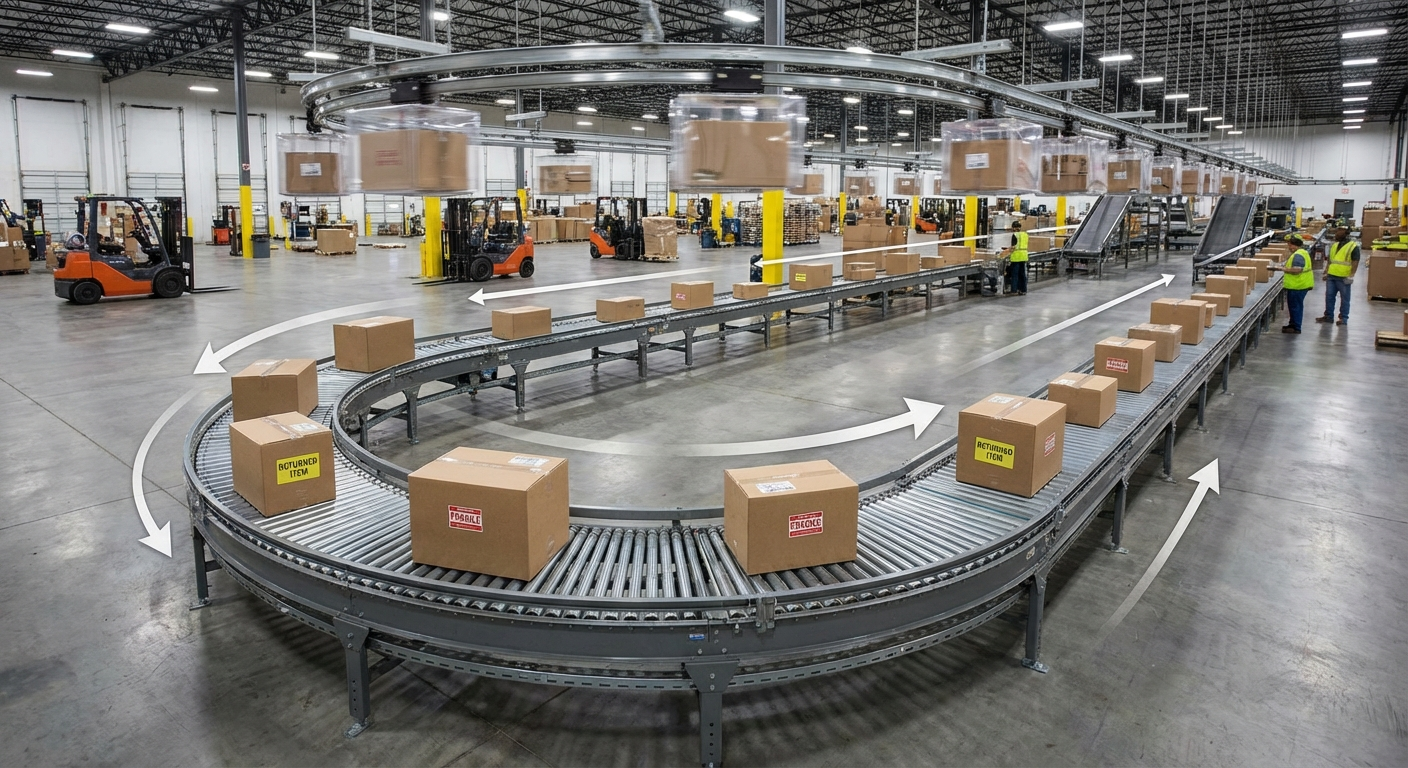
The Atlanta Advantage—How Local 3PLs Like All Points Outperform SFN
SFN provides a functional solution for straightforward Shopify merchants, but many growing DTC brands require more operational flexibility. Local 3PLs like All Points in Atlanta offer distinctive advantages built around a family-owned operator-grade approach active since 1995.
• Strategic Location: Atlanta’s logistics hub allows two-day ground delivery to 80% of U.S. households, reducing expensive air freight dependency and improving shipping reliability.
• Integrated Kitting, Printing, and Warehousing: All Points combines custom kitting, print-on-demand inserts, assembly, and warehousing services under one roof—capabilities largely absent from SFN.
• Customizable SLAs and KPIs: Tailored service agreements align with brand complexities, including pick accuracy, cutoff times, lot tracking, and photo documentation.
• Flexible Workflows and Operator Accountability: Skilled operational staff implement documented SOPs designed specifically for each client’s SKU portfolios and order profiles.
• “Whatever It Takes” Partnership Model: All Points is committed to adapting processes for campaign-specific challenges, accommodating seasonal surges, and multi-channel fulfillment.
Explore custom kitting and product assembly services: https://www.allpointsatl.com/services/custom-kitting-product-assembly
Explore comprehensive e-commerce order fulfillment: https://www.allpointsatl.com/services/e-commerce-order-fulfillment
What You Get with All Points
• Custom Kitting Reflecting Your Brand: Pre-built bundles, subscription fulfillment flows, and branded inserts that ship accurately the first time.
• Transparent, Documented Workflows: Easy-to-understand SOPs tailored by SKU, clear cutoff times, daily picking cadence, and detailed quality checks.
• Flexible SLA and KPI Agreements: Performance metrics customized to your business needs, including return processing and exception management.
• Atlanta-Based Fulfillment Network: Speed and savings due to Atlanta’s ground shipping advantages, avoiding premium air freight for most U.S. destinations.
• Comprehensive Onboarding: SKU cleanup, barcode audits, packout engineering, test waves, and hands-on support throughout launch.
Learn more: https://www.allpointsatl.com/services/custom-kitting-product-assembly
Learn more: https://www.allpointsatl.com/services/e-commerce-order-fulfillment
SFN vs. Fulfillment Software vs. Independent 3PL: A Simple Takeaway
• Fulfillment Software Only: Ideal if you operate your warehouse and need software to increase operational efficiency. However, managing labor and errors becomes complex beyond several hundred orders per day.
• Shopify Fulfillment Network: A plug-and-play solution best suited for brands with simple SKUs and standardized workflows seeking fast outsourcing tied directly to Shopify.
• Independent 3PL Operators: Best for brands with growing complexity—custom kitting, multi-channel sales, branded packaging—requiring tailored workflows and customer support.
For more in-depth comparisons: ShipBob https://www.shipbob.com/blog/shopify-fulfillment/ | Extensiv https://www.extensiv.com/blog/shopify-order-fulfillment | Practical Ecommerce https://www.practicalecommerce.com/fulfillment-compared-amazon-walmart-shopify
Practical Checklist Before Requesting Quotes
• Catalog Hygiene: Ensure a single, unique barcode per sellable unit and well-defined kit SKUs with clear bills of materials.
• Packaging and Insert Requirements: Identify mandatory gift notes, fragile handling, or branded marketing materials.
• Channel Strategy: Confirm if you plan to remain Shopify-only or anticipate expanding to Amazon, wholesale, or retail channels.
• Volume Forecast: Provide current and projected daily order volumes, SKU counts, and seasonal surges.
• Special Product Considerations: List any oversized, hazardous, fragile, or serialized product requirements and returns complexity.
Proactive clarity helps fulfillment partners provide accurate, transparent pricing and services.
Frequently Asked Questions
1) What is the Shopify Fulfillment Network? SFN is Shopify’s integrated fulfillment service that uses partner warehouses to store inventory and ship orders automatically from your Shopify store. It offers a standardized fulfillment experience connected directly to Shopify.
2) How does SFN pricing work? SFN pricing includes monthly storage fees, order pick and pack charges, parcel shipping fees based on dimensional weight, and miscellaneous inbound or removal costs. SKU mix, order complexity, and seasonal peaks influence the total cost.
3) What SLAs does SFN offer? SFN typically offers 99.5%+ pick accuracy, 24–48 hour dock-to-stock times, same-day or next-day fulfillment for orders before cutoff, and 95%+ on-time shipments, although seasonal or operational factors can affect actual performance.
4) Can I use SFN for multi-channel fulfillment? Primarily designed for Shopify direct-to-consumer, SFN has limited support for multi-channel fulfillment. Independent 3PLs with unified inventory systems better handle Amazon FBM, wholesale, and retail EDI orders in addition to Shopify.
5) How does Atlanta’s location benefit ecommerce fulfillment? Atlanta provides two-day ground delivery coverage to about 80% of U.S. households. This advantage reduces air freight reliance, lowers shipping costs, improves delivery reliability, and provides operational flexibility for brands served from this hub.
Primary Call to Action
Ready to explore tailored fulfillment solutions? Get a custom kitting quote: https://www.allpointsatl.com/services/custom-kitting-product-assembly
Secondary Call to Action
Download the 3PL guide for e-commerce and Amazon sellers: https://www.allpointsatl.com/resources/3pl-guide-for-e-commerce-and-amazon-sellers
Sidebar Module (for site use)
Based in Atlanta since 1995
Call: [phone number] | Email: [contact email]
Talk to an Atlanta 3PL expert: https://www.allpointsatl.com/contact
Disclaimer: This article is provided for informational purposes only and reflects the author’s views as of publication. All Points makes no guarantees regarding outcomes from using Shopify Fulfillment Network or any third-party services. Merchants should perform due diligence and consult directly with fulfillment providers to ensure alignment with their specific business needs.
Image Alt Tags for SEO: “Shopify Fulfillment Network warehouse operations”; “SFN pick and pack workflow”; “Atlanta 3PL shipping advantage”.
This detailed explanation equips DTC brands with the operational, pricing, and strategic insights to evaluate Shopify Fulfillment Network effectively, understanding when to utilize a standardized approach and when to consider a specialized Atlanta-based 3PL like All Points for more complex fulfillment needs.
Conclusion
Discover how the Shopify Fulfillment Network streamlines fulfillment for Shopify-based DTC brands with integrated, standardized services ideal for simple SKUs and low-to-mid volumes. Learn pricing, workflows, SLAs, and when to consider flexible, customized 3PL solutions like Atlanta’s All Points for growing brands.

.webp)
.webp)
.webp)
.webp)


