


Atlanta Ecommerce Fulfillment: What DTC Brands Need to Know
If you’re a DTC founder or operations lead comparing 3PLs in the Southeast, Atlanta ecommerce fulfillment can reduce transit time, stabilize costs, and simplify kitting and packouts. This guide covers real workflows, pricing drivers, SLAs/KPIs, risks, and the location advantages so you can request accurate quotes and scale with fewer surprises.
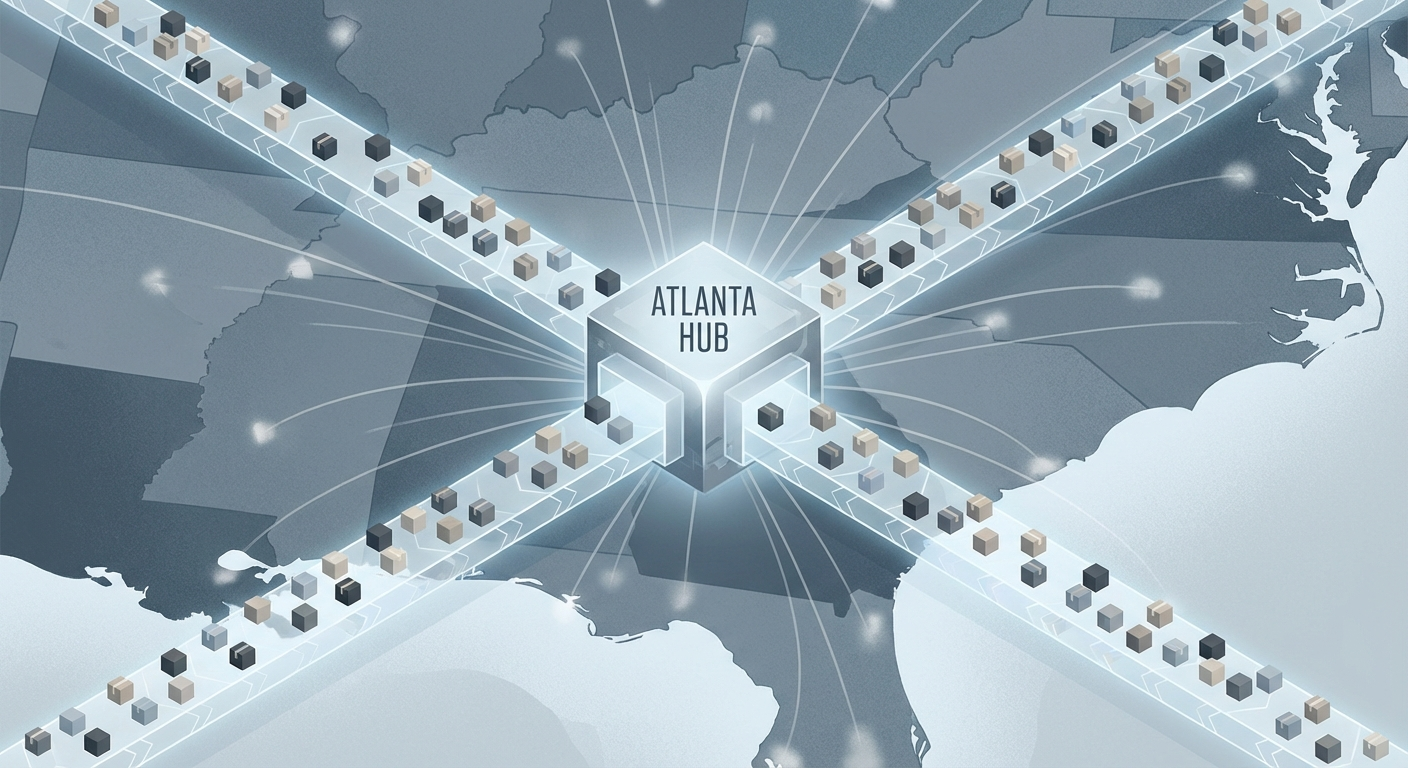
What Is Atlanta Ecommerce Fulfillment—and When Should You Use It?
Atlanta ecommerce fulfillment means storing inventory, picking and packing orders, and shipping from an Atlanta-based third-party logistics (3PL) provider. The key benefit is geographic: you can reach roughly 80% of U.S. households by ground within two days, leveraging dense carrier networks while controlling freight costs.
Use Atlanta ecommerce fulfillment when:
- Your customers are concentrated across the East Coast, South, and Midwest.
- You want reliable 2-day ground delivery without paying air surcharges.
- Kitting, assembly, or marketing inserts benefit from in-house printing and hands-on quality control.
- You require stable carrier pickups and flexible labor to absorb demand spikes.
Typical services bundled under one roof include:
- Ecommerce order fulfillment: Pick/pack, cartonization, address validation, and carrier label generation.
- Kitting and assembly: BOM-based builds, subscription boxes, gift sets, and custom packouts.
- Printing and marketing materials: Branded collateral, inserts, labels, and variable print-on-demand.
- Warehousing and inventory control: Dock-to-stock receiving, cycle counts, slotting, and WMS-driven accuracy.
If you need custom kitting or ecommerce support, see: https://www.allpointsatl.com/services/custom-kitting-product-assembly
For everyday DTC shipping needs, review: https://www.allpointsatl.com/services/e-commerce-order-fulfillment

Step-by-Step Workflow of Atlanta Ecommerce Fulfillment
Operational details matter. Here’s the operator’s view spelling out key steps:
Inbound Receiving (Dock-to-Stock)
- Appointment and ASN: Schedule deliveries; submit advance shipment notices (ASNs) and packing lists ahead of arrival.
- Unload and Count: Verify pallets, cartons, and units against ASN; flag any overages, shortages, or damage immediately.
- Quality Checks: Sample SKUs for labeling accuracy, barcode readability, and packaging condition.
- WMS Intake: Record lot numbers and expirations when applicable; capture weights and dimensions if not on file.
- Putaway: Slot inventory by velocity (A/B/C categories) and unit of measure (each, inner pack, case, pallet), using bin labels matched to the warehouse management system (WMS).
- Target: Dock-to-stock within 4 hours so inventory is available for sale the same day.
Order Release and Batching
- Order Import: API or EDI feeds drop orders into WMS every 5–15 minutes. Exceptions queue handles address issues.
- Wave Planning: Orders batched by carrier, service level, and pick path. Prioritization follows cutoff times and SLAs.
- Frequency: Multiple waves per shift maintain a steady workflow rather than a single daily batch.
Picking
- Methods: Single-order picking for low line counts; batch or cluster picks for higher volume; zone picking for large catalogs.
- Tools: Radio frequency (RF) scanning enforced at each pick step—no barcode scan means no pick recorded.
- Pick Path: Optimized routes reduce walking and increase efficiency. Top movers are re-slotted if travel times inflate.
- Controls: Real-time shortage alerts and pre-approved substitutions per SOP.
Kitting and Print (On-Demand or Scheduled)
- Kitting: BOM-driven builds triggered through WMS work orders; components scanned in and out to maintain inventory accuracy.
- On-Site Printing: Pull printed inserts and labels just-in-time to ensure marketing materials reflect current campaigns.
- Change Control: Marketing materials version-locked during campaign windows to avoid mix-ups.
Packout and Quality Assurance
- Cartonization: Automatic box selection based on product dimensions and fragility to minimize dimensional weight charges.
- Materials: Branded or eco-friendly packing supplies tied to product class and SOPs.
- Weigh and Measure: Inline scale and dimensioner validate shipment weight and size; outliers flagged for review.
- QA Checks: Scan-to-confirm at the pack station; optional photo capture for proof-of-pack.
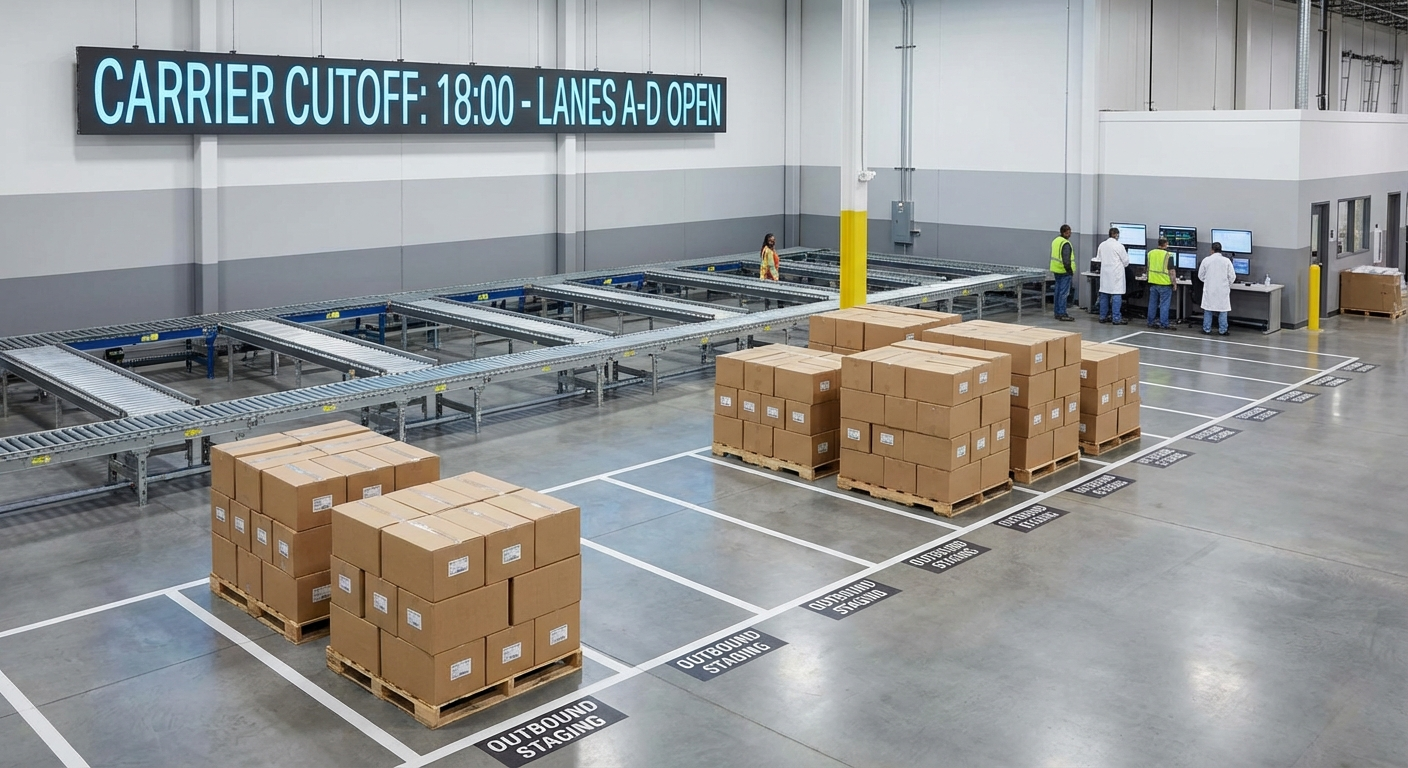
- Close and Stage: Apply carrier labels, sort by carrier lane, and stage cartons for outbound pickup.
Shipping and Cutoff Discipline
- Cutoffs: Late-afternoon parcel pickups ensure same-day dispatch; published and strictly enforced.
- Carrier Mix: Ground-first shipping strategy; service upgrades only when SLA exceptions occur. Regional carriers used when advantageous.
- Tracking: Shipment status updates pushed to client stores or CRMs; exceptions routed back to customer service.
Cycle Counts and Returns
- Cycle Counts: Conducted on A, B, C item cadence with recounts triggered by variance beyond tolerance threshold.
- Returns: Returned products inspected and dispositioned (restock, refurbish, scrap), with inventory reconciliation completed within SLA periods.

Key SLAs and KPIs to Expect from Atlanta Ecommerce Fulfillment
Setting measurable targets protects both margin and the customer experience. Typical KPIs include:
KPI | Target | Importance
Pick Accuracy | 99.5%+ | Avoids costly mis-shipments and customer issues
Order Cycle Time | ≤24 hours from order release to carrier scan | Maintains reliable 2-day ground delivery
Dock-to-Stock | 4 hours (standard inbound) | Ensures inventory availability and sales continuity
On-Time Shipment | 98%+ | Protects brand reputation and reduces churn
Enforcement:
- WMS dashboards with real-time color-coded shifts performance tracking
- Exception logs capturing root causes (system, labor, carrier, inventory)
- End-of-day reports delivered to clients summarizing volumes, misses, and corrective actions

Pricing Drivers for Atlanta Ecommerce Fulfillment
Pricing depends heavily on your operational profile and order characteristics:
- SKU Complexity and Order Patterns: Lines per order, units per line, and barcode quality affect pick labor. High SKU sprawl lowers pick density and increases travel time.
- Kitting and Assembly: Number of build steps, kit components, and QC checkpoints determine labor minutes. Includes one-time setup fees for fixtures and SOP development plus per-unit build costs.
- Printing and Marketing Collateral: On-site print incurs per-piece costs and stock holding. Mid-campaign version changes add setup time—batch when possible.
- Storage Footprint: Pallet, bin, or shelf storage impacts cost. Velocity-based slotting can reduce footprint. Climate control, hazmat, and seasonal overflow add fees.
- Shipping Profile: Zone mix, average weight and dimensions, and box assortment drive outbound costs. Residential surcharges, peak fees, and rate shopping rules also affect per-order costs.
- Technology and Integrations: Standard system connectors are included; custom EDI or WMS workflows may add one-time fees. Sandbox testing is recommended to avoid costly delays.
To get realistic quotes, share:
- 90 days of order history including lines per order, daily velocity, and SKU count
- Kit BOMs, packaging specs, and marketing material versions
- Seasonality trends, product launch dates, and promotional calendars
- Requests for tiered pricing by volume with clear assumptions on cutoffs, SLAs, and materials
If you need help scoping kits and assemblies, start here: https://www.allpointsatl.com/services/custom-kitting-product-assembly
For daily fulfillment, see: https://www.allpointsatl.com/services/e-commerce-order-fulfillment
Risks and Mitigations in Atlanta Ecommerce Fulfillment
Every fulfillment operation faces challenges; these can be managed with discipline and process controls:
- SKU Sprawl Causes Pick Errors and Slower Picks
Mitigation: Rationalize product variants, enforce barcode standards, slot by velocity, and refresh pick paths monthly.
- Labor Variability During Volume Spikes
Mitigation: Cross-train employees across pick, pack, and kitting; use batch waves; maintain a flexible labor pool; add shifts proactively.
- Inbound Issues Like Bad Labels or Missed ASNs
Mitigation: Set appointment windows, require advance document submission, use staging buffers, and escalate shortages within hours.
- Over-Customization in Packouts Slows Throughput
Mitigation: Lock marketing material version windows, pre-build high-volume kits, gate last-minute changes behind formal change control.
- WMS Discipline Drift Letting Errors Through
Mitigation: Enforce scanning on every touch, perform daily cycle counts of A items, audit exceptions regularly. Automation requires strong process adherence.
- Packaging and Dimensional Weight Surprises
Mitigation: Maintain approved carton libraries, audit weights and dimensions quarterly, and update cartonization rules when carriers adjust DIM factors.
The Atlanta Advantage: Why Location Matters for Ecommerce Fulfillment
Atlanta’s logistics merit is practical and proven:
- 2-Day Ground Reach to ~80% of U.S. Households: Covers the Eastern half of the country and much of the Midwest without costly air transit. That reduces freight spend and customer inquiries.
- Carrier Density and Infrastructure Access: Major interstates (I-75, I-85, I-20) and multiple parcel hubs increase reliability. Better pickup options mitigate carrier constraints.
- Cost Control Compared to Coastal Hubs: Lower facility rents and labor rates versus New York, New Jersey, and Los Angeles. Fewer winter weather delays than northern hubs.
- Operational Outcomes: Faster first scans after order cutoff, fewer missed delivery windows at ground service, and improved margins on free or 2-day shipping promises.
For brands concentrated on the West Coast, Atlanta works well as part of a two-node strategy (e.g., Atlanta + Nevada or Texas). For East and Midwest-heavy customers, a single Atlanta location often beats bi-coastal solutions on total cost.
What You Get with All Points
All Points is an Atlanta-based, family-owned 3PL founded in 1995. We run operator-grade SOPs with transparent SLAs and scale kitting and ecommerce workflows from hundreds to thousands of daily orders without losing accuracy.
Under one roof:
- Custom kitting and product assembly services: BOM-driven builds, subscription boxes, and QC-backed packouts. https://www.allpointsatl.com/services/custom-kitting-product-assembly
- Ecommerce order fulfillment solutions: Fast pick/pack, cartonization, ground-first shipping with strict cutoffs. https://www.allpointsatl.com/services/e-commerce-order-fulfillment
- Warehousing and distribution: Velocity-based slotting, cycle counts, and inventory accuracy. https://www.allpointsatl.com/services/warehousing-distribution
- On-site printing and marketing materials: Branded inserts and labels integrated with kitting and packouts. https://www.allpointsatl.com/services/printing-marketing-materials
How we work:
- Custom SOPs tailored per brand, fully documented and trained before launch.
- Daily KPI reporting on pick accuracy, dock-to-stock, cycle time, and on-time shipments.
- Plain-English communication that flags exceptions early with corrective plans.
Get a kitting quote or talk to an Atlanta 3PL expert today:
- Custom kitting and product assembly: https://www.allpointsatl.com/services/custom-kitting-product-assembly
- Ecommerce order fulfillment: https://www.allpointsatl.com/services/e-commerce-order-fulfillment
For a deeper checklist on pricing, SLAs, and onboarding, download our comprehensive 3PL guide:
https://www.allpointsatl.com/resources/3pl-guide-for-e-commerce-and-amazon-sellers
FAQ
1) What is included in Atlanta ecommerce fulfillment pricing?
Pricing typically covers receiving (per pallet/carton), storage (per pallet/bin), pick/pack (initial and additional picks), packaging materials, kitting labor (if applicable), printing (per piece), shipping (discounted pass-through), technology integrations (one-time if custom), and returns processing. Request tiered pricing with clear assumptions.
2) How quickly does All Points process orders from dock-to-stock to ship?
Standard dock-to-stock is 4 hours for ASN-backed inbound. Orders released before cutoff ship the same day; others ship within 24 hours. Cutoff times are published and strictly enforced.
3) What KPIs do you track for ecommerce fulfillment accuracy and timeliness?
Pick accuracy (99.5%+), order cycle time (≤24 hours from release to ship), dock-to-stock (4 hours), on-time shipment (98%+), and inventory accuracy via cycle counts. Daily dashboards and end-of-day reports keep clients informed.
4) How does kitting and printing under one roof reduce fulfillment errors?
By eliminating handoffs. BOMs trigger WMS work orders; components scan in/out; inserts print on demand with version control. This reduces build time, mismatches, and keeps inventory accurate.
5) What areas of the U.S. can Atlanta ecommerce fulfillment reach in 2 days?
Ground service covers most East Coast, South, and large parts of the Midwest—about 80% of U.S. households. Western states may require upgraded service or additional fulfillment nodes.
Sidebar
Based in Atlanta since 1995
Call: [phone number] | Email: [email address]
Meta Title
Atlanta ecommerce fulfillment: Workflow, pricing, SLAs
Meta Description
Atlanta ecommerce fulfillment for DTC brands. See workflows, SLAs, pricing drivers, and the Atlanta advantage. Get a kitting quote from All Points.
Additional Helpful References
- Best Fulfillment Service Companies - RedStag Fulfillment: https://redstagfulfillment.com/best-fulfillment-service-companies/
- Best Fulfillment Companies USA - Buske Logistics: https://www.buske.com/blog/best-fulfillment-companies-usa/
- Top Ecommerce Fulfillment Companies - Cart: https://www.cart.com/blog/top-ecommerce-fulfillment-companies
- Fulfillment Services Explained - Zendrop: https://www.zendrop.com/blog/fulfillment-services/
- UPS Ecommerce Fulfillment Solutions: https://developer.ups.com/us/en/supplychain/logistics-solutions/ecommerce-fulfillment
Disclaimer: This article is provided for informational purposes only. All Points strives to provide accurate and up-to-date information but does not guarantee specific outcomes or pricing. Contact All Points directly for customized service quotes and operational details tailored to your business.
Conclusion
Atlanta ecommerce fulfillment offers DTC brands faster 2-day ground delivery, cost control, and streamlined kitting from a strategic Southeast hub. Learn how Atlanta’s location, workflows, SLAs, pricing drivers, and risk mitigations help you scale efficiently with fewer surprises. Get expert 3PL insights here.
.webp)
.webp)
.webp)
.webp)
.webp)


