


Effective e-commerce packaging for fragile items: how to protect your products and reduce damage
Shipping fragile products can get costly fast when packaging fails. This guide is for DTC founders, retail marketers, and procurement leads who want a direct, operator-level playbook for effective e-commerce packaging for fragile items. The goal: package right the first time, cut damage below 1%, control labor minutes, and keep freight and materials costs in check, so you ship damage-free, reduce returns, and keep customers happy.
What is effective e-commerce packaging for fragile items and when to use it
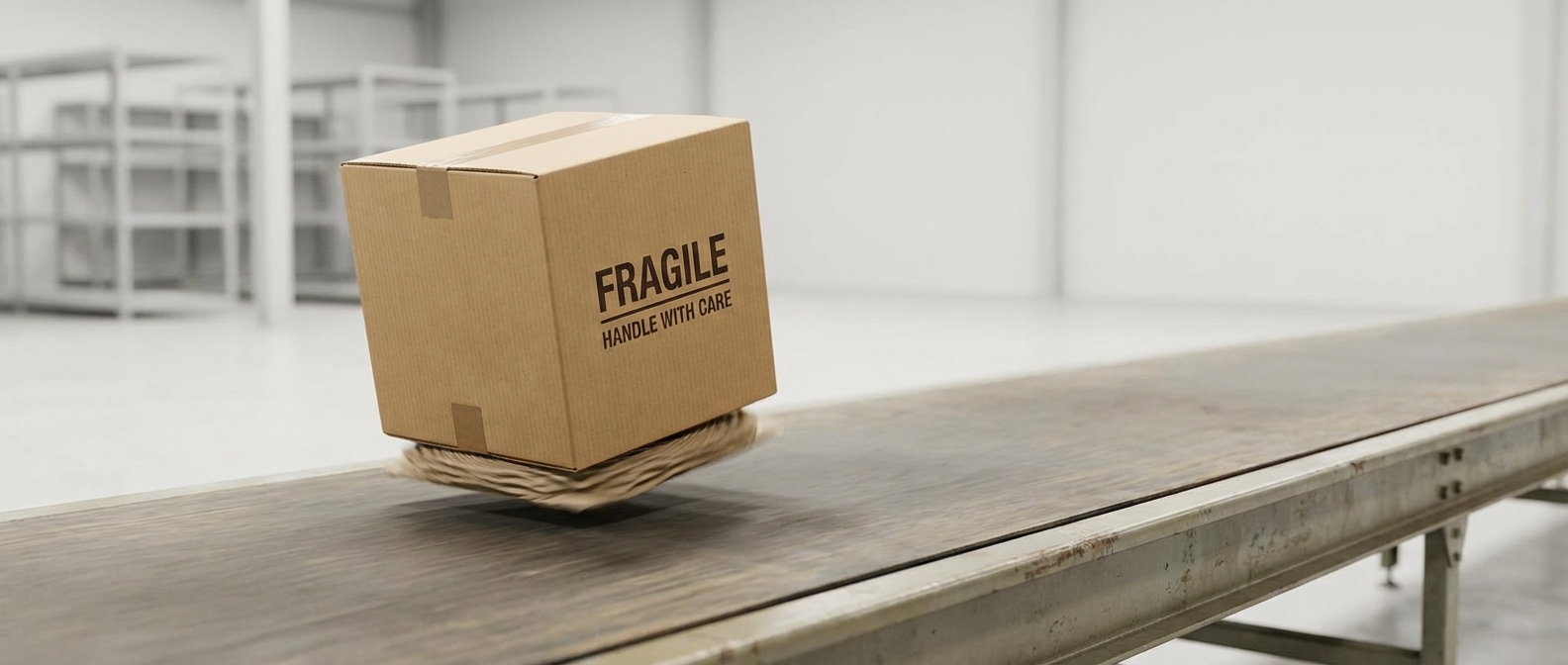
Effective e-commerce packaging for fragile items means selecting packaging that consistently prevents damage by focusing on three critical functions:
- Shock Absorption: Cushioning materials that absorb drops, impacts, and vibrations during handling and transit.
- Immobilization: Securing products firmly to prevent movement, rattling, or collisions inside the box.
- Right-sizing Boxes: Choosing carton dimensions tailored to the product and cushioning to minimize void space, reduce dimensional (DIM) weight fees, and avoid overpacking.
This specialized packaging applies to fragile SKUs such as glassware, ceramics, electronics, cosmetics, beverages, framed art, candles, and any delicate items vulnerable to cracking, chipping, leaking, or deformation. Bundled sets or multipacks, where individual items might collide, require additional partitioning or inserts to maintain integrity.
Why use effective fragile packaging? Breakage is expensive—not just due to lost merchandise but refunds, replacement shipping, and damage to your brand reputation. For example, a 1% damage rate on a $60 Average Order Value (AOV) at 10,000 orders per month means roughly $6,000 in avoidable costs each month from refunds and customer churn alone.
Packaging is your first line of defense in the fulfillment workflow and impacts every downstream step:
- Warehouse handling: Accurate cartonization in your Warehouse Management System (WMS) simplifies picking and reduces mis-shipments.
- Pack station throughput: Well-defined SOPs prevent delays and packing errors.
- Shipping costs: Correct size and weight reduce dimensional weight fees and carrier surcharges.
- Returns processing: Lower damage means fewer return shipments and related administrative costs.
You should implement effective fragile packaging whenever shipping any delicate or impact-prone SKU to avoid operational and financial risks. It is particularly essential when scaling SKU counts or offering fragile product assortments.

Step-by-step packaging workflow for fragile e-commerce products
Here is a typical Standard Operating Procedure (SOP) for packaging fragile items effectively. Adapt specifics based on your SKU characteristics and operational setup.
1. Confirm fragile SKUs and record dimensions/weights
- Measure exact product and inner packaging dimensions (length, width, height) and weight.
- Identify weak points or sensitive areas such as glass stems, lids, sensors, or exposed wiring.
- For kits or sets, note spaces required between items or any special dividers.
2. Select appropriately sized outer boxes
- Choose cartons that leave about 1.5–2.0 inches of space on all sides for cushioning materials after packaging.
- Minimum box strength depends on weight:
-- Light items (<10 lbs): Single-wall, 32 ECT (Edge Crush Test) cardboard typically suffices.
-- Medium to heavy items (10–30 lbs): Double-wall or 44 ECT for extra protection.
-- Very heavy (>30 lbs) or high-value SKUs: Consider 48–51 ECT or triple-wall cartons.
- Multi-depth cartons can reduce SKU count by allowing right-sizing without inventory duplication.
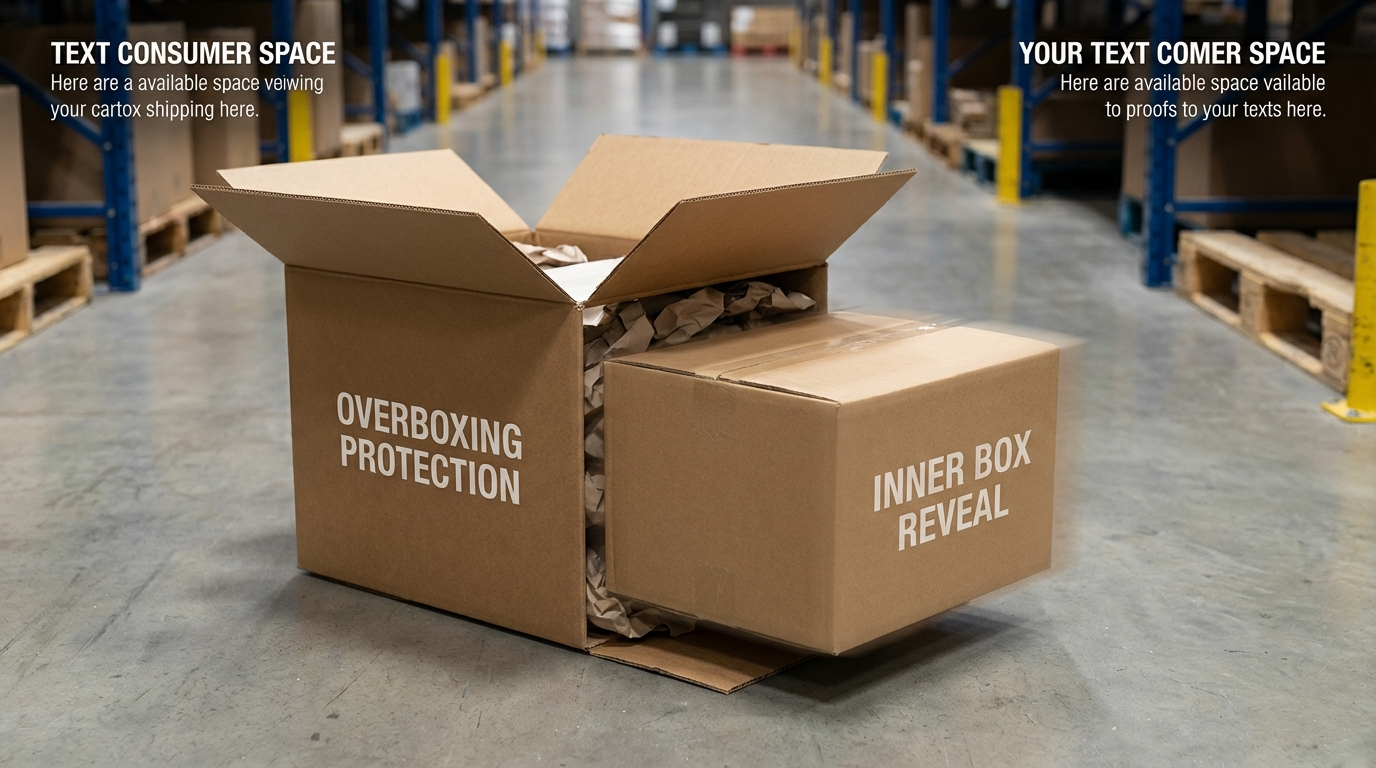
- For premium or highly fragile SKUs, consider an inner box within the outer carton (overboxing) to add cushion and security.
3. Choose internal cushioning materials
- Bubble Wrap: Light fragile items benefit from 3/16" bubble wrap; larger or heavier products need thicker 1/2" or multi-layer wraps.
- Paper Cushioning (kraft, honeycomb): Recyclable and eco-friendly, suitable for wrapping and void fill.
- Foam Inserts (PE/EPS or foam-in-place): Offers the best protection for delicate and high-value SKUs but raises costs and disposal concerns.
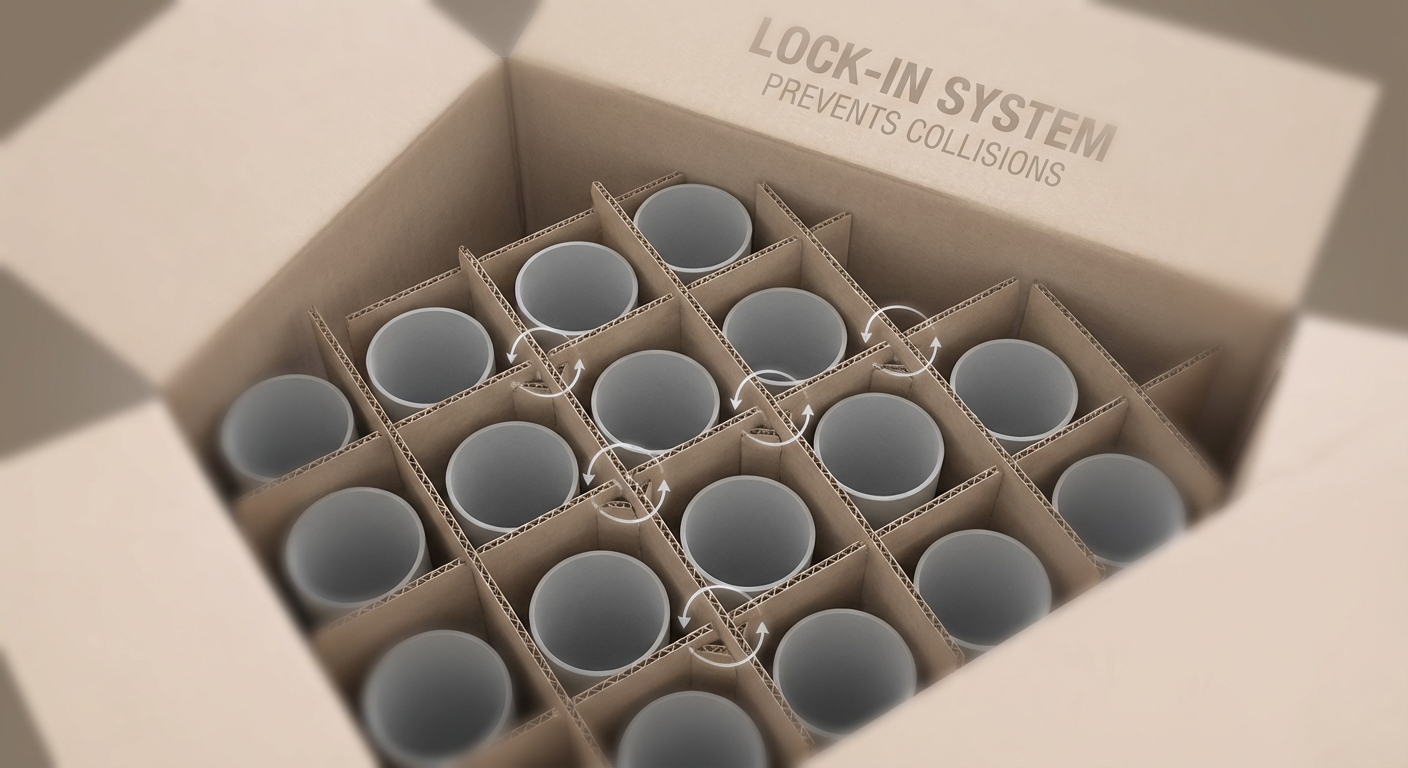
- Die-cut corrugate inserts or molded pulp trays: Immobilizes products within multi-item kits, reusable and sustainable.
- Air Pillows: Good for void fill but not effective for preventing shocks or internal collisions alone. Should be paired with wraps or inserts.
- Avoid loose fill peanuts for DTC shipments due to messiness and inconsistent protection.
4. Wrap or secure each fragile item individually
- Double-wrap vulnerable areas such as glass stems, corners, and handles.
- For liquid products: cap tightly, use pressure-sensitive seals or induction seals where possible. Poly-bag primary containers to contain leaks.
- Use corner guards or edge protectors for framed artwork or flat panels.
- In bundled sets, use dividers made of cardboard or molded pulp to prevent items from bumping into each other.
5. Add layers of cushioning in the box
- Start with a bottom pad that covers the entire footprint.
- Add side cushioning to maintain the 1.5–2.0 inch buffer around the product.
- Include a compliant top pad to absorb stacking forces and transit stress.
- The packed product should not touch any outer box wall—shake tests can verify immobilization.
6. Seal box with high-quality tape and add labels
- Use a minimum 2-inch hot-melt pressure-sensitive tape for sealing. Consider heavier-duty 3-inch tape or water-activated tape (WAT) on larger and heavier boxes.
- Apply an H-seal pattern on both top and bottom. Avoid skimping on tape to save seconds during packing.
- Label boxes clearly with “Fragile” and “This Side Up” tags for handling clarity, although carriers generally handle by parcel size rather than labels.
7. Test packaging before scaling production
- Perform field drop tests: drop the package from 30–36 inches on various sides and corners to simulate impacts.
- Conduct vibration tests for 30–60 minutes on simulators or by actual vehicle transit to check for internal product safety.
- Compression tests stacking 3–4 boxes for 24 hours simulate warehouse and delivery stacking.
- For highly fragile or premium SKUs, use ISTA 3A (International Safe Transit Association) testing protocols to reduce damage risk.
8. Document SOPs and train staff
- Standardize packaging instructions per SKU or kit with detailed step-by-step photos and a Bill of Materials (BOM).
- Integrate quality checkpoints in your WMS such as scanning to pack, verifying pack weights, and optional pack photos.
- Train packers regularly and conduct audits to maintain quality standards.
Tip: In operations with many fragile SKUs, set up dedicated fragile packing stations equipped with pre-cut cushioning, inserts, roller turntables, calibrated scales, and water-activated tape dispensers to streamline the process and reduce labor time.
SLA and KPI standards for fragile packaging operations
Maintaining and monitoring key metrics ensures fragile packaging performance meets customer expectations and operational goals:
KPI: Pick accuracy | Standard: ≥99.5% | Reason/Notes: Prevents wrong items and rehandling delays.
KPI: Pack quality rate | Standard: ≥98% (minimal errors) | Reason/Notes: Reduces damage risk caused by improper packing.
KPI: Order cycle time | Standard: ≤24 hours from order release | Reason/Notes: Balances speed without rushing fragile packing.
KPI: Damage rate (post-ship returns) | Standard: ≤1% | Reason/Notes: Measures packaging effectiveness.
KPI: Dock-to-stock time | Standard: ≤12 hours | Reason/Notes: Ensures fresh inventory and reduces makeshift packing.
KPI: Weight/dim verification | Standard: ≥99% accuracy | Reason/Notes: Controls DIM fees and prevents overpacking.
Adhering to these benchmarks improves customer satisfaction and limits damages and related chargebacks.
Pricing drivers for fragile item packaging
Fragile item packaging typically increases fulfillment costs 10–25% over standard items. The main drivers are:
- Box size and strength: Double-wall or reinforced cartons add $0.30–$0.80 per unit above baseline single-wall boxes. Overboxing adds labor but can reduce damage rates significantly.
- Cushioning materials: Costs vary by type and volume:
-- Bubble wrap: $0.10–$0.40 per unit.
-- Paper cushioning/honeycomb: $0.20–$0.70 per unit.
-- Die-cut inserts or molded pulp trays: initial tooling investment plus $0.25–$1.50 per unit at scale.
-- Foam-in-place: $1.00+ per unit with slower packing times.
- Labor time at pack station: Fragile packing runs 3–7 minutes per unit, significantly more than standard 1–2 minutes. At $0.40–$0.60 per labor minute, labor costs increase $1.20–$3.00+ per order.
- Volume and batching benefits: Pre-cut cushioning, dedicated fragile stations, and batching fragile orders yield 20–35% labor savings.
- Custom packaging and printing: Branding, specialized “Fragile” labels, or pre-printed cartons increase material costs but enhance customer experience and packing consistency.
- Shipping zones and carrier surcharges: Right-sized cartons reduce dimensional weight fees and avoid Additional Handling charges, especially on regional vs. continental or air shipments.
Pricing Example: A 3-lb glass candle originally packed in a single-wall 12×8×6 carton with bubble wrap and air pillows had a 2.5% damage rate. After switching to a double-wall 11×7×5 box with honeycomb wrap, top and bottom cushioning, and WAT tape, damage fell to 0.6%, DIM weight lowered by one tier, and labor time remained stable at 3.5 minutes due to batching, producing net savings of over $0.70 per order after avoided refunds.
Risks in fragile e-commerce packaging and how to mitigate them
Fragile packaging carries inherent risks. Here are common pitfalls and mitigation strategies:
- Under-packaging leading to breakage: Strict SOPs, robust packing specs, and product testing prevent insufficient protection.
- Over-packaging increasing weight and cost: Optimize box sizes and cushioning types to balance protection with cost efficiency.
- Labor variability causing inconsistent quality: Train packers with photo SOPs, quality audits, and enforce weight verification to standardize pack quality.
- Packing speed slowing throughput and causing delays: Batch fragile orders, allocate dedicated fragile pack stations, and standardize materials to maintain flow.
- Liquid leakage or damage under vibration: Use induction seals, poly bags, tight cap torque, shrink bands, and internal bracing.
- Environmental concerns: Transition to curbside-recyclable paper cushioning and molded pulp inserts; avoid peanuts, and use recyclable tapes.
- Carrier-related damage: Ship from distribution points with faster transit times to reduce handling and conveyor exposure.

The Atlanta advantage for fragile product fulfillment
Choosing the right 3PL location also impacts fragile product success. The All Points Atlanta facility brings specific benefits:
- Fast ground coverage: Approximately 80% of U.S. customers are reachable within two days by ground shipping, reducing time in transit and damage risk.
- Strong local carrier partnerships: Close collaboration ensures carriers handle fragile packages with agreed SLA/KPI targets, reducing surprises.
- Integrated kitting and printing: Fragile inserts, packaging, and branded materials are designed, printed, and assembled on-site, minimizing handoffs and errors.
- Decades of operational discipline: Family-owned since 1995, All Points has developed refined SOPs and experience specifically with fragile categories like glassware, cosmetics, electronics, and premium gift sets.
What you get with All Points
- Custom kitting & assembly services integrating fragile packaging components for delicate kits and sets.
- Precision ecommerce fulfillment tailored for fragile items with strict SLA monitoring and quality checks.
- Secure warehousing featuring fast dock-to-stock times and high inventory accuracy.
- In-house branded packaging design and printing for “Fragile” labels, cartons, inserts, and marketing collateral.
By partnering with All Points, your fragile SKUs receive end-to-end care from product design through packing, shipping, and delivery.
How to implement effective fragile packaging in 30 days
Week 1 – Audit and Design:
- Analyze recent damage and return data by SKU and carrier.
- Select top SKUs for packaging redesigns; choose carton sizes, box strength, and protection materials.
- Create detailed packout specs, visual instructions, and BOMs.
Week 2 – Prototype and Test:
- Build test packages per SKU; perform drop, vibration, and compression simulations.
- Adjust designs to eliminate product-to-box contact, improve cushioning, and secure liquid containment.
Week 3 – Pilot and Train:
- Establish dedicated fragile pack stations and assemble packaging materials.
- Train packers on new SOPs; enforce weight/verifications and take pack photos for quality control.
Week 4 – Rollout and Monitor:
- Deploy new specs via your WMS with built-in pack checks.
- Monitor damage rates daily, targeting ≤1%. Adjust quickly on failure trends.
Material and tool checklist for a serious fragile pack station
- Double-wall and multi-depth cartons in key sizes.
- Honeycomb or kraft paper cushioning systems.
- Bubble wrap (3/16" and 1/2"), corner and edge protectors.
- Die-cut corrugate inserts or molded pulp trays.
- Poly bags, shrink bands, torque tools for sealing liquids.
- 3" water-activated tape dispenser, hot-melt tape guns.
- Calibrated scales linked to WMS for weight checks.
- Pre-printed “Fragile” and orientation labels or cartons.
- Photo capture devices with standardized lighting for SOP and QC purposes.
Frequently Asked Questions (FAQ)
Q: How much does fragile packaging typically add to my fulfillment costs?
A: Costs typically increase 10–25% over standard packaging due to stronger boxes, cushioning, and longer labor times. Batching and dedicated fragile stations can recover 20–35% of labor costs.
Q: What SLA should I set for fragile item packing?
A: Aim for pack quality compliance ≥98%, pick accuracy ≥99.5%, on-time shipment ≥99%, and damage rates ≤1%. Daily KPI tracking is essential for proactive management.
Q: How quickly can fragile packages ship from Atlanta?
A: Leveraging Atlanta’s logistics network, All Points ships to approximately 80% of the U.S. within two days by ground, minimizing damage caused by prolonged transit.
Q: Can sustainable materials protect fragile products effectively?
A: Yes. Eco-friendly options such as biodegradable paper cushions and molded pulp inserts provide reliable protection when paired with right-sized cartons and secure packing methods. Peanuts are discouraged due to mess and inconsistency.
Q: How do you test fragile packaging workflows?
A: Through multi-angle drop tests from 30–36 inches, vibration simulation for 30–60 minutes, and compression stacking tests. Findings feed back into SOP refinements and pack design iterations.
Primary CTA
Get a kitting quote tailored for your fragile SKUs → https://www.allpointsatl.com/services/custom-kitting-product-assembly
Secondary CTA
Talk to an Atlanta 3PL expert about your fragile product needs → https://www.allpointsatl.com/contact
Sidebar
Based in Atlanta since 1995 • Phone: XXX-XXX-XXXX • Email: info@allpoints.com
Operator notes and observations from the floor
- Don’t rely solely on “Fragile” stickers—secure immobilization and cushioning carry the load.
- If a product slides inside its wrap, it will likely break. Incorporate friction materials or tighten wraps.
- Water-activated tape outperforms standard pressure-sensitive tape, especially for heavy boxes.
- Inserts outperform loose fill for bundled sets—packing is cleaner, faster, and more consistent.
- Photo-based SOPs enhance packer training and maintain pack quality ≥98%.
- On packaging supplier changes, reassess the full pack hierarchy to avoid damage fallout.
Additional Resources for Effective Fragile Packaging
For further detailed guidance on storing and packaging fragile items in e-commerce, consult these resources:
- How to store fragile items in e-commerce: https://pallitegroup.com/us/news/how-to-store-fragile-items-ecommerce/
- Best packaging for fragile items: https://www.imperialdade.com/blog/best-packaging-fragile-items
- How to package fragile items for shipping: https://www.ecoenclose.com/blog/how-to-package-fragile-items-for-shipping/
- E-commerce packaging: How to reduce damage and returns: https://www.hexcelpack.com/sustainable-packaging-blog/e-commerce-packaging-how-to-reduce-damage-and-returns
- Protective packaging solutions for fragile and high-value items: https://packagemate.com/blogs/news/protective-packaging-solutions-for-fragile-and-high-value-items
All Points boilerplate
All Points is an Atlanta-based, family-owned 3PL founded in 1995. We deliver end-to-end logistics—from custom kitting and ecommerce fulfillment to warehousing, distribution, and printing—so your brand ships accurately, on time, and at scale.
Disclaimer: This article is for informational purposes only and reflects operational practices as of publication date. Packaging requirements vary by product and carrier; always validate specifications for your specific SKUs and consult All Points or a packaging specialist for custom solutions.
Conclusion
Learn how to protect fragile e-commerce products with smart packaging: right-sized boxes, effective cushioning, and secure immobilization reduce damage rates below 1%. Follow proven workflows, testing, and SOPs to cut costs, boost customer satisfaction, and streamline fulfillment—critical for scaling delicate SKUs safely.
.webp)
.webp)
.webp)
.webp)
.webp)


